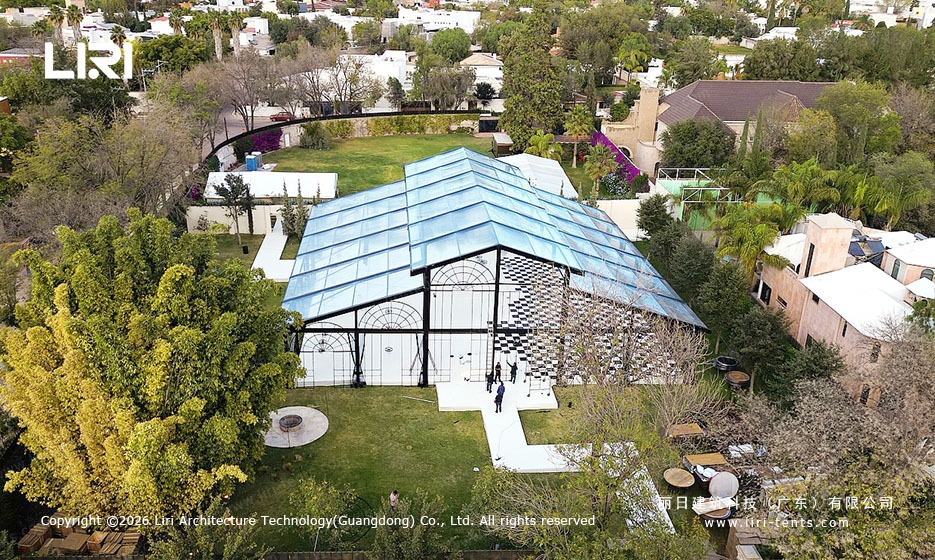
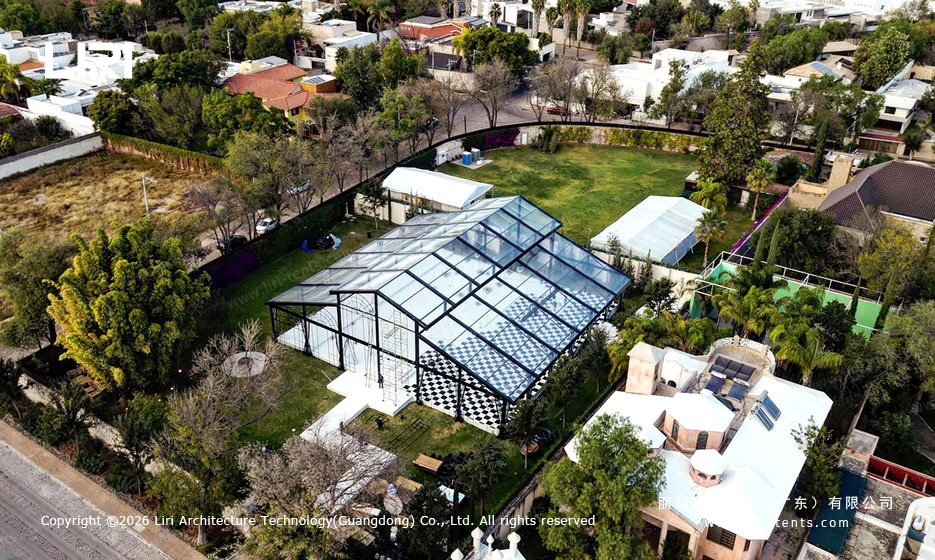
Hosting a multi-day gala on a sprawling historic estate presents a specific set of spatial challenges.
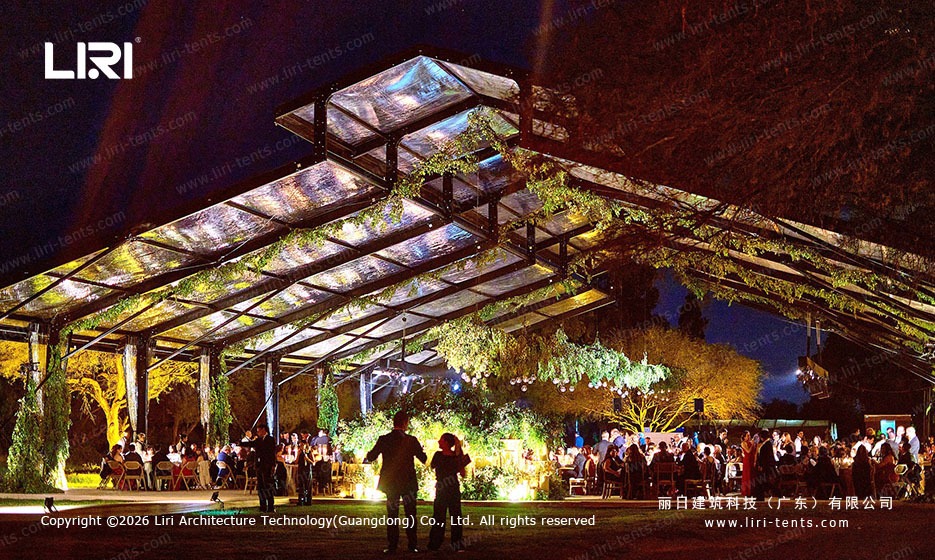
Event organizers needed a venue capable of comfortably seating 600 guests for formal dining, without the structure feeling like a conventional, temporary cover.
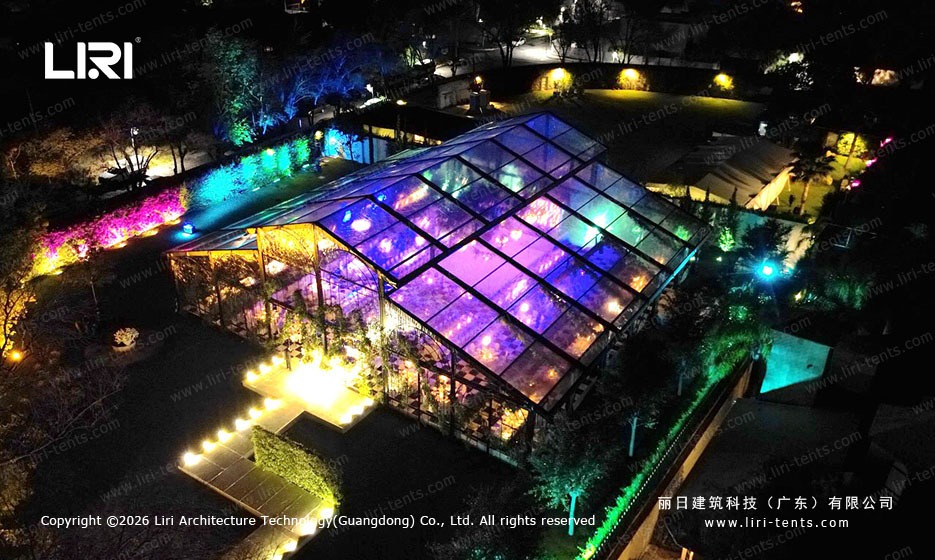
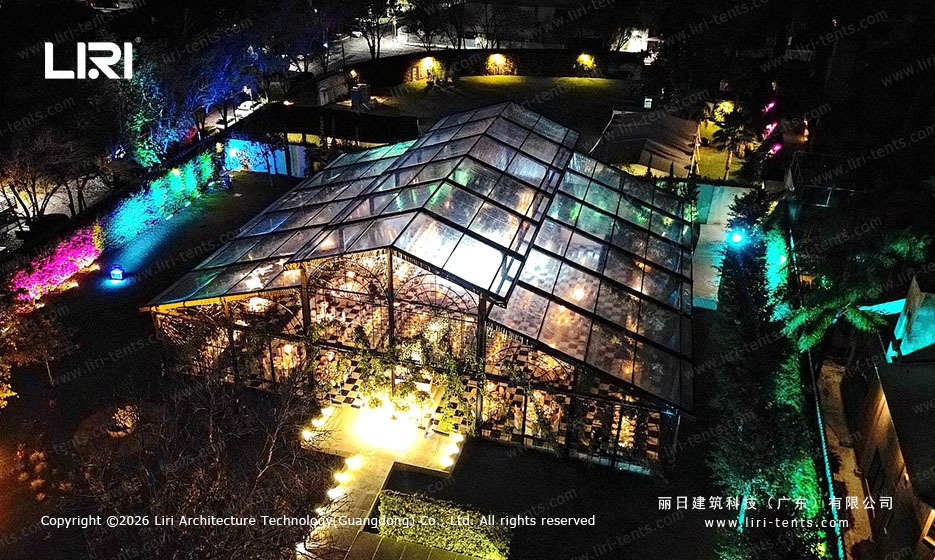
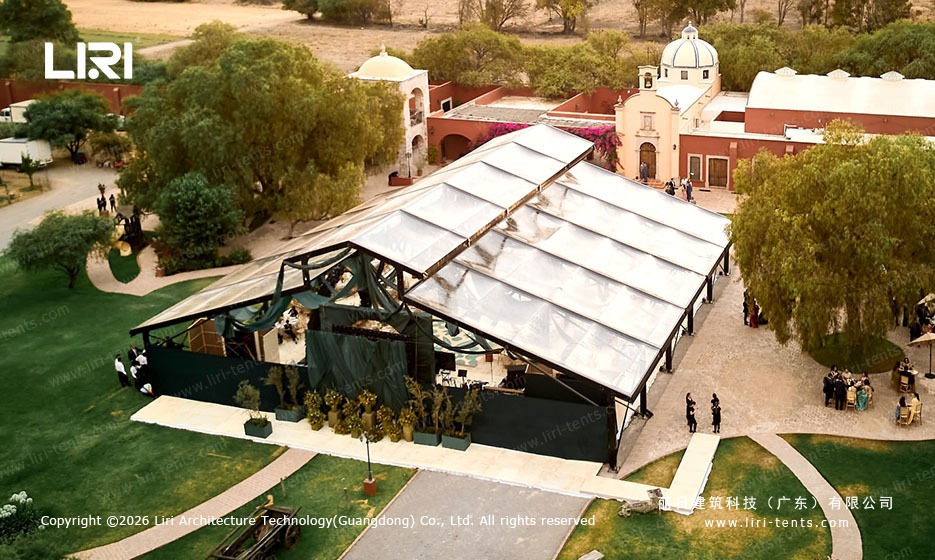
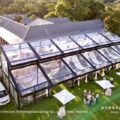
The physical setting demanded a building that respected the rural aesthetic while providing a highly controlled, premium interior. The selected layout was a 30-meter Aluminum Orangery, featuring a distinctive powder-coated black structural frame.
Departing from standard white A-frame designs, this iteration of Pastoral Marquees utilizes a multi-sided, pitched roofline that visually echoes classic iron-and-glass botanical conservatories.
Framing the Landscape: Inside the 30-Meter Clear Span
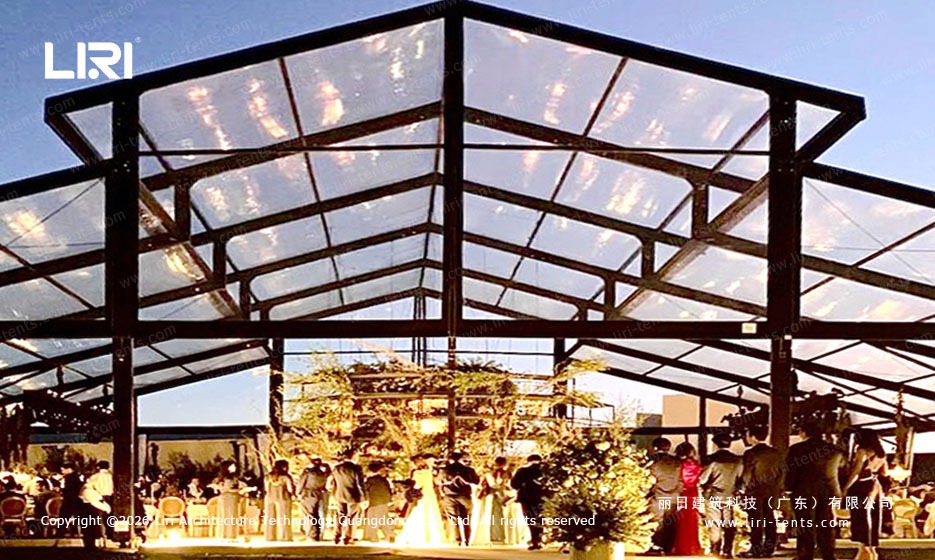
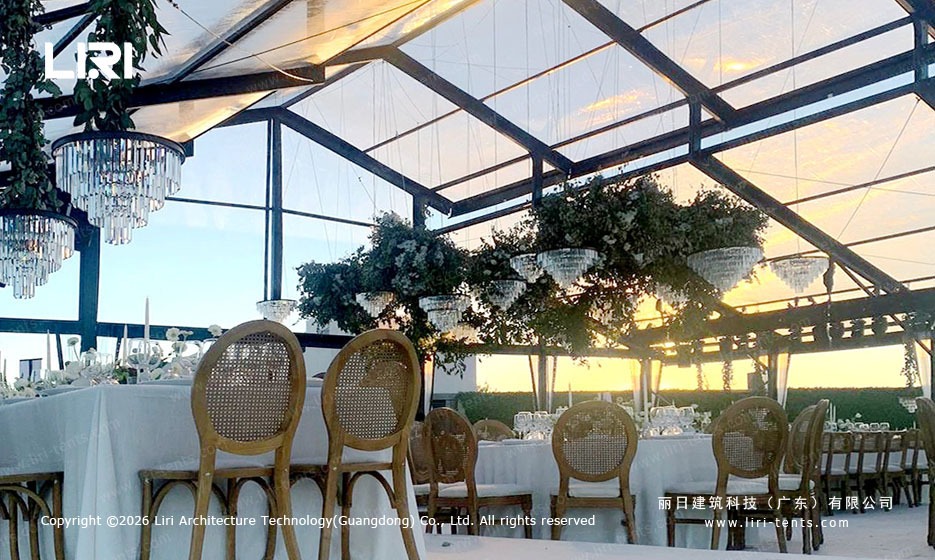
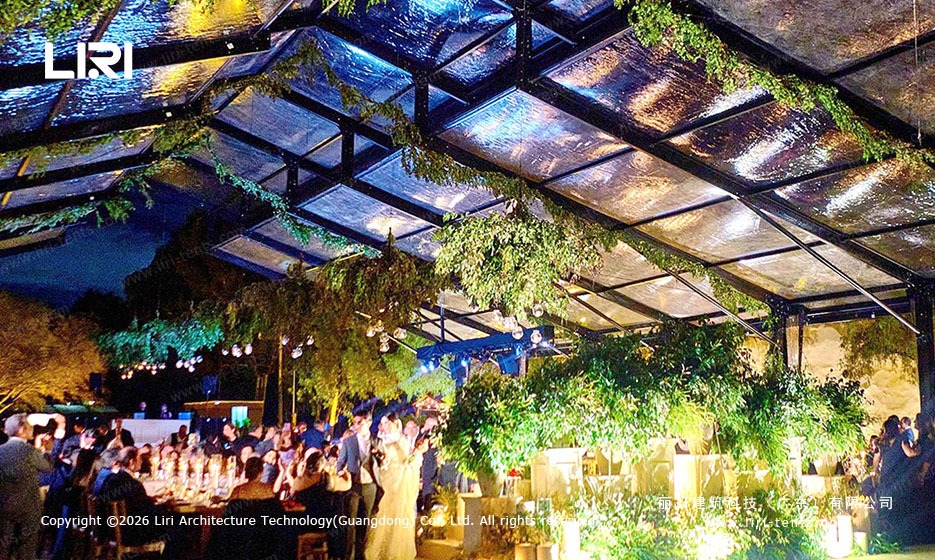
Stepping into the structure, the immediate impression is one of sheer volume. The 30-meter clear span design eliminates the need for any internal supporting columns, offering an entirely unobstructed sightline from one end of the dining hall to the other.
This lack of visual interruption is critical for large-scale luxury outdoor dining structures, allowing for fluid table layouts, sprawling floral installations, and natural guest movement without navigational bottlenecks.
The spatial atmosphere is heavily defined by the perimeter glass walls. Rather than standard vertical panes, the horizontal glass modules are proportioned in a 16:9 ratio. This specific dimensional choice is highly effective; it naturally frames the exterior gardens like a wide-screen cinematic view for the seated guests.
Even while situated indoors, attendees maintain a constant visual connection to the pastoral surroundings. The black framing recedes visually, drawing the eye outward during daylight hours and creating a sharp, sophisticated architectural grid when illuminated from within at night.
The high peak of the orangery roof draws warm air upward, creating a breathable, open environment even at maximum capacity.
Climate and Comfort in Luxury Outdoor Dining Structures
Operating a large, glass-heavy structure requires careful attention to the ambient environment. While transparent roofs are visually striking, they often create an unmanageable greenhouse effect during daytime events. To prioritize guest comfort, this layout utilizes an opaque, double-layered roof membrane.
This design choice blocks direct solar glare and significantly stabilizes the internal temperature.
The day-to-day operational reliability of the space relies on a few key functional integrations:
-
Ambient Temperature Control: Integrated HVAC systems push climate-controlled air through discreet floor-level vents, circulating it upward along the glass perimeters. This maintains a consistent temperature whether the venue is hosting a midday luncheon or a late-night reception.
-
Acoustic Balance: Large temporary event structures can struggle with sound reverberation. The combination of the heavy roof membrane and the varied angles of the multi-sided roofline helps diffuse sound waves, allowing for clear acoustics during speeches and comfortable conversation levels during dinner service.
-
Seamless Transitions: Wide, double-wing glass doors are positioned strategically along the gable ends, allowing natural air flow during temperate weather and providing wide, welcoming transition zones for guests moving between the main hall and the outdoor terraces.
The structure operated as the estate’s primary event hub for a continuous four-month season. It provided the refined atmosphere of a permanent architectural pavilion while maintaining the adaptability required for rotating event schedules.
For technical dimensions, floor plan configurations, or structural inquiries, contact our engineering team.
FAQ
How does a black frame glass marquee feel during daytime events? The interior feels expansive and highly connected to the outdoors. The black structural framing naturally draws the eye outward to the landscape, while the opaque roof prevents harsh sunlight and excess heat from overwhelming the space, ensuring a comfortable environment for daytime dining.
Can you customize the interior layout in a 30m clear span structure? Yes. The absence of internal support pillars means the entire 30-meter width is usable floor space. Project managers can freely design varied layouts, incorporating large stage setups, distinct lounge areas, and extensive banquet seating without working around structural obstacles.
How is temperature managed in large glass event spaces? Temperature stability is achieved through a combination of thermal roof covers and active climate control. Heavy-duty HVAC units are typically integrated into the floor or wall systems to distribute warm or cool air evenly, preventing condensation on the glass and maintaining a consistent ambient temperature regardless of external weather.
 Clear Span Black Marquee Tents for Sale | Versatile Glass Wall Event Spaces
 15x30m Aluminum Event Marquee for Outdoor Meeting
 How to Keep Event Marquee Warm in Winter?
 Large Exhibition Marquee for Sale: High-Capacity Modular Venue Solutions
 Frame Event Marquees for Extreme Cold Winter Outdoor Space
 From Garden to Grand: The Versatility of Orangery Frame Marquees