Executive Summary: The Engineering of Controlled Environments
In the B2B sector, operating a marquee during winter is a challenge of systemic engineering. Success is measured by two critical KPIs: Thermal Retention and Structural Redundancy. To transform a temporary structure into a climate-controlled environment that maintains 20°C+ while outside temperatures are sub-zero, one must eliminate thermal bridges and optimize airflow distribution.
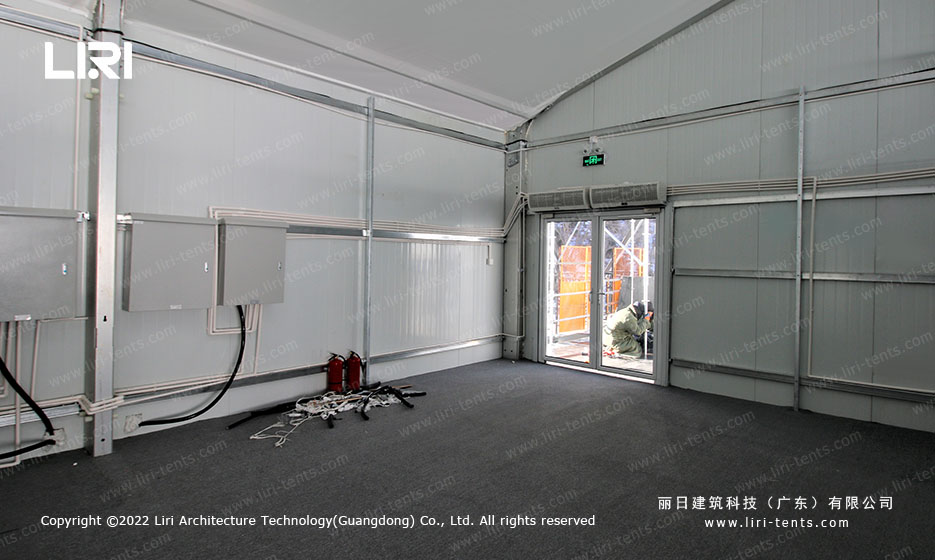
Winter Performance Specifications
| Component | Professional Standard | Functional Value |
| Frame Material | 6061-T6 High-Strength Aluminum | Resists low-temperature brittleness; maintains elasticity. |
| Snow Load Capacity | 0.5 kn/m² – 1.2 kn/m² | Engineered to withstand sustained heavy snowfall. |
| Roofing System | Double-layer Inflatable PVC | Creates an air insulation gap to prevent heat loss. |
| Foundation | Elevated Cassette Flooring | Isolates the interior from the frozen ground sink. |
Combatting the “Cold Bridge” Effect
💡 Technical Definition: Thermal Bridge (Cold Bridge)
A thermal bridge is an area within an object that has higher thermal conductivity than the surrounding materials (such as aluminum beams or ground contact points). In winter, heat follows these paths to escape, leading to high energy costs.
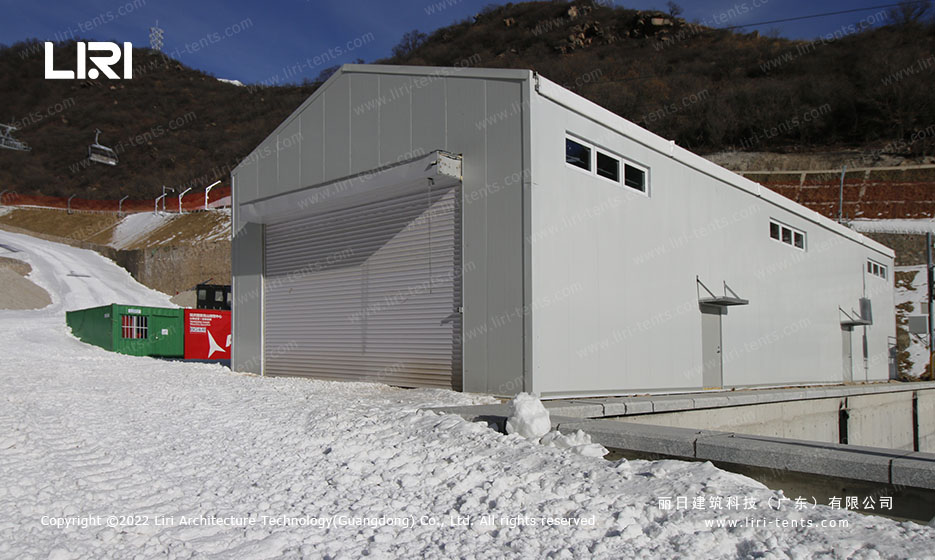
Walling: From PVC Fabric to Sandwich Panels
Standard PVC covers are insufficient for thermal control. For extreme environments, the transition to hard-shell walling is essential.
| Feature | ABS Hard Walls (Standard) | Rock Wool Sandwich Panels |
| Insulation Logic | High-density polymer barrier | 50mm high-density core (Mineral Wool/PU) |
| Energy Efficiency | Moderate | Superior (Highest R-Value) |
| Ideal Application | Temporary showrooms / Events | Long-term warehouses / Ski resort lounges |
| Value Addition | Rapid installation & aesthetics | Fire-rated Class A; massive energy savings |
Ground Isolation: The Air Plenum Effect
The frozen earth is a significant “heat sink” that will drain warmth from your space.
-
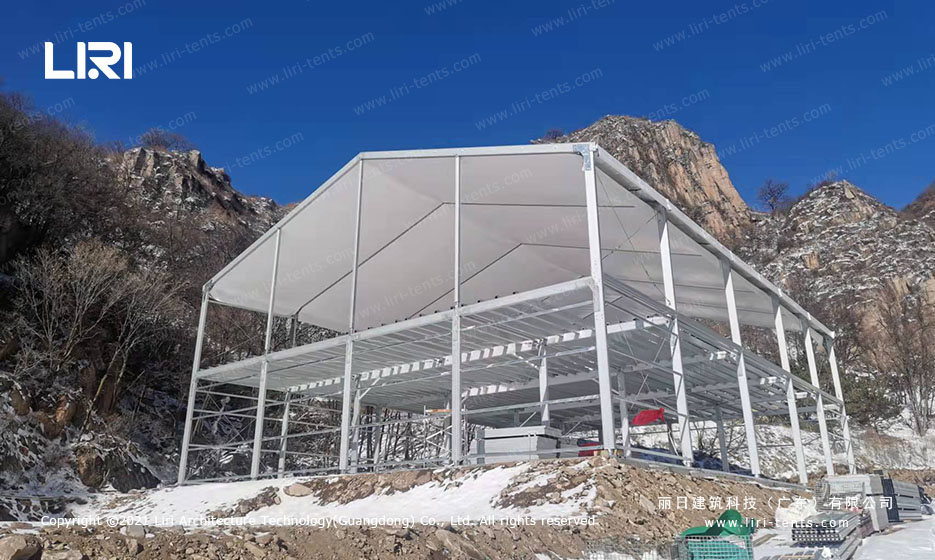
The Solution: Utilize an Elevated Cassette Floor System (as seen in construction phases).
-
The Benefit: Elevating the floor by 10-15cm creates an Air Plenum. This air gap acts as a natural insulator, ensuring the floor remains warm to the touch and providing a dry cavity for utility cables.
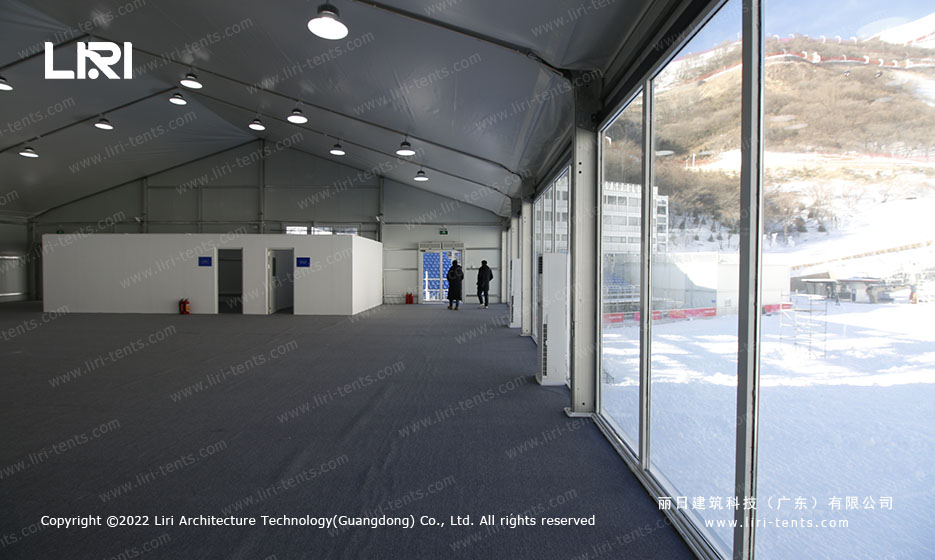
Strategic HVAC & Air Distribution
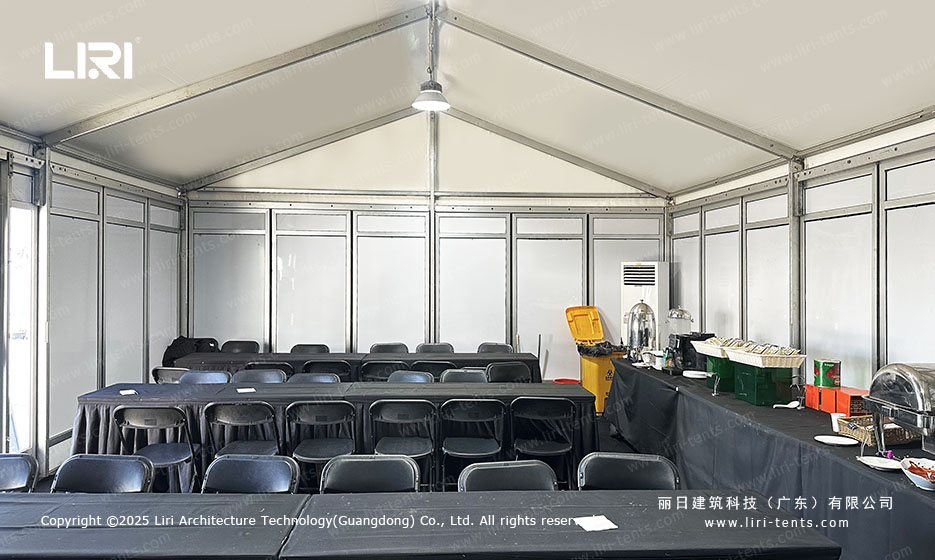
In a Clear Span structure, the distribution of air is as critical as the heating capacity itself.
-
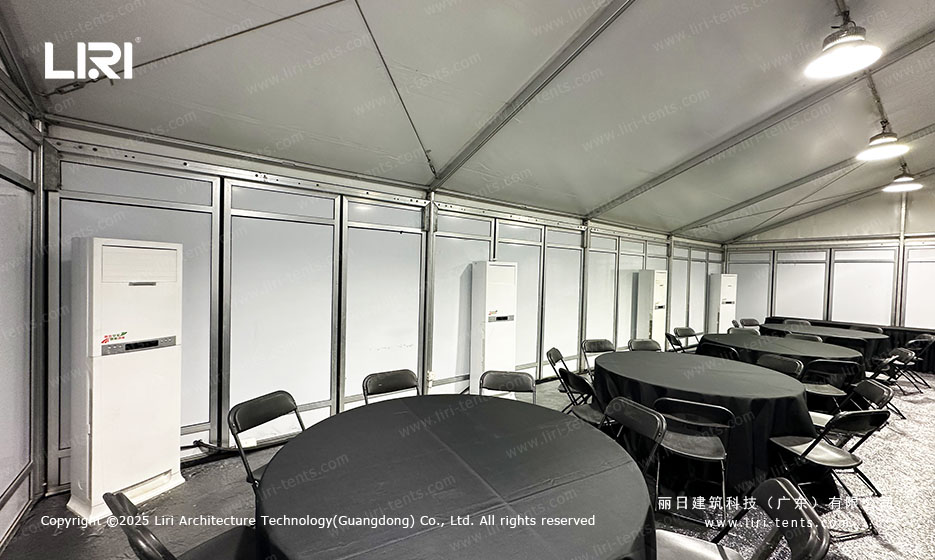
Industrial HVAC Units: Utilize 30HP-50HP external units connected via insulated ducts.
-
Air Flow Organization: It is mandatory to use internal Air Sox (Fabric Ducts). Without them, warm air naturally rises and traps at the roof ridge—causing uneven snow melt—while the ground level remains uncomfortably cold.
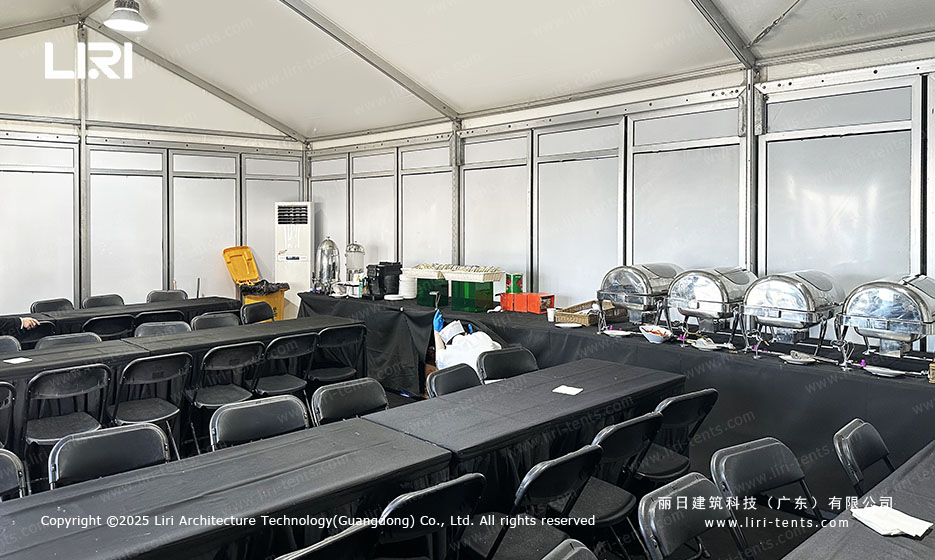
Structural Safety: Managing Snow Load and Wind
Engineering Note: At high-altitude sites, frames must utilize 6061-T6 aluminum to handle extreme wind loads (up to 100km/h) and heavy snow accumulation.
-
Active Snow Melting Strategy: Maintain an internal temperature of at least 12°C. This creates a microscopic layer of melt-water between the roof fabric and the snow, encouraging snow to slide off before it exceeds the structural load limit.
-
Anchoring: Frozen soil requires heavy-duty Weight Plates or chemical anchors to ensure stability during winter gales.
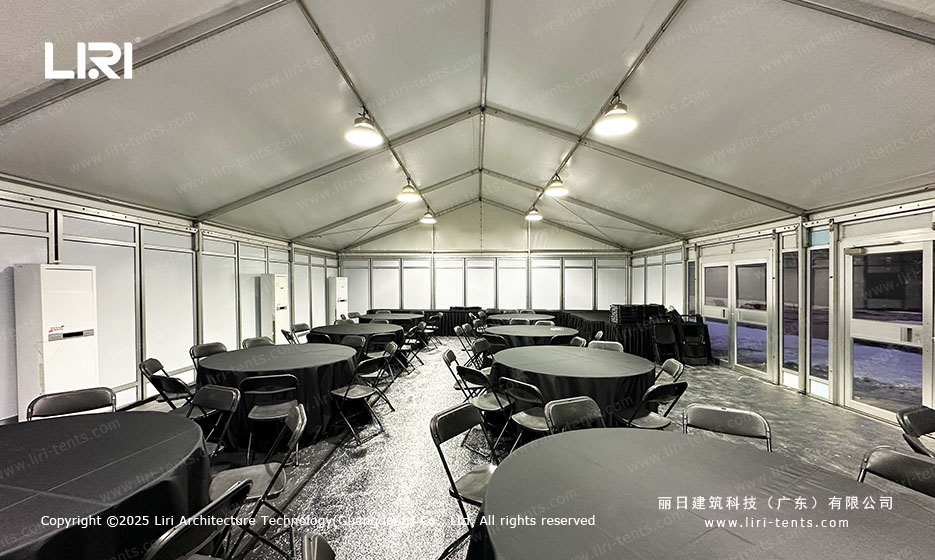
Winter Operational Checklist
-
Infiltration Audit: Seal all gaps in wall joints and door frames with weather-stripping to prevent Cold Air Infiltration.
-
Drainage Management: Ensure perimeter gutters are clear to guide melt-water away, preventing ice dams from forming at the base.
-
Power Redundancy: Maintain a backup generator for the HVAC system to prevent structural “cold soak” and snow-load risk during a grid failure.
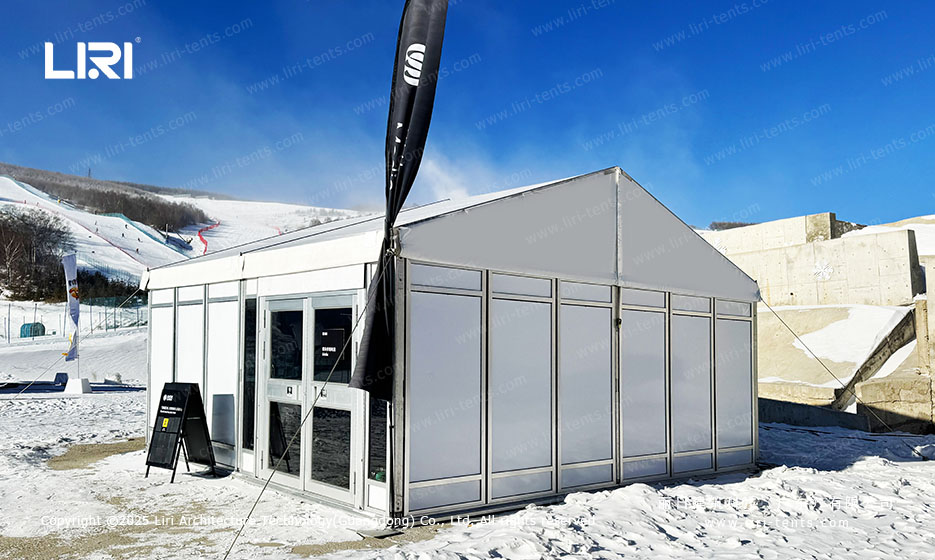
Engineering a Year-Round Space
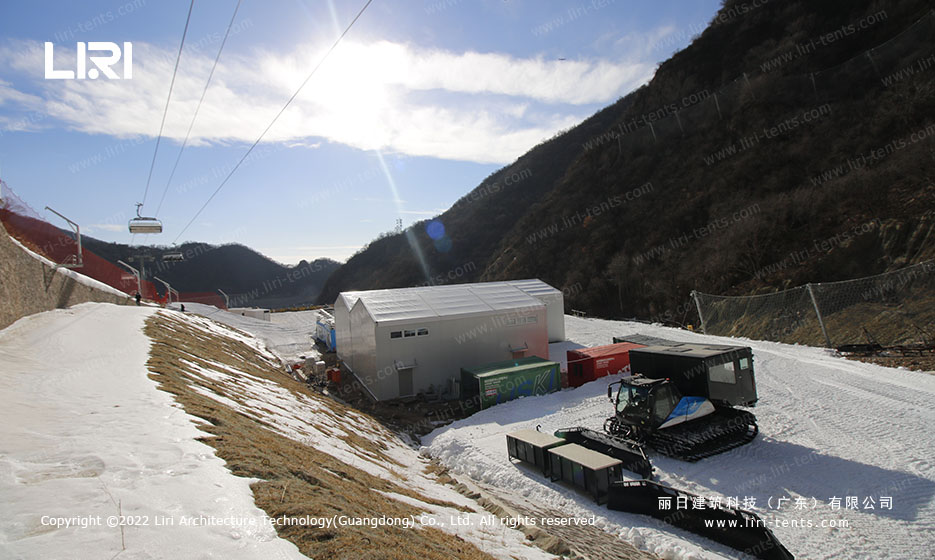
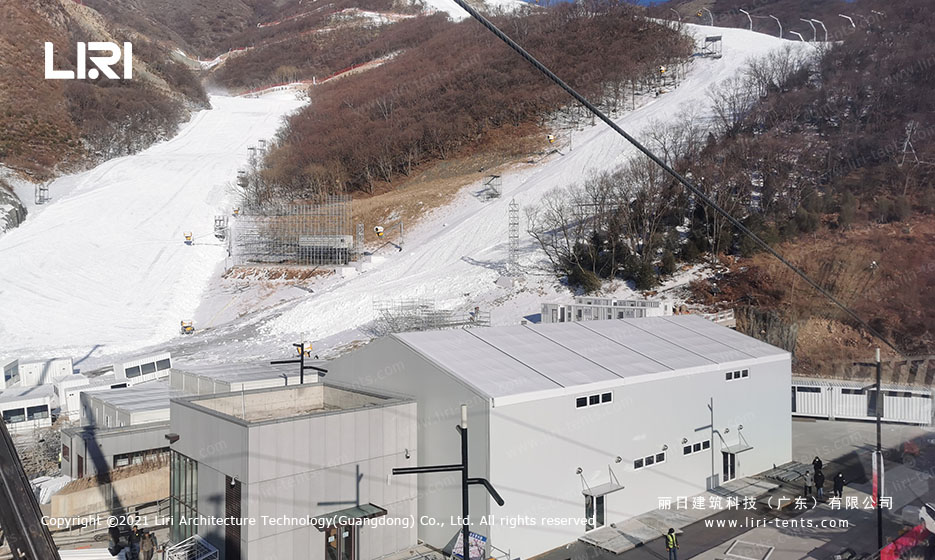
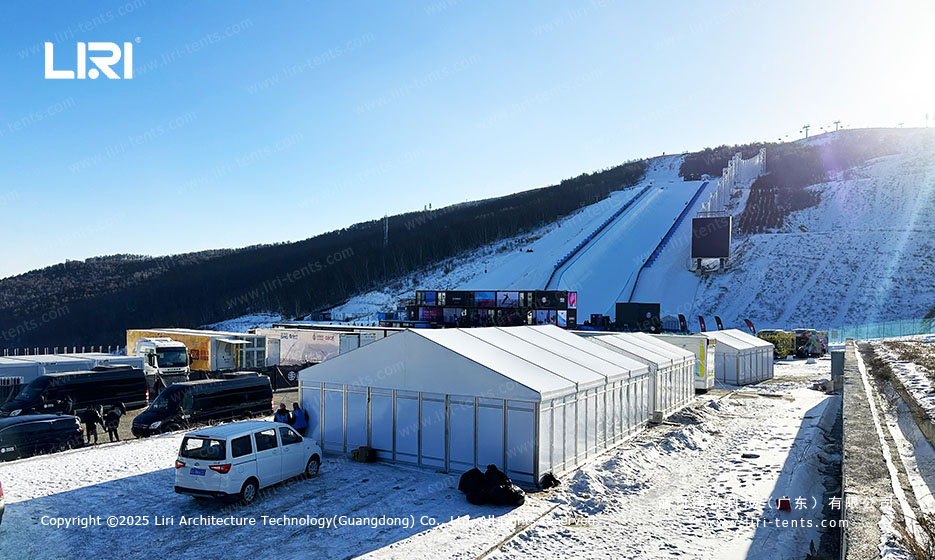
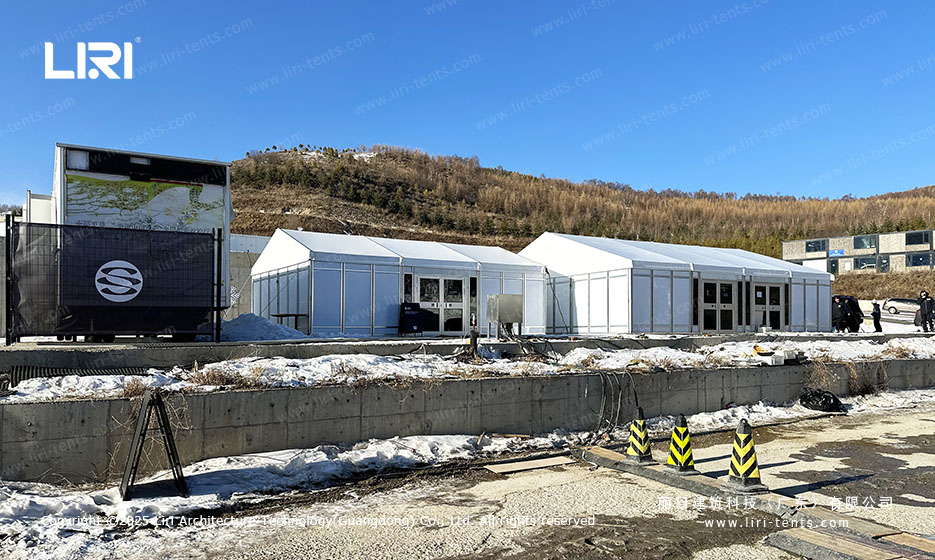
As demonstrated in our ski resort projects, a high-quality winter marquee is a masterpiece of materials science. By integrating sandwich panels, elevated flooring, and professional HVAC systems, temporary structures can achieve the comfort and safety standards of permanent buildings.
 Cold-Weather Event Marquees for Outdoor Winter
 15x30m Aluminum Event Marquee for Outdoor Meeting
 Heavy-Duty Aluminum Structure for Temporary Supermarket Buildings
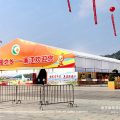 All Weather Event Marquee for Temporary Exhibition Hall
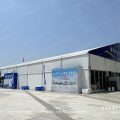 Large Heavy Duty Marquee For Automotive Industry Exhibition
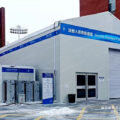 Event Marquee Structure For Extreme Cold Outdoors