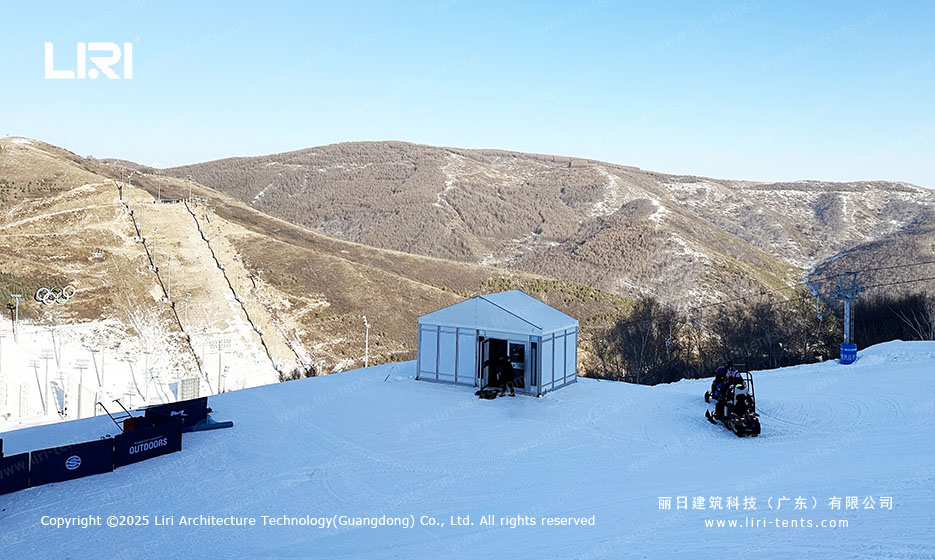
For major events, corporate operations, or seasonal retail, executing projects in winter demands a temporary structure that can withstand formidable challenges: structural integrity against snow and wind, and efficient, safe indoor climate control Insulation.
Professional Modular Temporary Structures (or Winter Marquees) far exceed basic party tents. They are designed with engineering-grade structural reinforcement and integrated heating systems, allowing for rapid deployment in challenging, high-altitude, or snow-prone environments while delivering the comfort and safety standards of a permanent building.
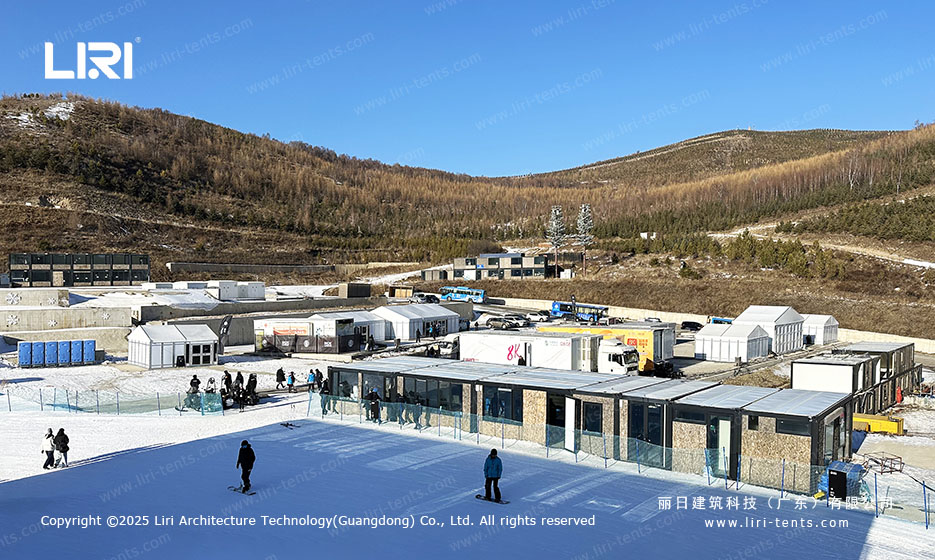
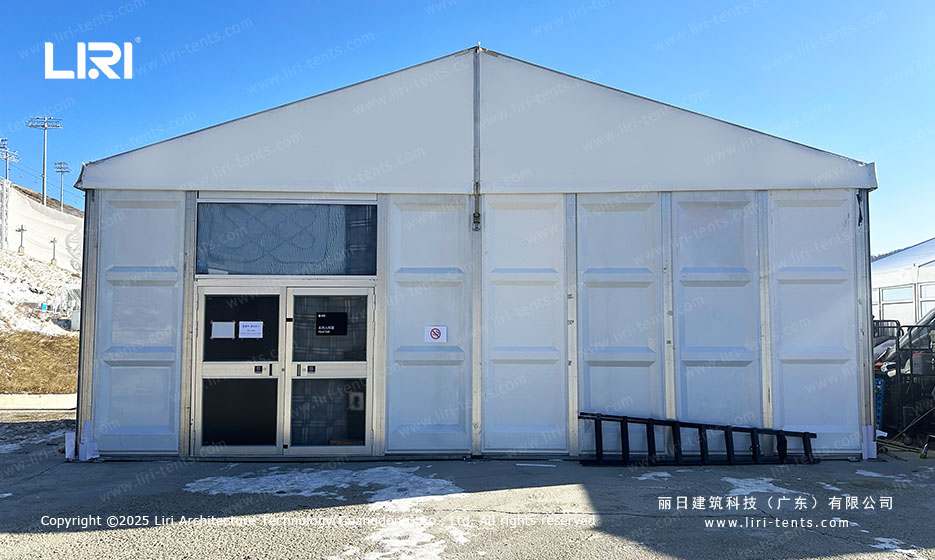
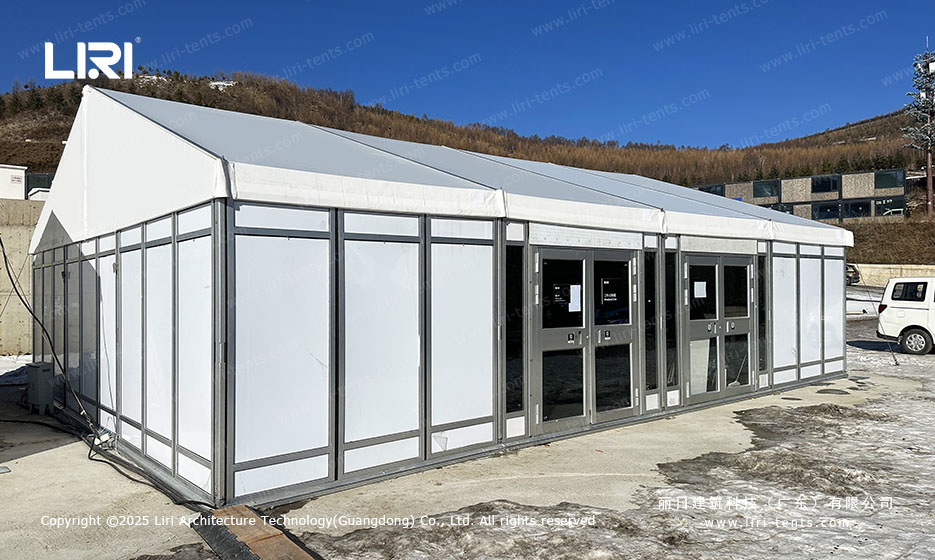
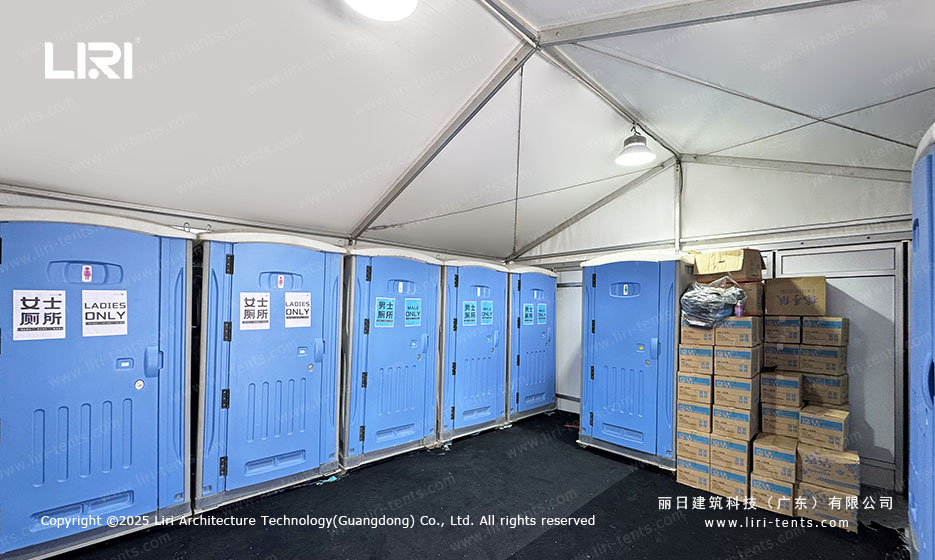
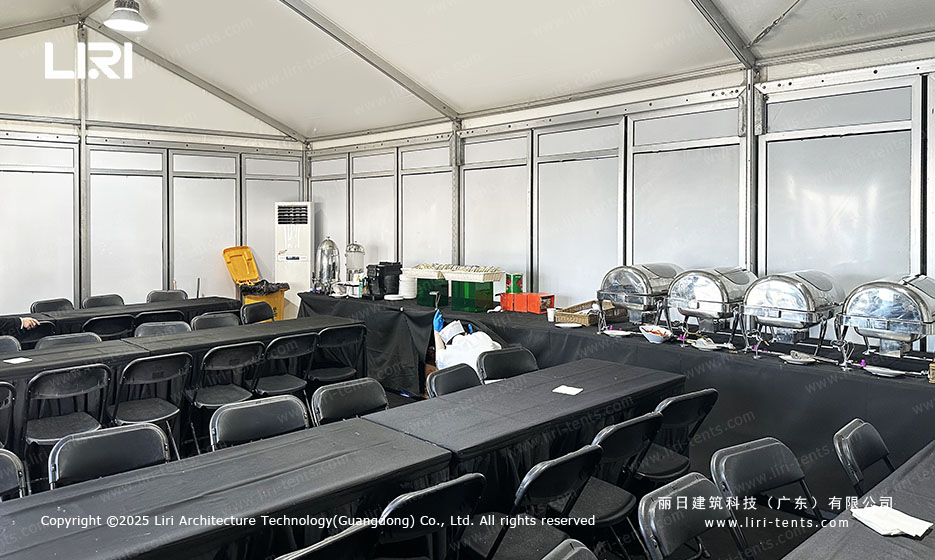
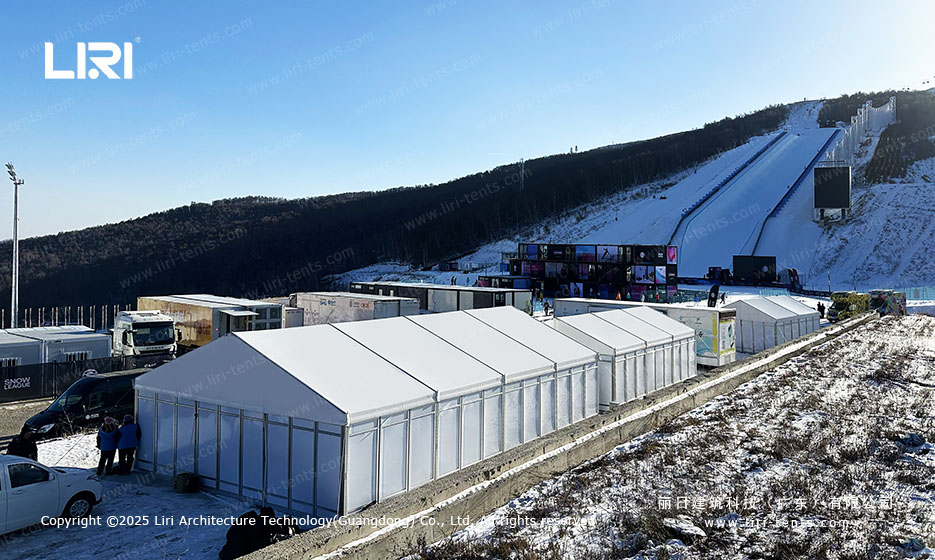
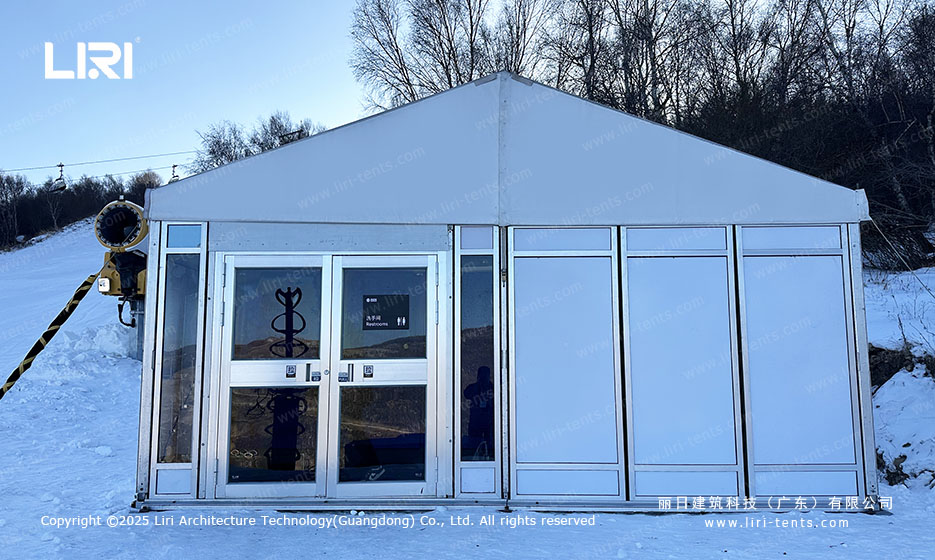
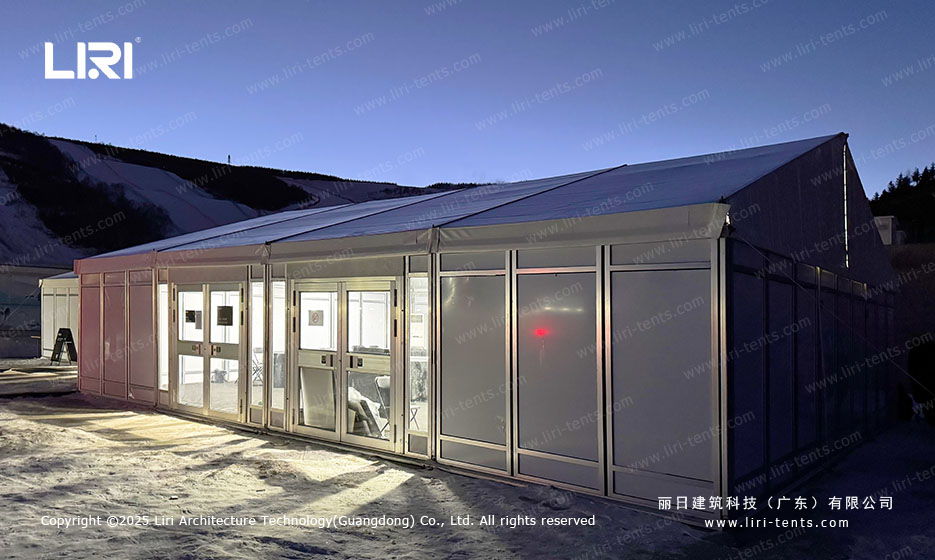
❄️ Challenge 1: Structural Safety and Snow Load Management
The first priority for any Insulated Tent operating in winter is guaranteeing structural resilience against sudden snow accumulation (Snow Load) and high winds.
The Reliability of Heavy-Duty Aluminum Framework
Our temporary spaces utilize high-strength 6061 Aluminum Alloy for the main framework. The key advantage of this material, compared to standard steel, is its ability to maintain exceptional tensile strength and ductility even in sub-zero temperatures, which is fundamental to securing the structure’s safety.
-
Mitigating Snow Load: For areas exposed to heavy snowfall, we implement reinforced roof trusses and additional bracing. Based on precise calculations for maximum local Snow Load, our structures can be engineered to safely handle loads up to 0.5—a standard far exceeding typical requirements.
-
Wind Resistance: Our optimized design and secure anchoring systems ensure the structure can withstand wind speeds up to 100 km/h, critical for stability in exposed, high-altitude locations.
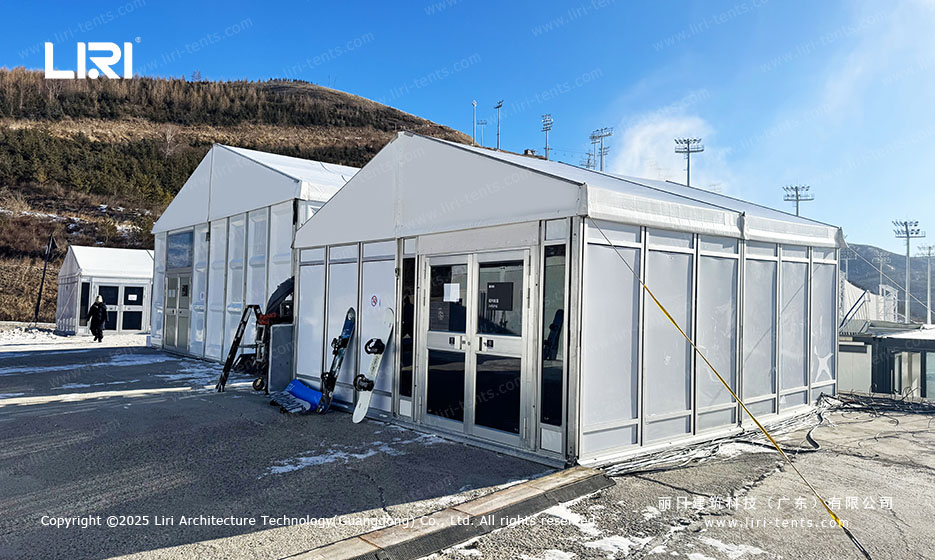
Snow Ground Fixation and Rapid Deployment
Deploying a B2B Winter Marquee on snow or uneven ground restricts traditional anchoring methods.
-
Ground Isolation: We prioritize the installation of a Cassette Flooring System. This system not only provides a flat, professional indoor surface but critically establishes an insulating layer between the tent and the frozen ground, which is essential for Insulation effectiveness.
-
Anchoring Solutions: Where conventional drilling is impractical (e.g., solid ice or sensitive ground), we use a combination of heavy-duty ballast systems and custom ground anchors to ensure the structure remains securely fixed, regardless of the terrain.
🔥 Challenge 2: Efficient Tent Heating and Multi-Layer Insulation
A successful winter outdoor space must achieve uniform, energy-efficient, and safe internal heating.
Integrated HVAC Systems: Safe and Reliable Tent Heating
We advise against simple heaters, which fail to address the complexities of large-scale Tent Heating (e.g., uneven heat, fire risk, humidity). Professional Tent Heating relies on an Integrated HVAC (Heating, Ventilation, and Air Conditioning) System:
-
Safety Priority: The HVAC units are typically installed outside the structure, conveying warm, dry air via flexible ducts. This design effectively separates the heat source from the tent fabric, completely eliminating open flame hazards. All PVC fabrics used must comply with stringent fire codes, such as the 4102 standard.
-
Precise Climate Control: The HVAC system provides accurate temperature and humidity management, quickly stabilizing the large interior space and avoiding issues like condensation that can occur with less sophisticated heating.
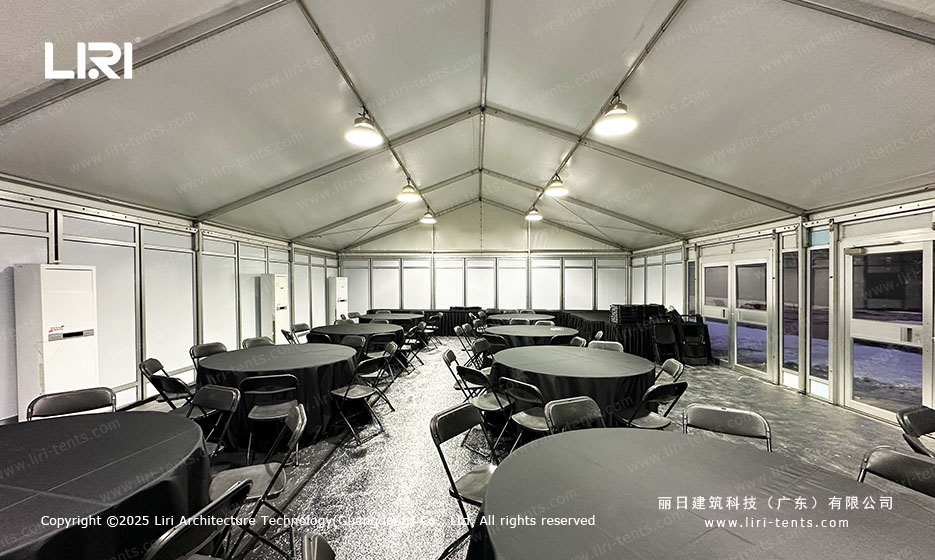
Architectural-Grade Thermal Barriers (The Core of Insulated Tent Design)
Maximizing the effectiveness of Tent Heating means minimizing heat loss. We achieve the true performance of an Insulated Tent through a three-tier thermal barrier:
-
Rigid Wall Upgrades: Utilizing ABS Engineering Plastic Walls or Sandwich Insulated Panels instead of soft PVC fabric. These walls offer superior thermal and acoustic insulation.
-
Double-Layer Roof Lining: Installing an air-cushioned thermal inner lining beneath the roof. This creates a stable air gap that can reduce heat loss through the ceiling by up to 30, while effectively preventing condensation caused by the temperature differential.
-
Floor Isolation: The aforementioned Cassette Flooring System prevents the ground’s frigid temperature from penetrating the interior, ensuring foot-level comfort and boosting overall Insulation efficiency.
📈 Investment Return: Year-Round Utility and TCO
Investing in an engineering-grade Insulated Tent solution is about optimizing your Total Cost of Ownership TCO. While the initial capital expenditure is higher than for simple summer tents, the long-term returns are compelling:
-
Reduced Operational Cost: The superior Insulation efficiency of the structure significantly lowers the energy consumption required for Tent Heating, leading to substantial savings on fuel or electricity bills.
-
Extended Seasonality: Transforming your space from a three-season structure into a year-round facility allows you to host high-value winter events, maximizing the structure’s utilization and improving your overall Return on Investment ROI.
-
Brand Assurance: A warm, dry, and safe temporary space elevates the customer experience and the professionalism of your event, backed by the 20 year anti-corrosion life cycle of our 6061 aluminum structures.
When facing extreme cold, every structural and thermal detail matters. Contact our engineering consultants today for a customized Winter Temporary Structure solution, including a precise heat load analysis report and professional advice on structural reinforcement based on your local Snow Load and wind requirements.
 15x30m Aluminum Event Marquee for Outdoor Meeting
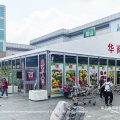 Heavy-Duty Aluminum Structure for Temporary Supermarket Buildings
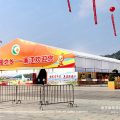 All Weather Event Marquee for Temporary Exhibition Hall
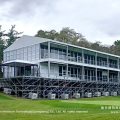 Maximize View: Premier Two Storey Marquees for Golf Course
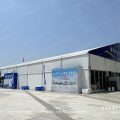 Large Heavy Duty Marquee For Automotive Industry Exhibition
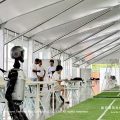 30x60m Curved Marquee: The Future of Robot Training