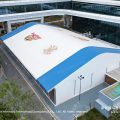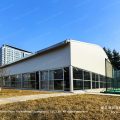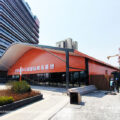
In the rapid expansion of urban sports infrastructure, the demand for “immediacy” and “spatial quality” has become paramount. Traditional masonry construction, hindered by long permit cycles and rigid structures, is struggling to keep pace with the dynamic nature of modern events.
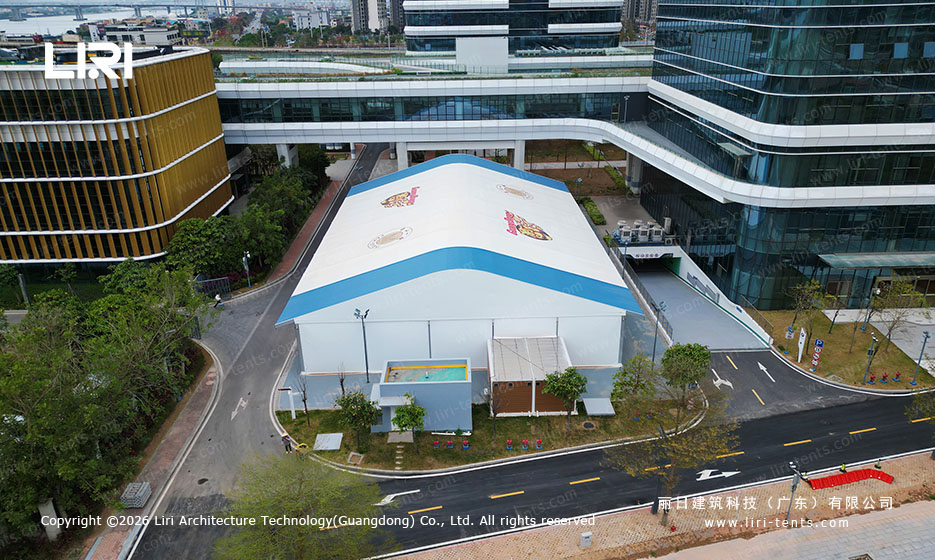
High-performance sports marquee structures represent a fundamental shift—not merely a temporary shelter, but a flexible spatial solution that integrates optical control, acoustic optimization, and structural integrity.
Specialized Venues: Tailored Environments for Every Discipline
By analyzing the specific competitive logic of various sports, our modular structures redefine spatial boundaries:
-
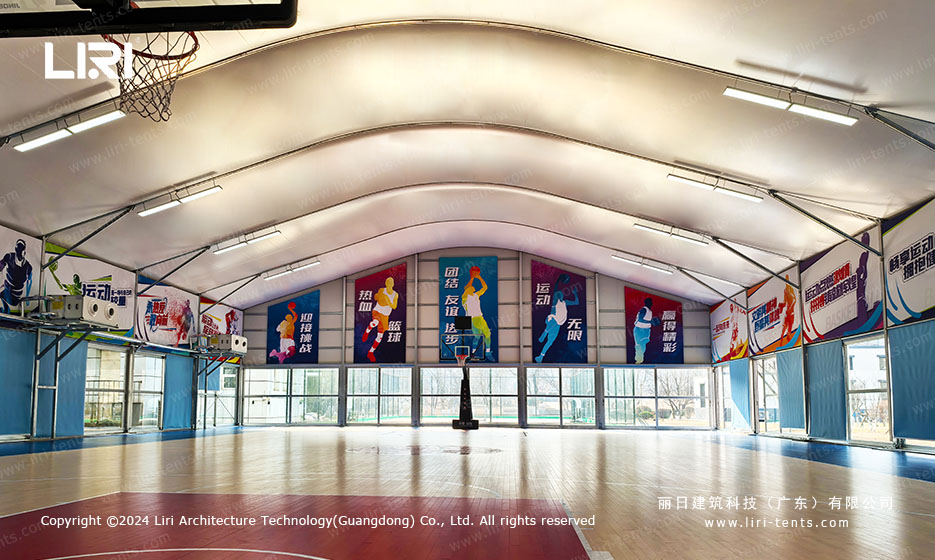
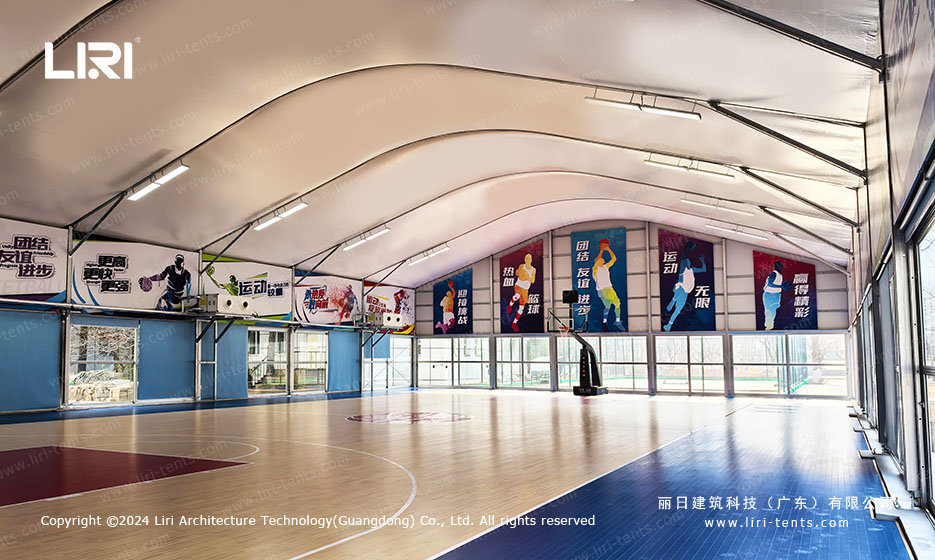
Indoor Basketball Halls: Reclaiming Verticality Basketball demands uncompromised “Vertical Clearance.” Our designs prioritize side-height extensions to ensure an internal clearance of 10m – 12m (33ft – 39ft), allowing ball trajectories to remain unobstructed. Specialized translucent PVC roofing filters harsh sunlight, providing uniform, glare-free illumination.
-
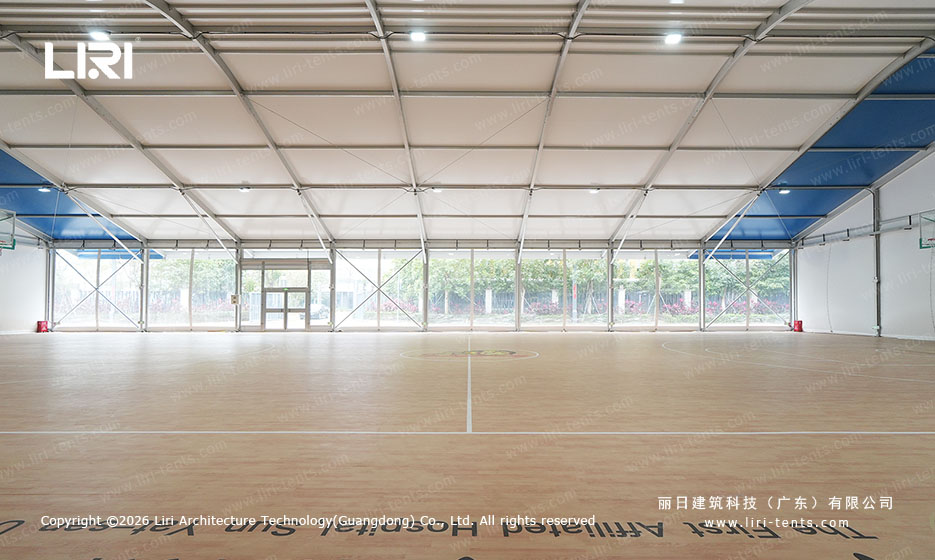
Indoor Tennis Court Covers: The Art of the Clear Span Tennis athletes require expansive lateral movement. Our clear span engineering eliminates all internal support columns, ensuring a 100% unobstructed field of view. With optional retractable side walls, these structures can transition into a naturally ventilated outdoor mode within minutes.
-
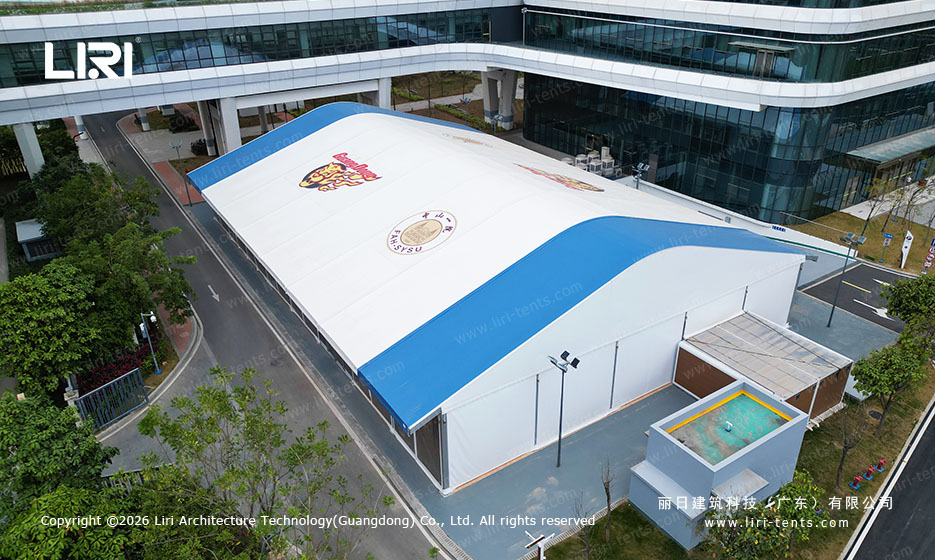
Football & Training Facilities: The Robust Guardian To cover vast areas such as standard football pitches, we employ high-strength aluminum skeletons. These structures can span 40m – 60m (131ft – 197ft) without center poles, offering professional teams a reliable, all-weather training base capable of withstanding heavy wind and rain.
-
Multi-functional Event Marquees: Mobile Brand Hubs Designed for rapid deployment and scalability, these marquees serve as more than just arenas. They seamlessly integrate VIP lounges, media centers, and spectator seating. For touring championships, this is a professional stadium that moves with the game.
The Technical Core: Why Modular Logistics Win
These structures earn their “high-performance” label through a balance of aerospace-grade materials and logistical agility:
-
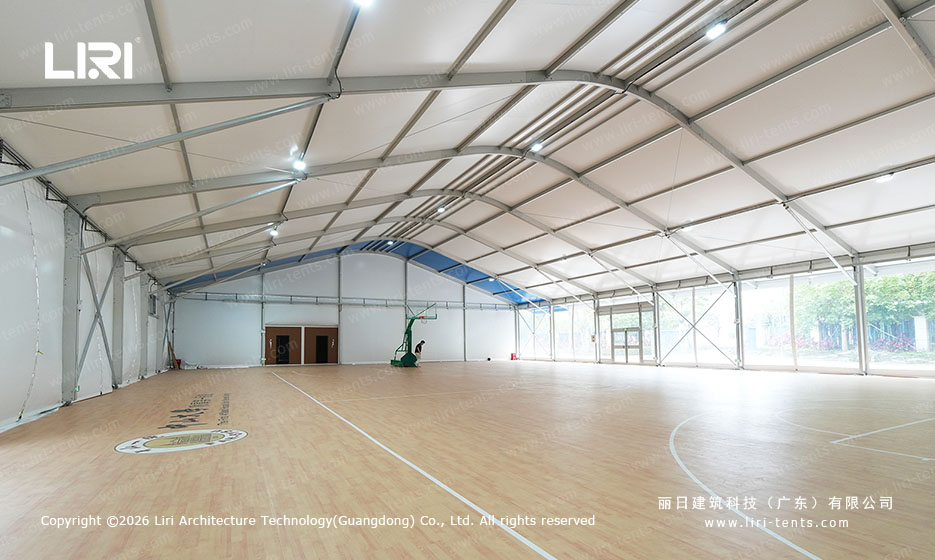
Structural Reliability: Utilizing 6061-T6 aluminum alloy frames and high-density, self-cleaning PVC fabric, these halls meet international safety standards for wind resistance (up to 120km/h / 75mph) and fire retardancy.
-
Non-Invasive Foundation: Whether on concrete, asphalt, or turf, we utilize versatile anchoring—such as weight plate systems or steel stakes—to ensure stability without damaging your existing surfaces.
-
Rapid Deployment: Unlike traditional construction that takes years, a modular marquee for sale solution can be fully operational within days or weeks, drastically reducing the gap between investment and utilization.
FAQ
Q1: How do you manage internal temperatures during peak summer? A: We regulate the climate through “breathable” design. This includes sliding side-wall systems for natural airflow, industrial-grade ventilation fans, and specialized roof membranes that reflect a significant percentage of solar heat.
Q2: Is this a temporary tent or a permanent building? A: Think of it as “relocatable permanent architecture.” The aluminum frame has a design life exceeding 20 years. While it offers the flexibility of a temporary structure, its durability is comparable to traditional venues.
Q3: Can these structures be installed on uneven terrain? A: Absolutely. We utilize specialized scaffolding or integrated flooring systems to level the ground, ensuring the athletic flooring remains perfectly horizontal regardless of the underlying topography.
The rise of the sports marquee is a profound disruption of the traditional “fixed-venue” model. It is no longer just a sheltering tool but a forward-looking spatial asset management strategy.
The height of the basketball hall, the unobstructed vistas of the tennis court, and the sheer resilience of the training facility prove that modular technology is now a superior alternative to traditional construction.
Its true value lies in its scalability and mobility—allowing operators to expand or relocate in response to market demand. It is no longer a stagnant capital expenditure, but a fluid, intelligent space that liberates sports from the constraints of land and time.