What Are Geodesic Tents?
A geodesic tent is a spherical structure built from interlocking triangles. Unlike conventional marquees with vertical posts, the geodesic design distributes stress evenly across the entire frame. This principle allows the structure to span large areas with minimal material weight.
Commercial geodesic tents use high-strength steel tubing, zinc-plated or painted for corrosion resistance. The roof membrane is heavy-duty PVC fabric rated for UV exposure. Standard radius sizes range from 8 meters to 30 meters, offering flexibility across venue scales. Optional equipment includes air conditioning, glass doors, transparent fabric sections, and interior wall linings.
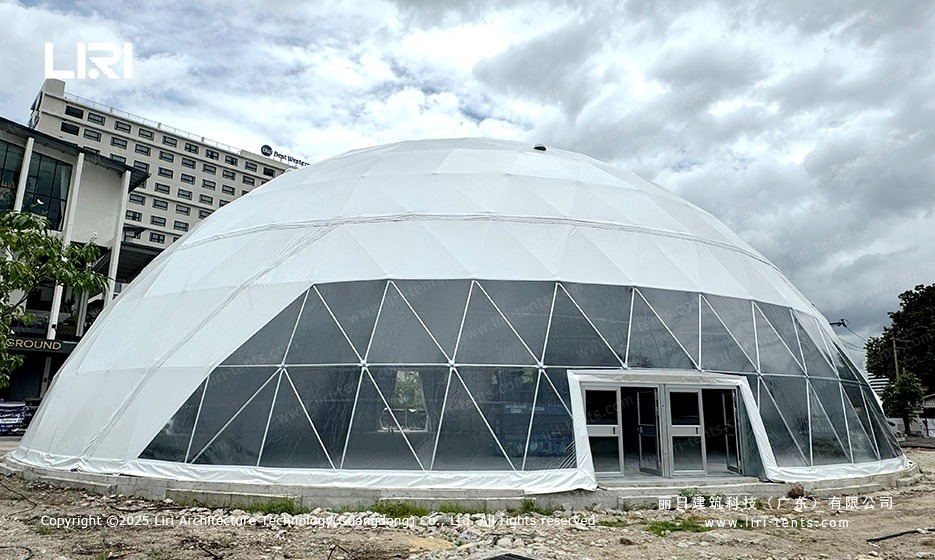
Construction and Materials
The frame consists of triangular panels connected at steel hubs. Each triangle transfers load to its neighbors, creating a self-bracing system with no interior columns. This makes geodesic domes a natural fit within the clear span tent category. The PVC roof cover is tensioned across the frame. Upgrades include transparent fabric panels for natural light, glass door systems, and ceiling linings for insulation.
Applications for Geodesic Dome Tents
Spherical tent designs are widely used at trade exhibitions, outdoor celebrations, and public events. The distinctive dome shape attracts attention at brand activations and product launches. For organizers looking for geodesic dome marquees for sale, the structure delivers both visual impact and practical function. The spherical interior creates natural acoustics that suit performances, presentations, and immersive displays.
Sizing and Options
An 8-meter dome seats 50 to 80 guests for dining, while a 20-meter dome handles 300 to 400 people. The 30-meter version accommodates 700 or more, making it suitable for gala dinners and concerts. Each modular section bolts together on-site. A trained crew erects a mid-size dome in two to three days. Flooring options include cassette panels, plywood subfloors, and sport-grade surfaces.
Why Choose a Geodesic Dome?
Compared to frame marquees, geodesic domes handle wind loads more efficiently. Snow slides off the curved surface. A dome tent uses roughly 30% less steel per square meter than a conventional clear span tent of equivalent footprint. For rental businesses, the geodesic tent adds a premium option that clients pay more for, and the disassembled frame stores compactly.
Accessories and Maintenance
Options include glass walls, ceiling linings, cassette flooring, weight plates, and transparent roof sections. These let the same dome serve different functions across events. For operators sourcing geodesic dome structures for sale, this versatility improves fleet utilization. A steel-frame geodesic tent lasts 15 to 20 years with proper care. PVC membrane needs cleaning every six to twelve months to prevent UV degradation. Steel hubs should be inspected annually for corrosion.
FAQ
What is the difference between a geodesic tent and a dome tent?
A geodesic tent uses triangular panels in a spherical framework, while a dome tent typically uses a simpler arched profile. Geodesic designs distribute load through multiple triangles for maximum strength-to-weight ratio, handling higher wind loads.
How long does installation take?
An 8-meter dome requires one to two days for a crew of four. A 20-meter dome takes three to four days. Site conditions affect timing, but the modular design keeps assembly straightforward.
Can a geodesic tent handle high winds?
Yes. The triangular framework resists wind forces naturally. A properly anchored dome handles 80 to 100 km/h depending on size. The curved surface presents less resistance compared to flat-roofed structures.
What flooring works inside a geodesic dome?
Cassette flooring is common for temporary events. For longer installations, plywood subfloors with vinyl finishes are practical. Sport events may need reinforced impact-absorbing surfaces. The circular floor plan may need custom cutting at edges for festival dome tent installations.
â Browse Geodesic Dome Marquees for Sale
 35M Big Geodesic Dome Structure for Multi-Functional Event Hall
 Geodesic Dome for Sale | Clear Roof Dome Marquee Tent Event
 20m Dome Marquee: Visual Impact for Premium Receptions
 How a Clear Span Sports Court Marquee Created a Year-Round Basketball Arena
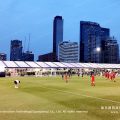 Transparent Marquee Tent for FIFA Fan Zone in Thailand: 20m Clear Span Build
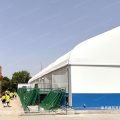 15x38m Clear Span Swimming Pool Marquee Tent — CBT Aluminum Structure