
Two quotations sit on your desk and both suppliers have invited you to visit. The trip costs a few days and the deposit is five figures, so the visit has to produce more than showroom photos. A marquee factory audit works when every claim the supplier makes is paired with one specific thing to see, measure or request. This checklist walks through the claims that matter on an aluminium marquee order and the evidence that should exist behind each one.
What Does a Factory Audit Actually Decide?
An audit decides whether the company you are about to pay can actually produce what the quotation promises. Sales conversations cannot answer that question; production floors can. Before you travel, send the document request from our marquee buying guide so the visit starts from paper rather than from brochures. The audit itself then confirms whether those documents describe a real process.
Which Production Claims Can You Verify on the Spot?
A specification sheet is a promise; a production floor is where the promise either has equipment and records behind it or does not. The fastest audit method is to walk in with the quotation and ask one question per line item: show me. Most specification claims map directly to something physical in the factory, and a supplier that produces to spec will have the paperwork within reach, not in a folder that needs printing after your visit.
| Claim | What to look at | What to request |
|---|---|---|
| Frame in 6061-T6 extruded alloy | Profile cross-sections, storage racks, extrusion source | Material certificate per batch |
| Hard anodised surface | Finish on finished profiles, anodising records | Anodising process documentation |
| PVC membrane, flame retardant | Fabric rolls and lot labels | Fire test reports naming DIN 4102 B1 and NFPA 701 |
| Hot-air welded seams | Membrane welding floor and machine settings | Weld quality records |
| Engineered anchoring | Anchor hardware and installation drawings | Anchor calculation basis |
Each row exists on real orders. Our aircraft hangar project in Xi’an was documented with 6061-T6 extruded profiles, hard anodised surfaces, a PVC membrane certified to DIN 4102 B1 and NFPA 701, and engineered anchor bolts rated at 30 kN against standard expansion bolts. If a supplier quotes similar figures, the factory floor is where those claims turn into evidence or evaporate.
How Do You Tell a Manufacturer From an Assembler?
Ask three questions. Where do the profiles come from: an extrusion line the company controls, or purchased tube with an unknown history. Who performs the structural work: an in-house engineering team, or an outside drafting office. Where is the coating applied: in-house, or by a contractor with its own records.
An assembler can still deliver, but the answers change who you call when a seam fails in year three. A trading office between you and the welder also adds a translation layer to every warranty discussion. Signals worth noting during the walk: welders working against documented settings, gauges with calibration tags, and an engineering office that can open your project file on screen rather than promising a drawing by email. The specifications page lists what this manufacturer commits to in writing, and the visit should confirm the factory behind it.
What Should a One-Day Visit Agenda Cover?
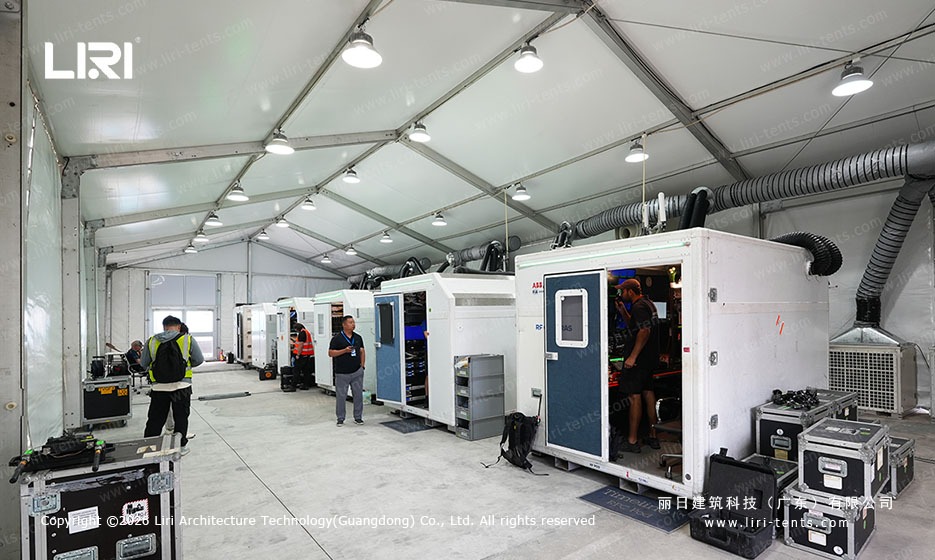
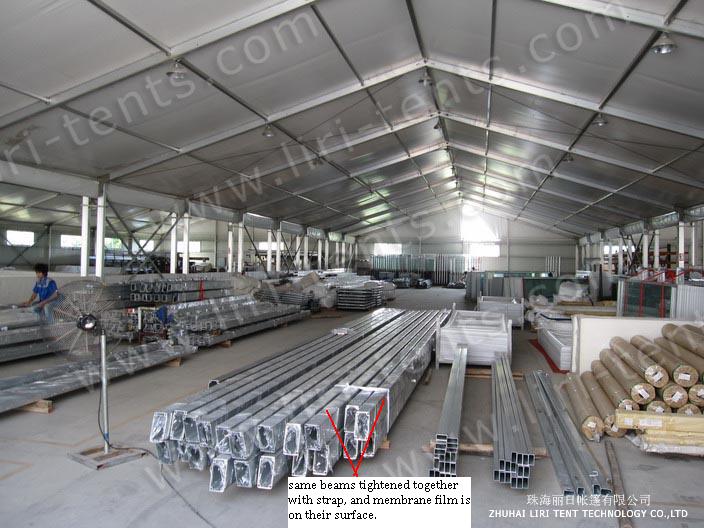
Sequence the day so you finish at packing, not at reception. Start at material intake and profile storage, then move through cutting and welding stations, the membrane hall where rolls are cut and hot-air welded, the QC area where test reports and gauges live, and finally the warehouse where crates are assembled. A tour that skips QC and ends in a showroom shows you what the company wants to sell, not what it can build. The factory page gives the layout overview; the audit confirms the working state of each hall.

Which Documents Should You Take Home?
Five items belong in your order file. Batch material certificates for the frame alloy. Fire test reports that name DIN 4102 B1 and NFPA 701 explicitly. Weld quality records tied to production batches. The structural calculation basis for your project, with the note that site-specific loads always follow the requirements of the project location and professional review. Reference project files that show deliverables, not only photographs.
Each item earns its place later. Certificates support customs and insurance questions. Fire reports are the first document a venue or authority requests. Calculation records shorten the engineering review at your end. Project files show whether the supplier has delivered at your scale. These are the same documents a pre-shipment inspection checks against the finished order, so collecting them now turns the later inspection into a comparison instead of a discovery.
How Do Findings Change the Order You Place?
An audit without consequences is tourism. Convert each finding into order language: certificates become contract annexes, inspection rights become a clause, fire documents become a shipping requirement, and spare parts become a line item. If a claim cannot be evidenced on the floor, either the specification changes or the price should. When you are ready to put those terms in front of a manufacturer, contact us with your project type, spans and location, and we will tell you which of these documents we can produce before you commit.
 Marquee Pre-Shipment Inspection: A Buyer Checklist Before Balance Payment
 Marquee Container Loading and Export Packing: A Buyer Checklist
 10x25m Tension Membrane Marquee Tent: Three-Peak Safari Lodge Structure
 Marquee Price per Square Metre: What the Figure Hides in a Quotation
 Electric Retractable Canopies for Industrial & Factory Aisle
 Custom Span Marquee Tents: Specifying a Made to Order Width