A marquee can feel warm on a sunny day, but it does not have to feel stuffy. Heat builds up for a few simple reasons: sun on the roof, still air, and many people sharing one space. Most fixes are choices you make before the tent goes up.
This guide explains where the warmth comes from, how walls and openings change the feel of a room, and what to ask before you order. No building knowledge is needed.
Why a marquee warms up in the first place
Sunlight is the biggest factor. The roof takes the full force of the midday sun, and the fabric or roof panels pass some of that warmth to the air just underneath. Warm air rises, so it collects near the top of the space while guests sit lower down. On a still afternoon, that layer of warm air has nowhere to go.
The walls matter just as much. Clear PVC windows are made from a strong, flexible plastic. They let in plenty of daylight, which is lovely to look through, but they also let the sun warm the room, rather like a greenhouse.
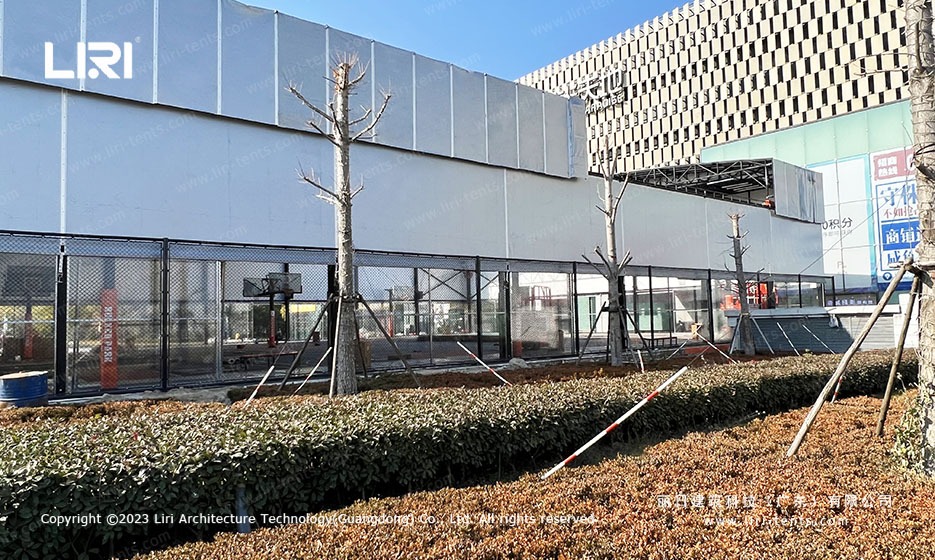
Solid white walls reflect more light and stay cooler to the touch. A marquee with glass on every side will feel different from one with plain white sides, even on the same lawn at the same hour.
People add heat too. A full dinner, a busy exhibition stand, catering equipment and lighting all raise the temperature. Two hundred guests in a closed marquee at two in the afternoon is a very different prospect from fifty guests at six in the evening. Thinking about the hour and the crowd is the cheapest comfort decision you can make.
Let fresh air move through the space
Still air is what makes a tent feel heavy. The simplest answer is to give the air a way in and a way out. Rolled-up sidewalls, open windows and a door at each end create a light cross breeze. Even a small movement of air makes a crowded room feel far more comfortable, and it costs nothing but a little planning.
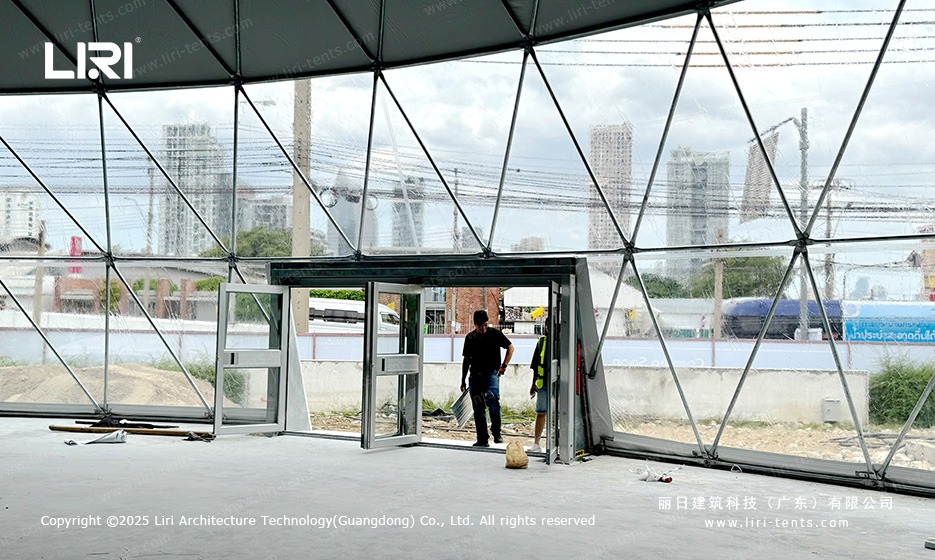
Openings work best when they are on more than one side. A single open door lets some air in, but two openings facing each other let it travel across the whole space. This is worth discussing with your supplier at the quoting stage, because the number and position of doors is fixed when the walls are made. Our guide to where to place doors and entrances covers that in more detail.
The type of wall changes how much you can open. Soft PVC sidewalls can often be rolled up or left off entirely on a warm day. Glass wall panels usually slide, while solid panels tend to stay in place.
If you expect to open the sides often, say so early, because it affects which wall system makes sense. There is more on this in our guide to choosing between glass, PVC and solid sidewalls.
Warm air also needs a way out at the top. Ventilated roof panels and ridge vents, which are small openings along the highest line of the roof, let rising air escape instead of sitting above your guests.
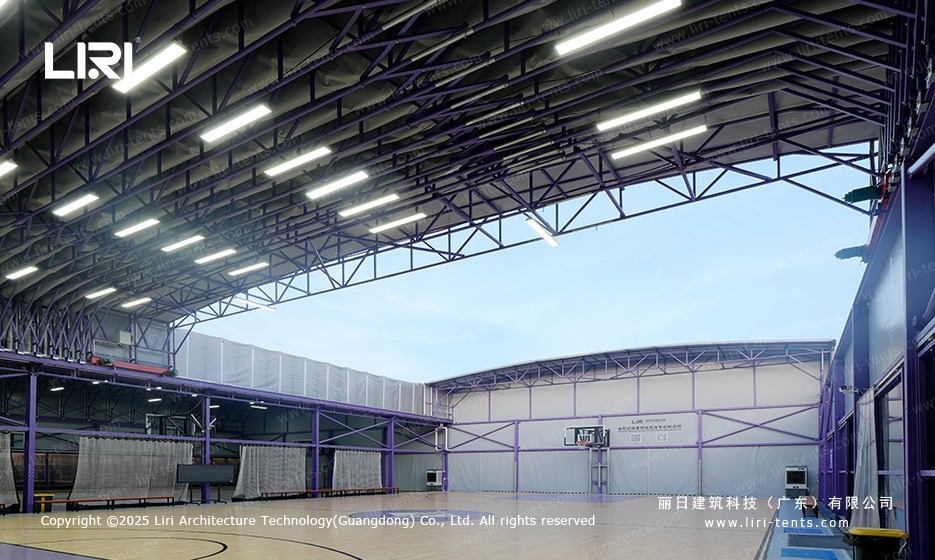
Some larger structures take this further. A retractable roof marquee can slide its roof panels open to the sky, which suits sports courts and permanent venues.
These are specialist builds, not a standard feature, and they cost more than a normal frame marquee. For a one-off summer event, open sides and a few fans usually do the job for far less. If the roof matters to you, our guide to how the roof shape changes the space inside is a useful next read.
Where you put the marquee matters too
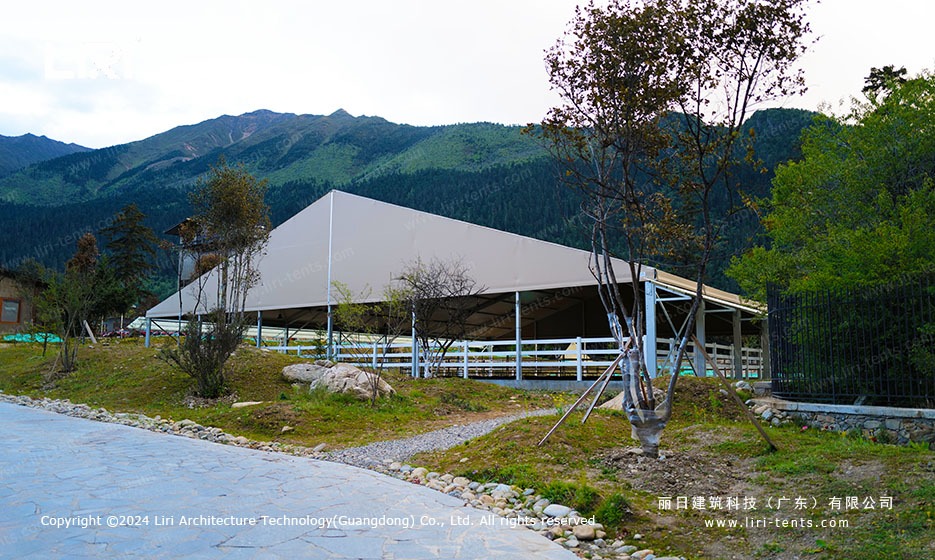
The ground under the tent holds heat. Grass stays noticeably cooler than asphalt, concrete or paving, which soak up sun all day and keep giving it back in the evening. A lawn with a little shade from nearby trees can be more comfortable than a car park a few metres away. When you have a choice of site, the soft ground is usually the kinder one in summer.
Which way the marquee faces is worth a thought as well. In most parts of the northern hemisphere, the west side catches the low, strong sun late in the afternoon, which is exactly when many receptions and dinners begin. Putting the main entrance or a solid wall on that side can keep the worst of the glare off your guests. You do not need to measure anything; just stand on the site at the hour your event starts and see where the sun lands.
Timing is the other free decision. A ceremony at midday in high summer asks a lot of any structure. The same marquee at five in the evening often needs nothing more than open sides.
If your date is fixed, plan shade, drinking water and airflow around the hottest part of the day. If the date is flexible, a later start is the simplest comfort upgrade available.
It also helps to think about what surrounds the tent. A marquee squeezed between two buildings may lose the breeze that an open lawn enjoys. One placed near a hedge can pick up welcome shade without losing that airflow. Walk the site on a warm afternoon if you can, because a plan on paper rarely shows how the air actually moves.
Fans and cooling units, when you need more
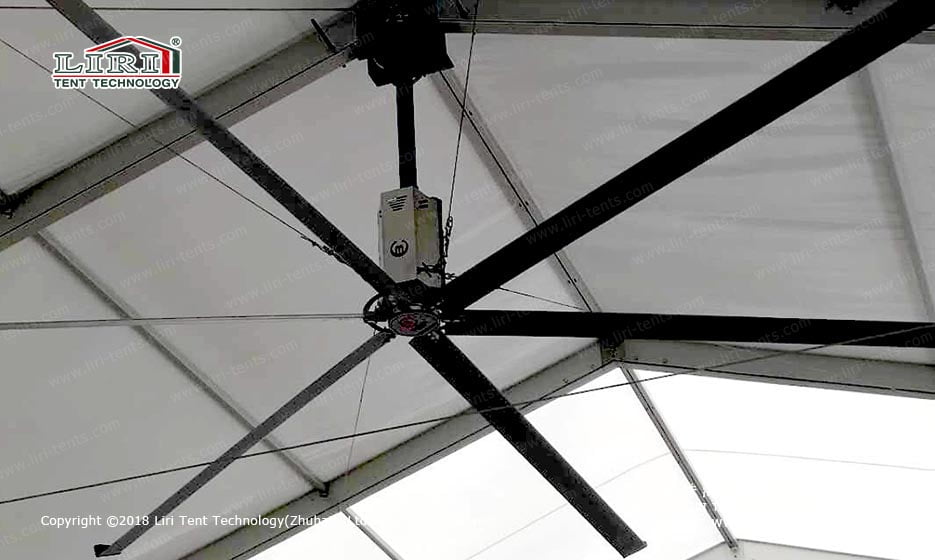
Sometimes openings and shade are not enough. Large ceiling fans fixed to the frame push the air around without chilling the room, and that moving air makes a real difference to how warm people feel. They are common in sports and exhibition marquees, where the roof is high enough to keep them well out of reach. Fans use electricity, so the site needs a supply that can handle them.
Air conditioning is the next step. Cooling units can bring the temperature down in a closed marquee. They suit a formal dinner, a product launch, or a hot climate where the sides must stay shut.
They work best when the walls and doors close properly, because you are paying to cool the air inside. Our page on a marquee supplied with air conditioning shows how those units are fitted.
There are practical points to settle first. Cooling equipment needs power, space outside for the units, and somewhere for the warm air to go. It also adds to the hire or purchase cost and to the time needed on site.
Ask for a clear figure early, so you can compare it with simpler options. A well placed marquee with open sides may need no machinery at all, and that is worth finding out before you budget for it.
What to check before you order
Start with the date, the hour and the number of guests. Those three facts tell you more about summer comfort than any product specification. Add the surface you will build on, whether there is natural shade, and how much electrical power the site can provide. A short list like this makes the conversation with a supplier much more productive.
Then ask which wall and door options come with the marquee, and which are extras. Confirm whether roof vents or fans can be added, and who is responsible for setting them up. If air conditioning is likely, ask about power, noise and where the units will stand. None of these are awkward questions; they are the normal things a buyer should know before committing.
Finally, think about the whole day rather than one moment. A marquee that opens wide at noon may need its sides down by evening if the wind picks up or the air cools. Choosing a structure that can change with the weather is often more useful than choosing one that only suits a perfect afternoon.
Keeping a marquee comfortable in warm weather is mostly a matter of ordinary choices. Pick a decent site, let air in on two sides, give warm air a way out, and add fans or cooling only where the event really needs them. None of it requires technical knowledge, and all of it is easier to arrange before the frame arrives than on the morning of the event.
If you are comparing marquees for a summer event, tell us your date, guest count and site. We can then talk through the wall, roof and cooling options that suit it. A short conversation at the start usually saves a lot of adjustment later.
 Marquee Sidewalls Explained: Glass, PVC or Solid Walls?
 Do You Need a Floor in a Marquee? A Plain Guide to What Goes Underfoot
 Recent Formula E Shanghai E-Prix Marquee Tent: Multi-Zone Race Village Setup
 Marquee Doors and Entrances: A Simple Guide for Buyers
 Marquee Roof Shapes: How the Roof Changes Your Space
 29m x 40m Electric Retractable Basketball Court Marquee for Lock Park Sports Facility