For a multi-day motorsport event like the ABB Formula E World Championship, the host venue rarely provides all of the operations, hospitality, and fan-engagement spaces the championship needs.
The recent Hankook Shanghai E-Prix is a useful case in point: a coordinated package of clear span marquee tents and high peak pagoda tents built the full race village around the existing grandstand infrastructure, handling public entry, accredited personnel, race car display, and VIP hospitality on a temporary footprint that came down after the chequered flag.
For event organizers weighing a permanent build-out against a temporary marquee tent setup, the Shanghai deployment shows what a Formula E race marquee tents package delivers under tight schedules, mixed access flows, and the visual standards of a world championship paddock.
Why Marquee Tents Replace Permanent Structures for Race Weekends
The default for a major motorsport event used to be a permanent hospitality building or a hard-walled structure that lives on the venue for years. For a championship that visits a new city every round, that approach breaks down. Permanent buildings need permits measured in years, lock the venue into a single layout, and leave a structure the next tenant has to remove.
Race organizers need a building-like interior — high ceilings, weatherproof fabric, secure entry — that deploys in days and removes just as quickly once the championship moves on.
Clear span marquee tents answer that brief directly. A typical A-frame aluminum marquee is on the ground inside three to five working days once the bay count, anchor type, and fabric spec are confirmed, and the same tent redeploys to the next round — a unit economics permanent structures cannot match.
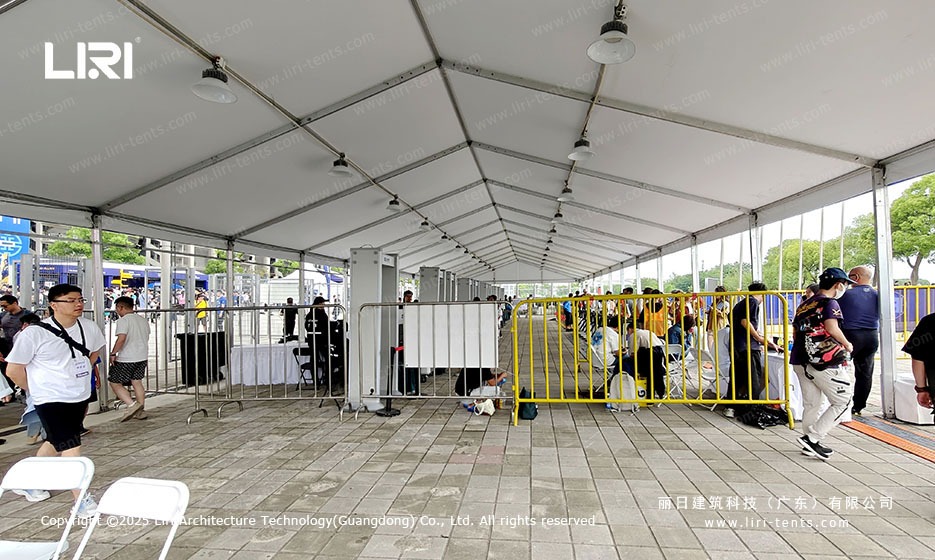
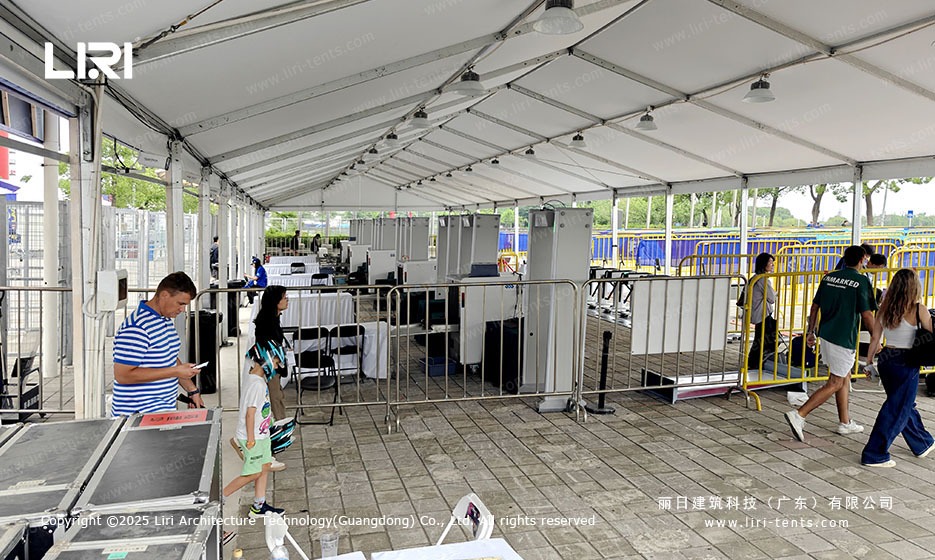
For race operations, the practical impact is visible: a long, open clear span interior fits the turnstile arrays, security lanes, and queueing flow that public entry requires, and ceiling-hung fans keep the air moving while marshals screen thousands of fans per session. A car show marquee grade fabric and aluminum frame read as event infrastructure.
Multi-Zone Race Village: Entry, Accreditation, Fan Village, Hospitality
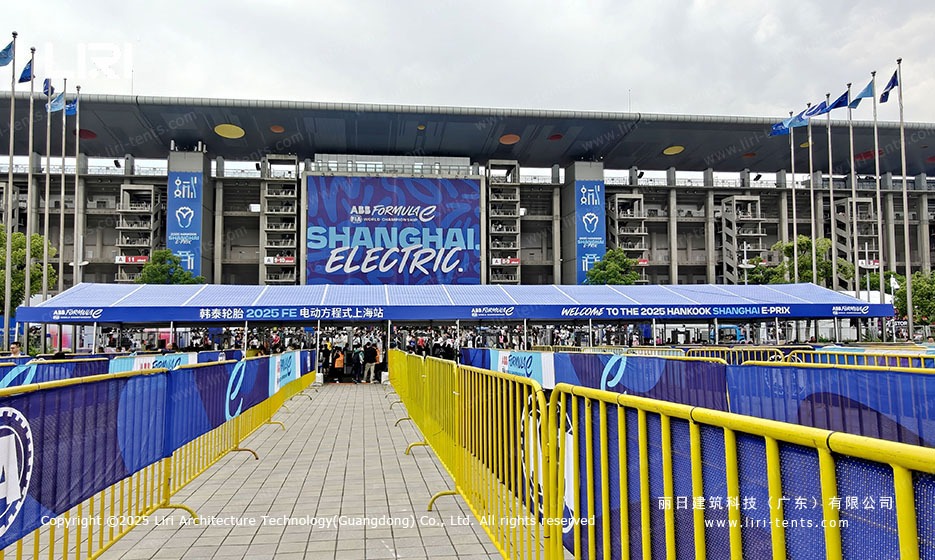
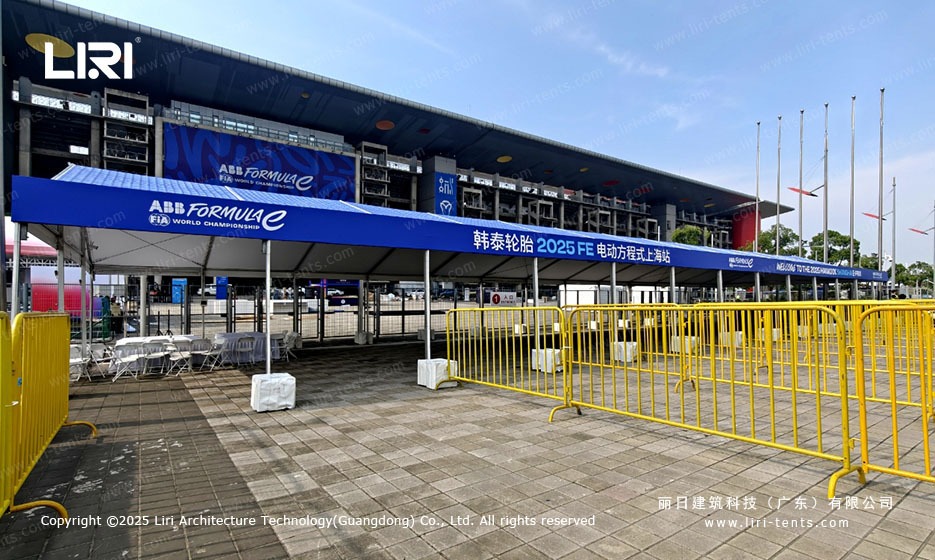
The Shanghai deployment was organized as a small village of distinct zones, each with its own tent footprint and operating tempo. The main public entry was anchored by a long A-frame marquee with a blue roof, signposted with the championship welcome banner and lined with crowd-control barriers to channel ticket-holders into the security and scan lanes.
From there, the public route opened onto the Fan Village — a wider A-frame covered space with the championship show car on a raised display platform, a partner booth row, and standing-height rest areas for the crowd.
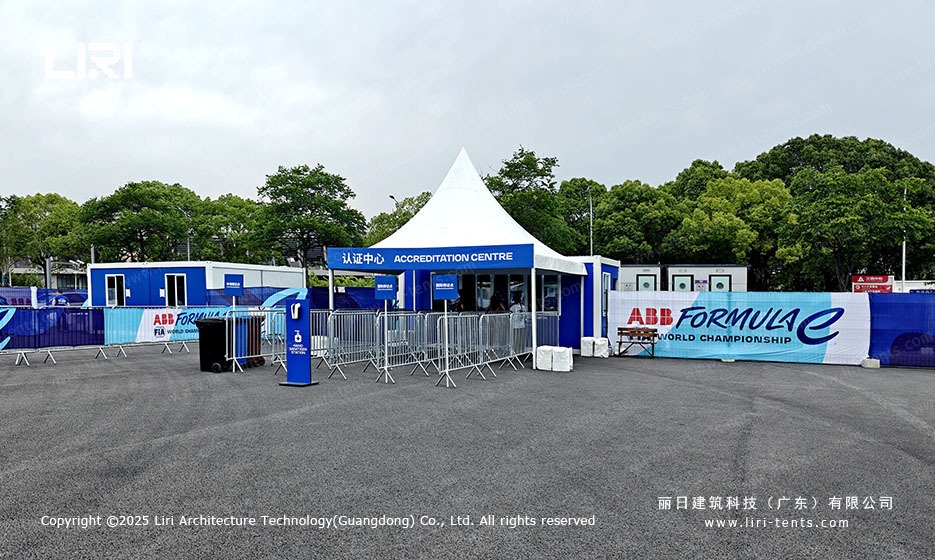
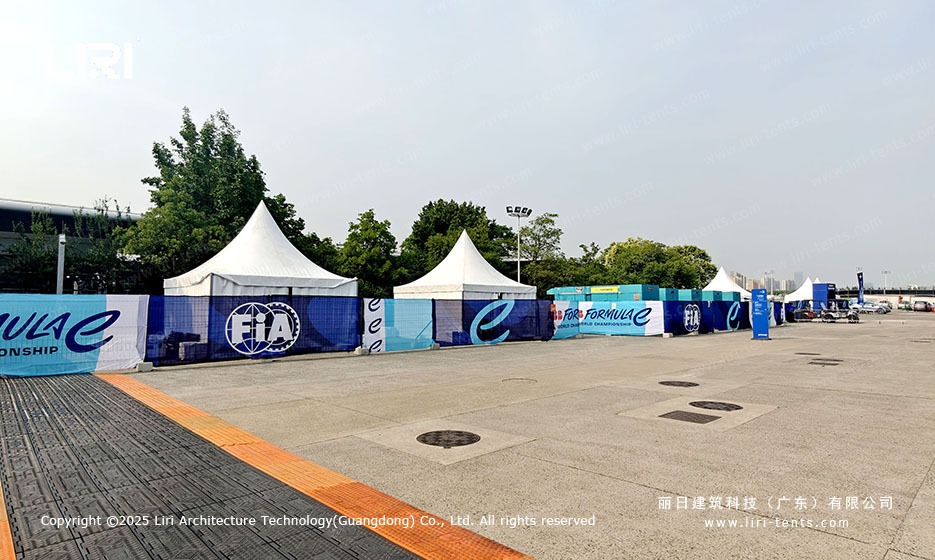
Parallel to the public route, a separate Accreditation Centre ran from a high peak pagoda tent, signposted in Chinese and English, handling media, team personnel, and championship staff. Behind the Fan Village, a hospitality block of pagoda tents with white sidewalls ran the refreshment service, and a longer A-frame with the same blue roof as the main entrance hosted the lounge seating.
The result was clear spatial separation between the four operating modes — public arrival, accredited access, fan engagement, and VIP — without any permanent structure. The model is reusable across any motorsport or Shanghai 25m clear span exhibition marquee deployment.
Pagoda + A-Frame Synergy: Matching Tent Type to Zone Function
The deployment mixed two tent families on purpose. The high-traffic zones — public entry, Fan Village, hospitality lounge — used A-frame aluminum marquees, because the clear span width creates a column-free interior that handles queueing, security lanes, and the visual scale of a championship car on a display platform.
The internal purlin is also the easiest place to hang lighting, fans, and signage, which makes the security checkpoint and hospitality tent look finished rather than improvised.
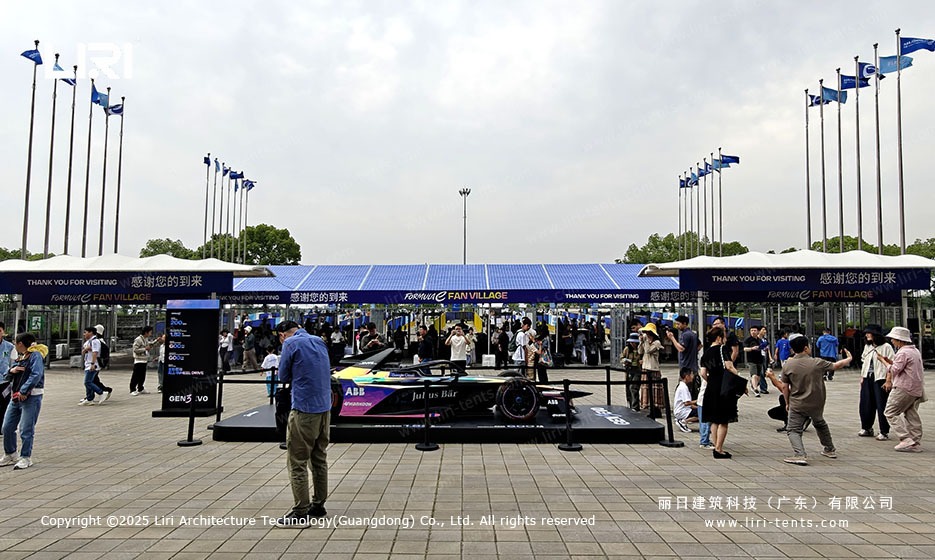
For zones that needed a strong silhouette and a faster install — the Accreditation Centre, refreshment area, partner booths set back from the main crowd route — the organizers used high peak pagoda tents. A pagoda’s peaked roof reads as a destination from a distance, exactly what an accreditation signpost or refreshment stop needs.
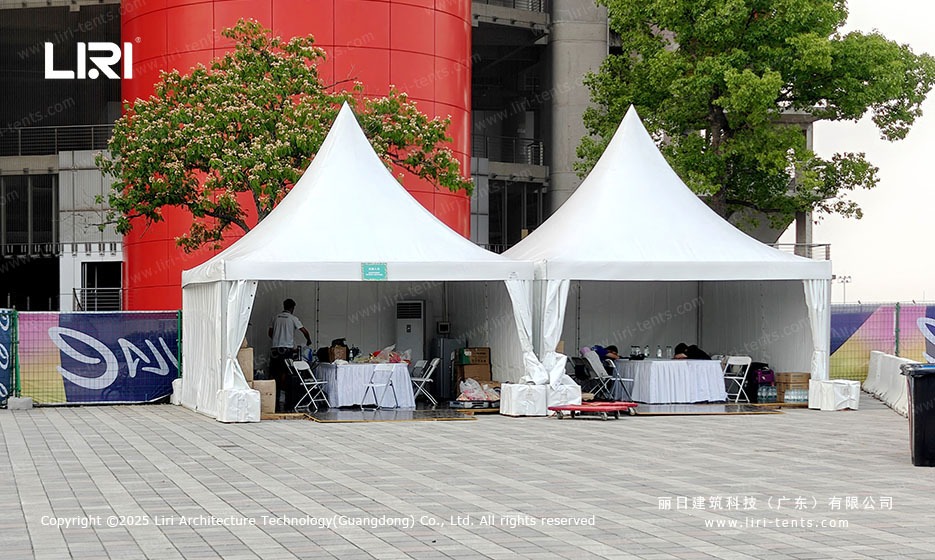
Twin pagodas with full sidewalls also create a closed dining environment that an A-frame cannot match at the same footprint, which is why the catering block used a pair of pagodas joined with shared sidewall fabric rather than a single open-span hall. The two families are not interchangeable; the right answer is to mix them by zone function.
Field Performance Across the Race Weekend
The marquee package went from site survey to operational handover ahead of the practice sessions, and the same footprint stayed up through free practice, qualifying, and the race.
On race day peak, the public entry tent processed ticket scans and bag checks under continuous fan-assisted ventilation, the Fan Village tent kept its display car shaded from the afternoon sun, and the hospitality block held its lounge seating without any weather impact on the guests. A motorsport VIP marquee tent deployment in a beachside climate follows the same operating logic.
After the race, the tent package was struck, packed, and shipped to the next round on the calendar. For an organizer evaluating transparent fan zone marquee tent options for a similar event series, the lesson from the Shanghai deployment is that a multi-zone race village runs more cleanly on a small kit of reusable clear span and high peak tents, anchored in concrete ballast or base plates on the host surface, and re-styled with branded roof fabric per round rather than rebuilt. The same aluminum frame turns up at the next city with a different livery — that is the operating model.
FAQ
How many marquee tents does a Formula E race village typically need?
A mid-size E-Prix like the Shanghai deployment runs four to six tent footprints: one for public entry, one for accreditation, one or two for the Fan Village, and one or two for hospitality. Each footprint can be a single bay or a multi-bay marquee depending on peak crowd.
What tent type is the standard fit for a public entry security checkpoint at a race?
A clear span A-frame aluminum marquee. The column-free interior fits turnstile arrays and security lanes, and the high ceiling allows fans and lighting to be hung without blocking security camera sightlines.
Why use pagoda tents alongside A-frame marquees at the same event?
Pagodas give a strong peaked silhouette for signposted zones like accreditation or refreshment stops, and they install faster than a full A-frame. Pairing the two lets the organizer match the tent type to the zone function rather than over-building every zone.
How long does a race village marquee setup take to deploy?
Once bay count, anchor type, and fabric spec are confirmed, a multi-zone race village of four to six tent footprints is typically on the ground and weather-tight within three to five working days, with the same package struck and packed in two to three days.
Can the same marquee package be reused for the next race on the calendar?
Yes — the main operating advantage. Aluminum frame marquees and pagodas are designed for repeated install and strike cycles, and the branded roof fabric can be swapped per round so the same frame carries a different livery at every city.
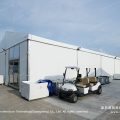 Sanya Formula E Marquee Tent: Multi-Zone Layout for Electric Racing Event
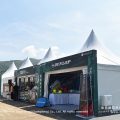 Pagoda & A-Frame Marquee Layout for Davis Cup-Style Tennis Tournament at Hengqin
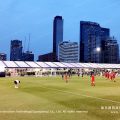 Transparent Marquee Tent for FIFA Fan Zone in Thailand: 20m Clear Span Build
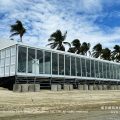 Motorsport VIP Marquee Tent: Beachside Racing Hospitality Solution
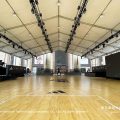 25m Clear Span Exhibition Marquee: Shanghai Urban Plaza Sports Arena
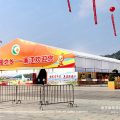 All Weather Event Marquee for Temporary Exhibition Hall