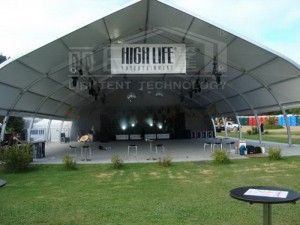
A TFS curve tent is an odd sight in a winter photo: a sleek arched hall sitting on a frozen field, glowing from inside while snow piles up on the roof. But that is exactly why event organizers pick it for Christmas markets, holiday parties, and seasonal retail pop-ups. The curved aluminum frame sheds snow without extra shoveling, and the insulated atmosphere inside keeps mulled wine, live music, and shoppers comfortable when the temperature drops. Organizers who plan cold-season events often start with a frame event marquee for cold weather to test the site before committing to a full season.
The TFS series is a clear-span structure, which means the interior has no center columns. That single fact changes how you plan a winter event: you can run long rows of stalls down the middle, hang string lights from the ridge, and place a stage or a Santa grotto at the far end without working around poles. The space reads as one big hall, which is what visitors expect from a proper Christmas market rather than a scatter of small tents. For smaller pop-ups, a cold weather marquee for winter markets offers the same shelter in a more compact footprint.
Why the Curve Design Works in Cold Weather
The curved roof is not just a styling choice. Its shape lets snow slide off naturally and reduces the surface area exposed to wind, so the structure stays stable in conditions that would flatten a flat-roof canopy. The frame is engineered aluminum, and the cover is a coated PVC membrane that stays flexible in low temperatures, so it does not crack when you tension it on a frosty morning.
Heating is the next consideration. A clear-span hall holds heat far better than a row of linked booths because there are no interior walls to leak warm air. Many operators use indirect warm-air heaters placed outside the tent, which keeps the air dry and the space smoke-free inside. For deeper planning, the marquee heating strategy for winter events covers heater sizing, ventilation, and condensation control in one place.
Layout Ideas for a Christmas Market or Party
Start with the traffic flow before you place a single stall. Put the entrance on the side that faces the car park, run a central aisle down the full length of the hall, and line both sides with vendor booths. Place high-traffic food stalls at the back so guests walk past the crafts and gifts first, and keep a warm lounge area near the exit with seating and a photo point.
Budget the season as a whole, not just the opening weekend. A Christmas market that runs for four weeks needs a maintenance plan: check the anchors after every heavy snowfall, keep the entrance clear of ice, and schedule a quick interior sweep each morning before the gates open. Ventilation matters too, because warm air from food stalls meets cold fabric and forms condensation; roof vents and door gaps give that moisture an escape route, which protects the decor, the electrics, and the customers’ coats.
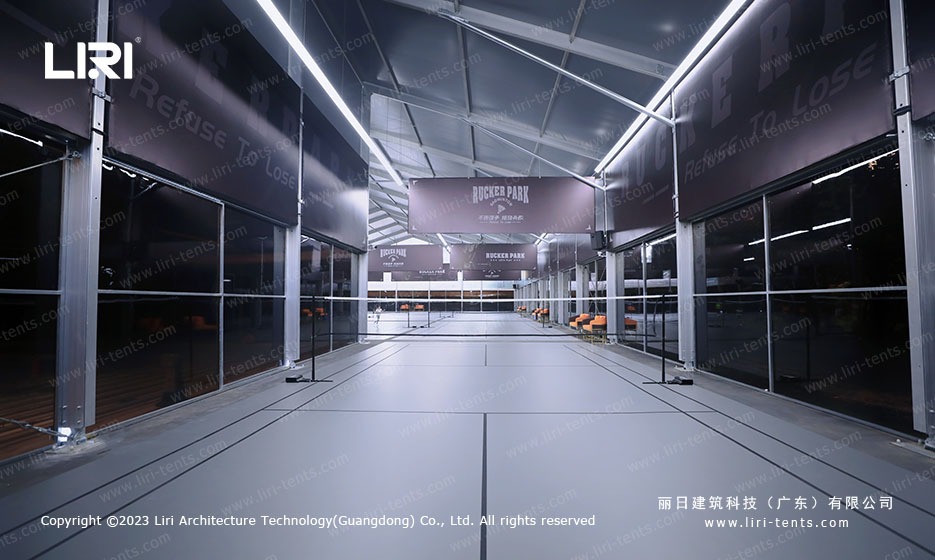
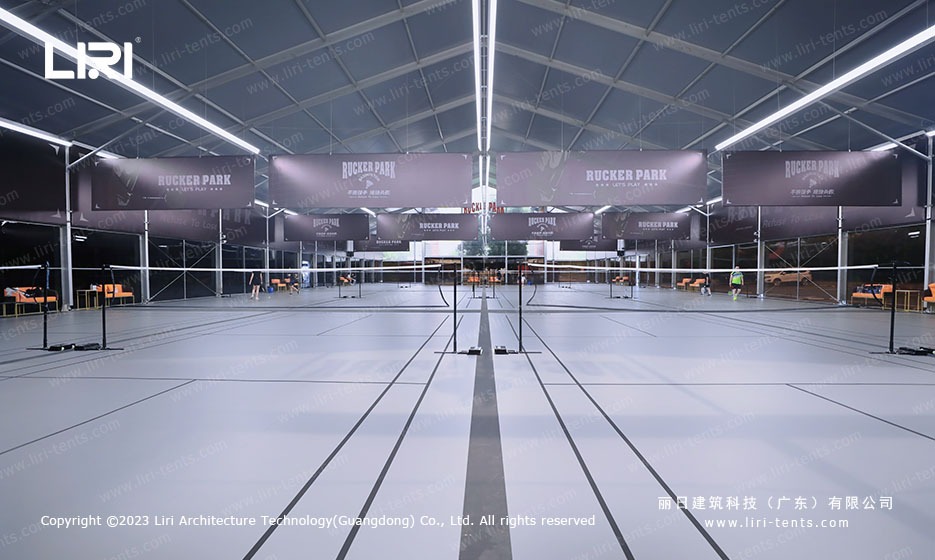
Lighting does most of the festive work. Warm white string lights along the ridge, up-lights on the curved walls, and a few spotlights on the stage turn the neutral shell into a holiday scene. If the event runs over several weeks, add branding panels on the end walls and printed covers where the budget allows. For venues that need an even bigger footprint, the TFS curve structure marquee shows the same system scaled up to a multi-court sports hall, and an all weather marquee for temporary events handles the shoulder months before the snow arrives.
Frequently Asked Questions
Can a TFS curve tent be used outdoors in winter?
Yes, the curved roof sheds snow and the aluminum frame is rated for cold-climate wind loads. The PVC membrane stays flexible at low temperatures, so the structure can stay up for a full market season.
How do you heat a TFS curve tent for a Christmas event?
Indirect warm-air heaters placed outside the tent are the standard solution. They keep the air dry, avoid smoke inside, and can be sized to match the hall volume for steady temperatures around the clock.
What is the difference between a TFS curve tent and a frame marquee?
A TFS curve tent uses a curved aluminum truss that creates a barrel-roof profile with full clear span. A standard frame marquee has a flatter roof, which suits rectangular layouts but holds snow more easily in winter.
How many stalls fit inside a TFS curve tent?
As a rule of thumb, a 20 by 30 meter TFS tent fits about 40 standard market stalls of 3 by 2 meters with a central aisle. Wider units or fewer stalls leave room for a stage, a bar, and a lounge, and a custom TFS marquee for indoor halls can be tailored to the exact floor plan.
 20m x 118m TFS Curve Structure Tennis Court Marquee for 8-Court Sports Park
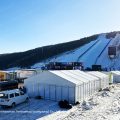 Frame Event Marquees for Extreme Cold Winter Outdoor Space
 How to Keep Event Marquee Warm in Winter?
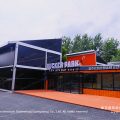 Badminton Court Marquee | Year-Round Sports Hall Solution
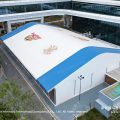 Custom 25x40m TFS Sports Marquee Tent for Basketball Hall
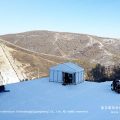 Cold-Weather Event Marquees for Outdoor Winter