Marquee tent buyers often compare individual frame prices and fabric grades, but the production method behind the structure matters just as much. When a factory builds tents from standardized spare parts rather than one-off components, every order benefits from faster lead times, lower costs, and easier maintenance. This article explains why tents standardization production has become the default approach for commercial marquee suppliers serving rental companies, event organizers, and industrial clients.
Why Standardized Components Make Marquee Tents More Flexible
Standardization means the roof purlins, eave beams, corner castings, and keder profiles are produced in fixed modular sizes and then combined into different widths and spans. All the components are independent, so none of them is locked into a single tent model. If your rental inventory grows from a 10m clear span to a 25m hall, the same beam series and connection castings can be reused across both units.
This interchangeability is what separates a modular aluminum system from a bespoke steel weld-up. With standard parts, you can reconfigure a structure for a different footprint next season, add a gable end, or extend the length without ordering a completely new frame. Operators who own a modular aluminum marquee fleet find that one parts inventory supports every unit they rent out, which is why 20m modular aluminum marquee tents remain a popular starting point.
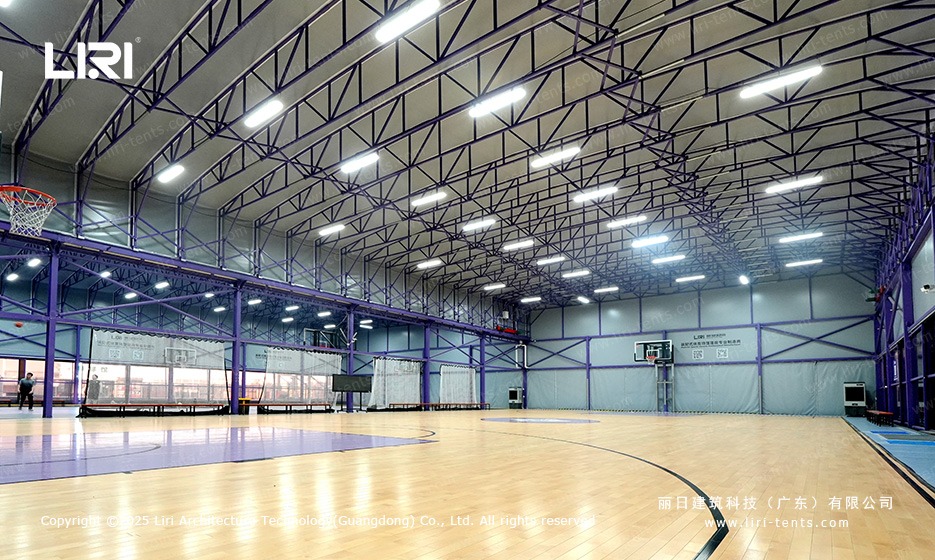
Standardization Production vs. Custom Fabrication: A Practical Comparison
Buyers weighing a standardized marquee against a fully custom structure should compare lead time, spare parts, and long-term cost. Standardized frames ship in 15-25 days because profiles are pre-extruded and anodized in batches, while fully custom fabrication often needs 40-60 days. A damaged roof purlin or base plate is replaced from stock instead of being remanufactured, which keeps rental downtime below one day.
Tooling and extrusion costs are spread across many units, so per-square-meter pricing drops noticeably on repeat orders. For businesses that move tents between sites, this also means reassembling without new parts. If no component is missing, the same aluminum frame can be dismantled, transported, and rebuilt at another venue, and all materials remain recyclable at end of life. That is a real advantage when you compare temporary warehouse storage marquees against permanent concrete buildings that cannot be relocated.
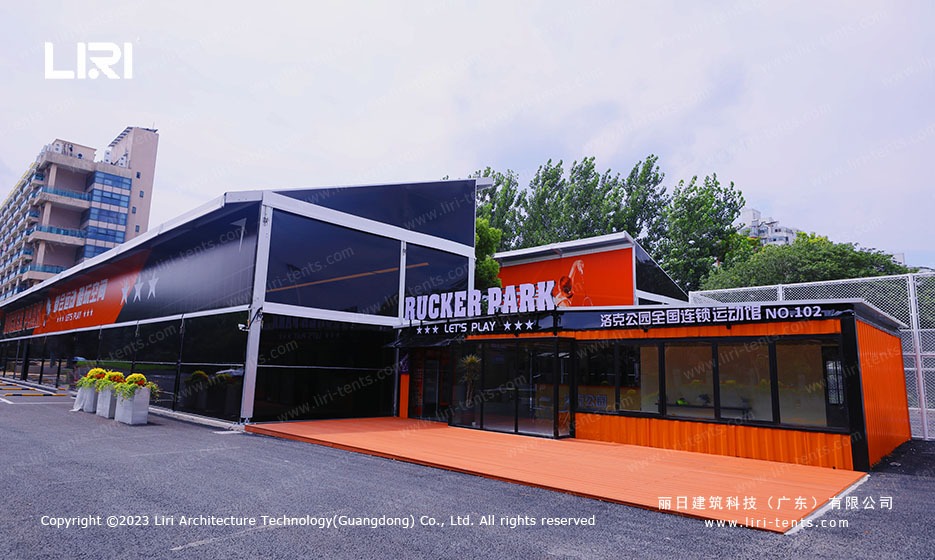
Quality Control Improves When Every Tent Shares the Same Parts
Factories that standardize their marquee production can also standardize their inspection process. The same jigs, torque specs, and fabric welding tolerances apply to every unit, so quality problems are caught at the extrusion and anodizing stage rather than at the customer’s site. This is why flexible industrial space solutions built on modular frames tend to show fewer leaks, looser joints, and mismatched panels after years of use.
Buyers should still verify the alloy grade and coating thickness before signing. Look for hard-pressed extruded aluminum with an anodized finish, hot-dip galvanized connectors, and double PVC-coated fabric with UV and flame-retardant treatment. When these specifications are matched with a standardized production line, the result is a marquee that behaves predictably across multiple setups.
FAQ: Common Questions About Tents Standardization Production
What does tents standardization production mean in practice?
It means the factory manufactures roof, wall, and frame components in fixed modular sizes and assembles them into different tent widths and heights. The parts are interchangeable across models, which shortens production time and simplifies future expansion or repair.
Can standardized tents be rebuilt at a different location?
Yes. Because the components are standard and reusable, the frame can be dismantled and erected again at another site without adding or replacing parts, as long as nothing is lost during transport. All aluminum and fabric materials are recyclable when the tent reaches the end of its service life.
Are standardized marquee frames weaker than custom-built steel structures?
No. Hard-pressed extruded aluminum alloy with an anodized finish meets commercial wind and snow loads when engineered correctly, and it resists corrosion far better than untreated steel. The modular design also allows engineers to add intermediate columns and bracing for larger clear spans.
How does standardization affect the price of a marquee tent?
Standardized parts reduce tooling and inventory costs, so factories pass part of that saving to buyers. Repeat orders of the same model benefit most, and spare parts stay affordable because they are mass-produced rather than made to order.
Need a marquee built on a standardized aluminum frame for your next project? Review the clear span sports marquee case study to see how a modular system performed in year-round use.
→ Browse Commercial Marquee Tents for Your Project
 How a Clear Span Sports Court Marquee Created a Year-Round Basketball Arena
 Wedding Marquee Tent – Outdoor Bangkok Reception Venue
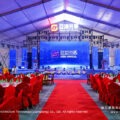 Event Marquee Tents for Corporate Year-End Party
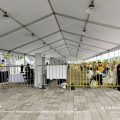 Recent Formula E Shanghai E-Prix Marquee Tent: Multi-Zone Race Village Setup
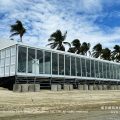 Motorsport VIP Marquee Tent: Beachside Racing Hospitality Solution
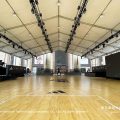 25m Clear Span Exhibition Marquee: Shanghai Urban Plaza Sports Arena