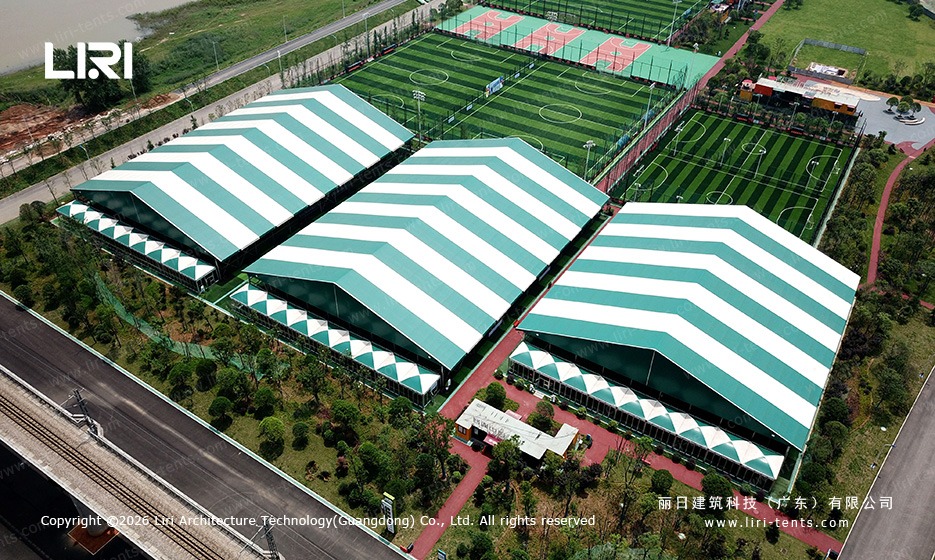
To be honest, it pains me to see stadium owners losing thousands in revenue because of a single rainstorm on an open-air pitch.
Even worse are those who try to save pennies by installing flimsy frames that creak in the wind—that isn’t just a bad investment; it’s gambling with your brand’s reputation and player safety. In the modern sports industry, space isn’t an expense; it’s your primary engine for production.
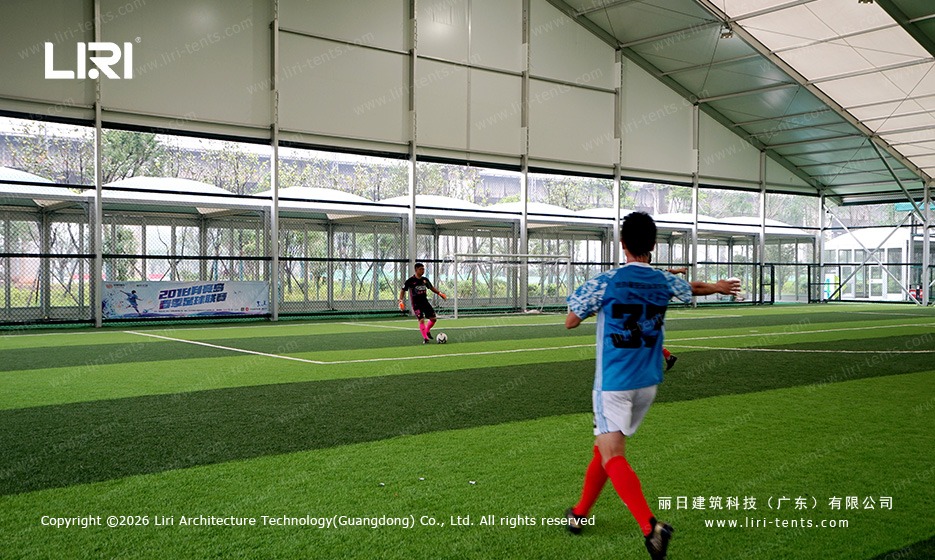
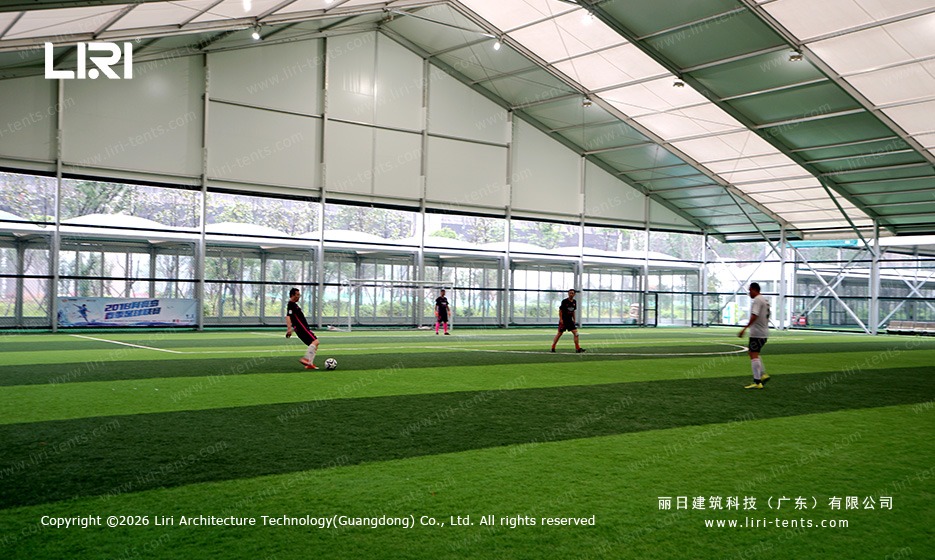
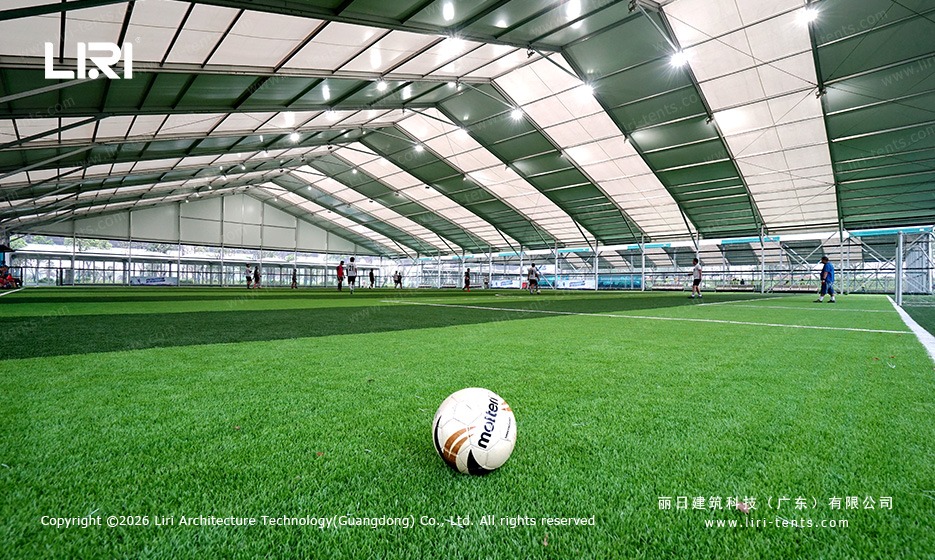
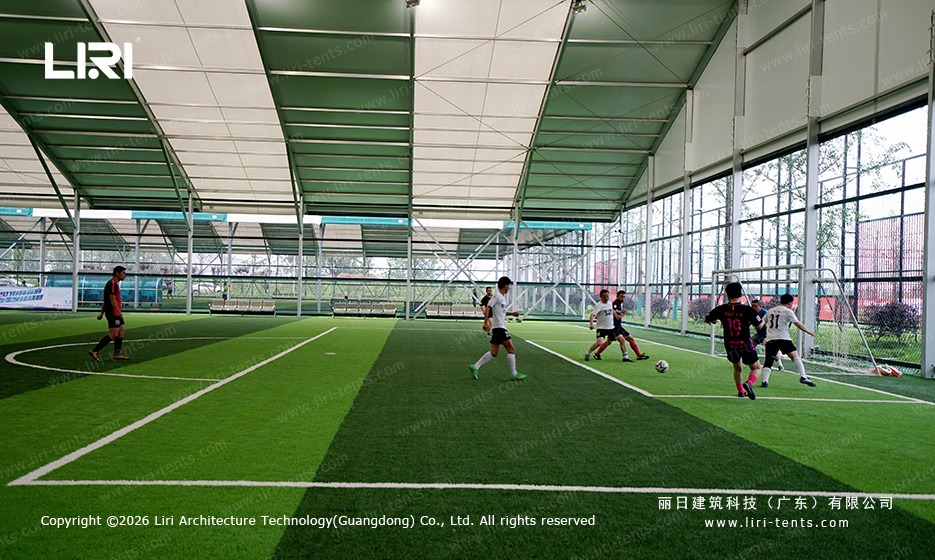
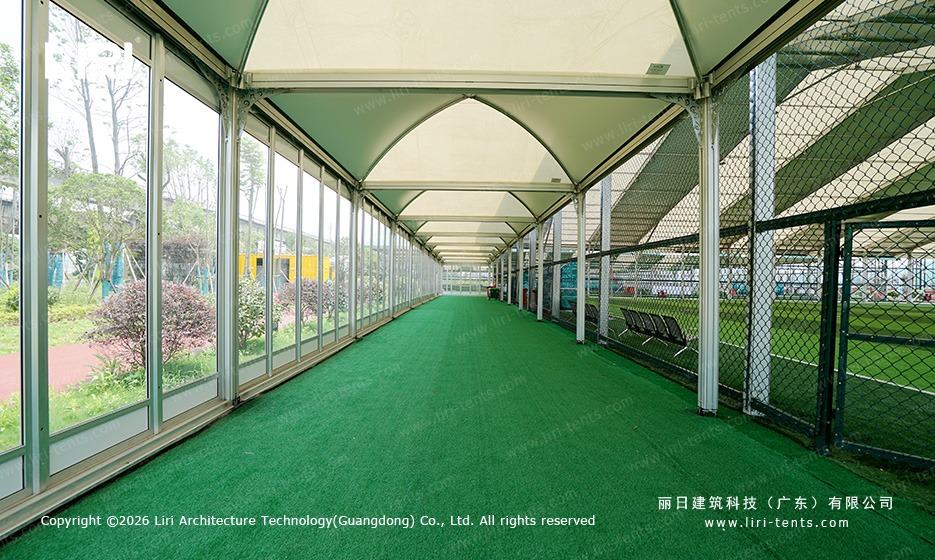
| Dimension | Specification Details |
| Size Range | Spans from 10m to 60m; length can be extended infinitely |
| Wind Resistance | 100km/h – 120km/h (Certified engineering standards) |
| Core Materials | Aviation-grade corrosion-resistant aluminum frame + Heavy-duty weather-resistant canopy |
| Environmental Adaptation | -30°C to +70°C; handles heavy rain, high UV, and coastal salt spray |
| Estimated Lifespan | 20+ years for the frame; 5-8 years for the modular canopy (replaceable) |
Scenario Challenges: Why Your Open-Air Pitch is “Burning Money”
Whether it’s the bureaucratic nightmare of permanent construction permits or increasingly volatile weather, traditional concrete stadiums are often too slow and too expensive. If you are in a coastal area, salt spray will turn standard steel into a rusted mess within a year. If you are in the north, heavy snow loads can easily crush those so-called “temporary sheds.”
The modular aluminum solution I recommend. It doesn’t require complex deep foundations. It can be “planted” directly on existing concrete or even leveled grass, making it perfect for urban green belts or even rooftop conversions.
Accessories as Solutions: From “Tents” to Premium Athletic Halls
Clients often ask me, “Isn’t this just a big tent?”
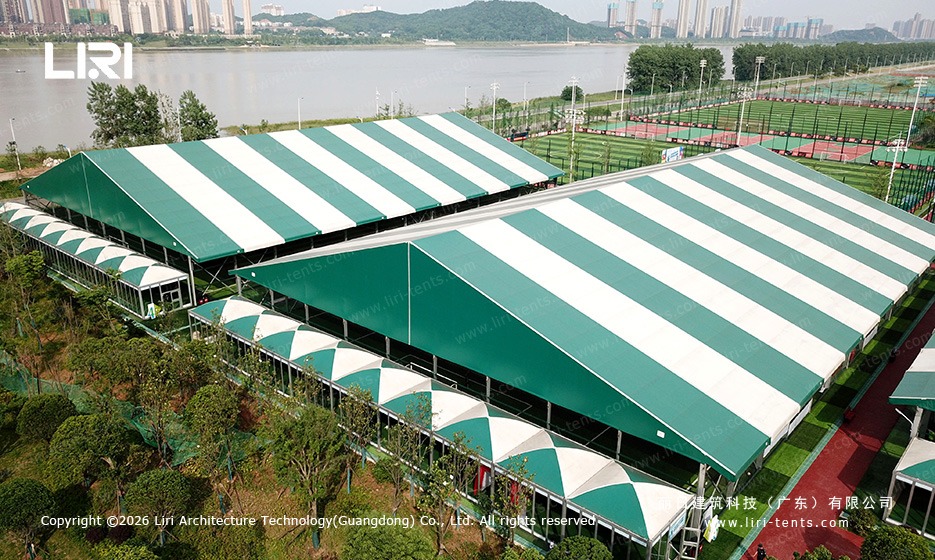
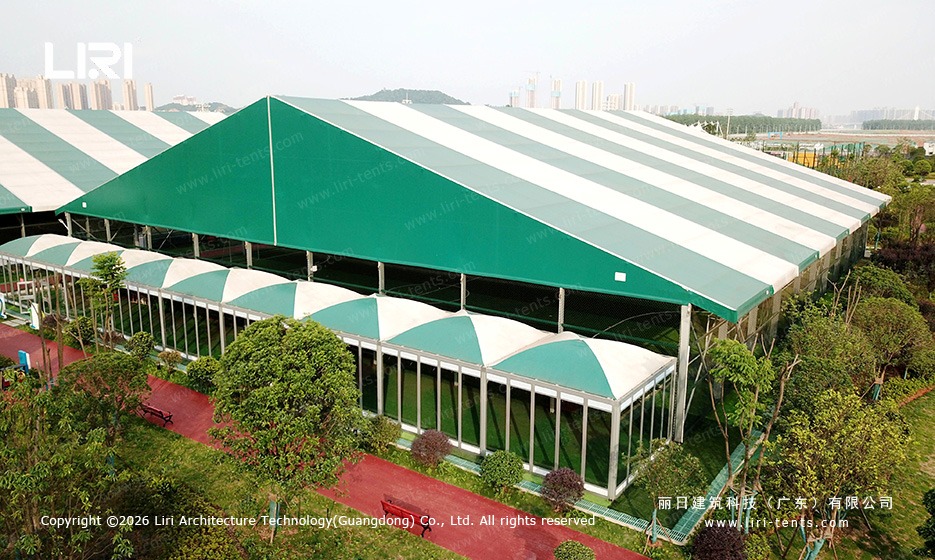
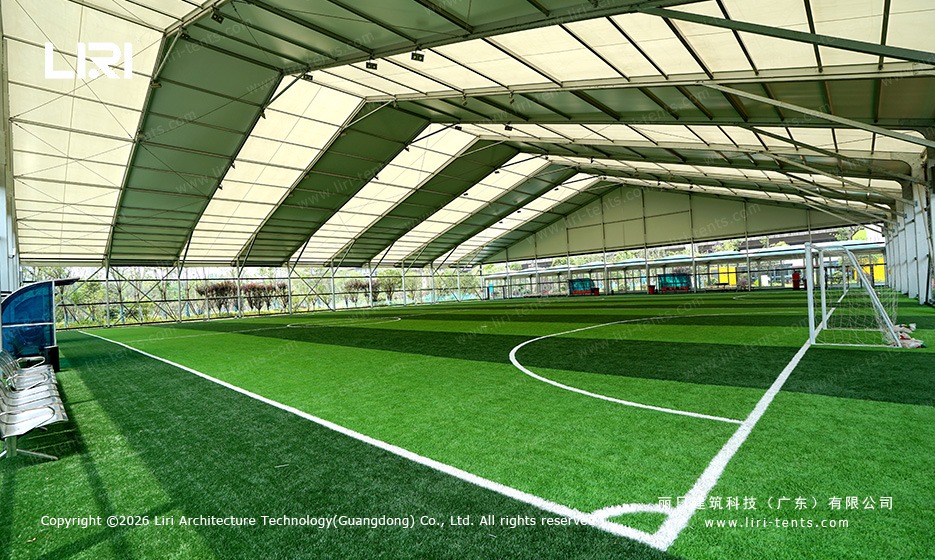
My response is simple: “Once you integrate professional lighting, ventilation, and specialized turf systems, it is a high-performance stadium with wind resistance exceeding Level 10.”
-
Heavy-Duty Weather-Resistant Canopy: We don’t use cheap materials that yellow and leak light.
-
Sidewall & Netting Systems: we utilize a semi-open structure. This ensures natural airflow (let’s face it, nobody wants to play in a sauna) while the high-strength netting solves the safety risk of stray balls.
-
Drainage & Resilience: Our gutter systems ensure that even during a downpour, the pitch stays bone-dry. While competitors are canceling matches, your players are still scoring goals.
Efficiency and Compliance: Say Goodbye to Construction Red Tape
Let’s talk straight: getting a construction permit for a traditional building can take six months of paperwork. Because these modular structures are often classified as “temporary facilities” or “demountable equipment,” the approval process is significantly streamlined in most jurisdictions.
Our teams can complete the full assembly of a standard 5-a-side pitch in 7 to 10 days. This means by the time your competitor is still filing paperwork, you are already selling memberships and recouping your investment. This rapid deployment isn’t just a feature; it’s a massive commercial moat.
Financial Logic: Asset Allocation, Not Just Consumption
From a financial perspective, this solution offers unparalleled flexibility. If your land lease ends or urban planning changes, this entire frame can be 100% disassembled and rebuilt at a new location.
-
Land Utilization: Zero-destruction installation means no long-term damage to the land. When you move, you leave the site exactly as you found it.
-
Sustainability (ESG): Aluminum is 100% recyclable. Investing in eco-friendly infrastructure isn’t just good for the planet; it’s a powerful marketing tool for your brand in today’s B2B landscape.
FAQ
-
Q: Will the frame corrode in coastal environments?
-
A: No. Aviation-grade aluminum undergoes an anodic oxidation process, providing corrosion resistance far superior to painted steel.
-
-
Q: Does it get too hot inside during the summer?
-
A: The canopy has high thermal insulation properties. Combined with industrial exhaust fans or our semi-open wall design, the perceived temperature is usually 5-8°C lower than outside.
-
-
Q: Can it really withstand a typhoon?
-
A: These structures are certified for wind loads above 100km/h. Provided they are anchored to our engineering standards, they are far more stable than many permanent “shacks.”
-
 Large Exhibition Marquee for Sale: High-Capacity Modular Venue Solutions
 15x30m Aluminum Event Marquee for Outdoor Meeting
 Sports Marquee for Sale: High-Performance Modular Spatial Solutions for Modern Athletics
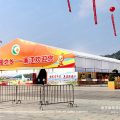 All Weather Event Marquee for Temporary Exhibition Hall
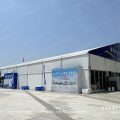 Large Heavy Duty Marquee For Automotive Industry Exhibition
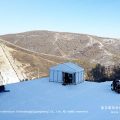 Cold-Weather Event Marquees for Outdoor Winter