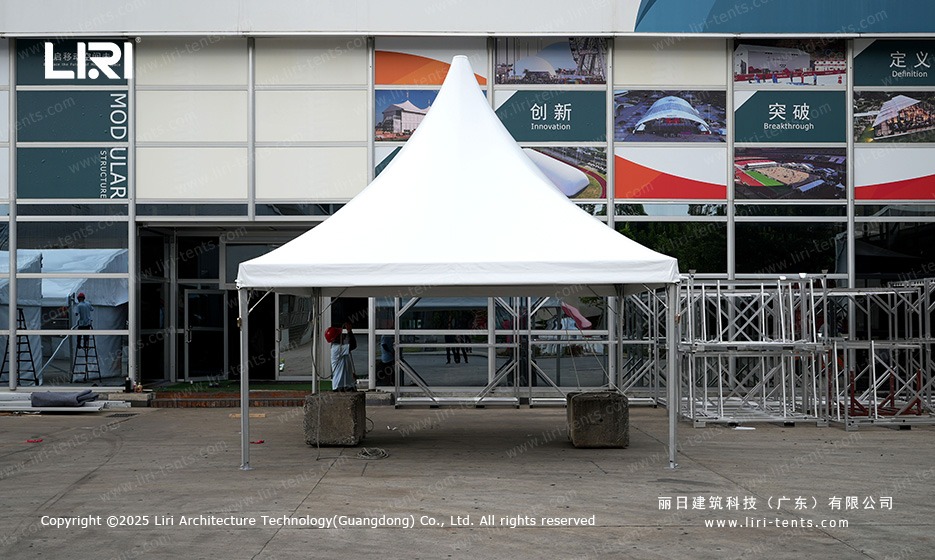
A 5×5 meter pagoda tent at an exhibition center entrance does one specific job: it marks the gate and gives visitors a covered stop before they walk inside. The high peak roof catches the eye from a distance, which matters when your booth sits at the back of a crowded hall. For other pagoda gazebo tents used at outdoor events, the same shape works for product launches, food stalls and reception desks.
Why a Pagoda Shape Works Better Than a Flat Roof at an Exhibition Gate
Flat-roof marquees look functional, but they disappear in a row of standard booths. A pagoda peak rises above the crowd line, so attendees spot the entrance before they reach the building. The four-sided slope also sheds rain faster than a flat deck because water runs off all faces at once rather than pooling in the center.
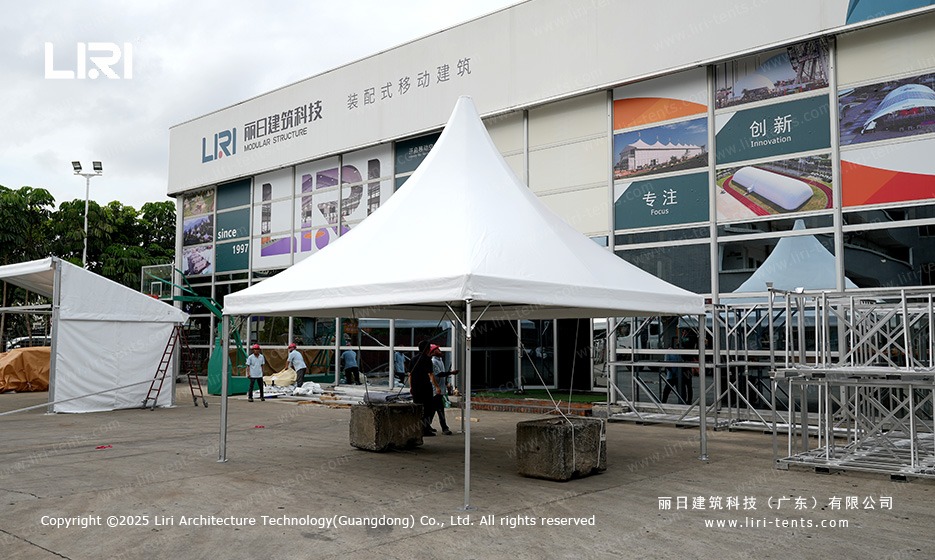
The crew chose white PVC fabric for the roof because it reflects heat under midday sun. A darker color would absorb more thermal load and raise the interior temperature by several degrees. For a similar high peak pagoda shelter installed at a garden party, the fabric choice follows the same logic but the sidewall configuration changes based on the season.
Frame, Fabric and Sidewall Specs for a 5x5m Unit
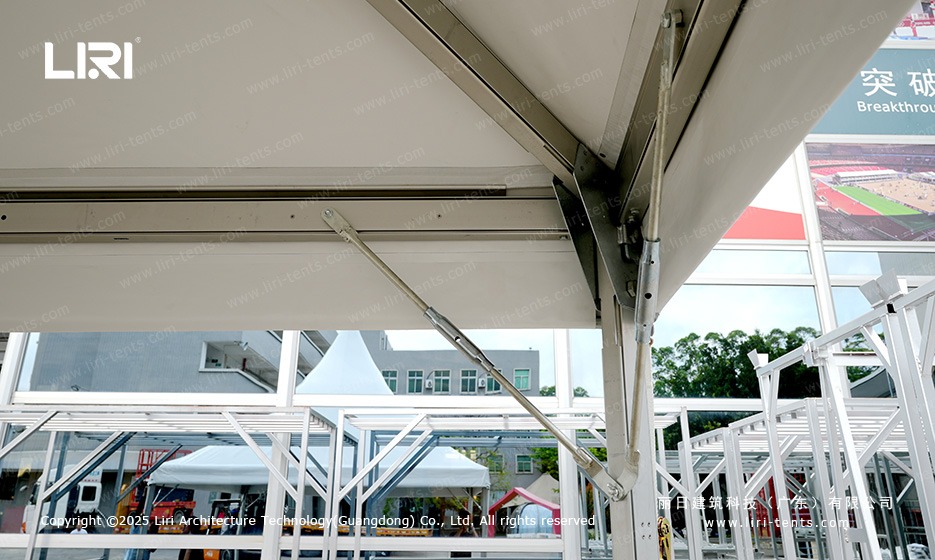
The aluminum frame uses 6061-series extrusions with bolted joints. No welding is required on site, so the crew assembles the structure with hand tools in under two hours. The roof fabric is 850 gsm PVC with a UV-stabilized coating, which the manufacturer rates for three to five years of continuous outdoor exposure.
Sidewall Options
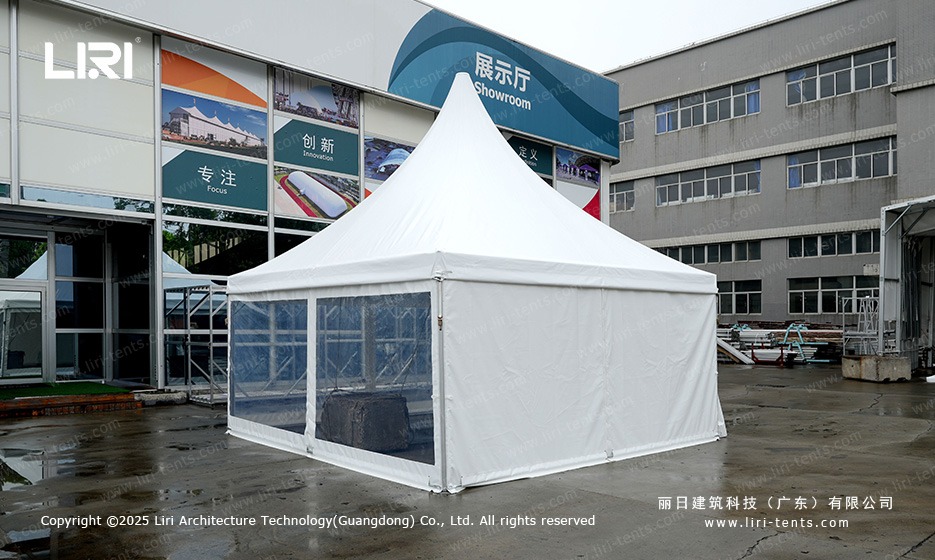
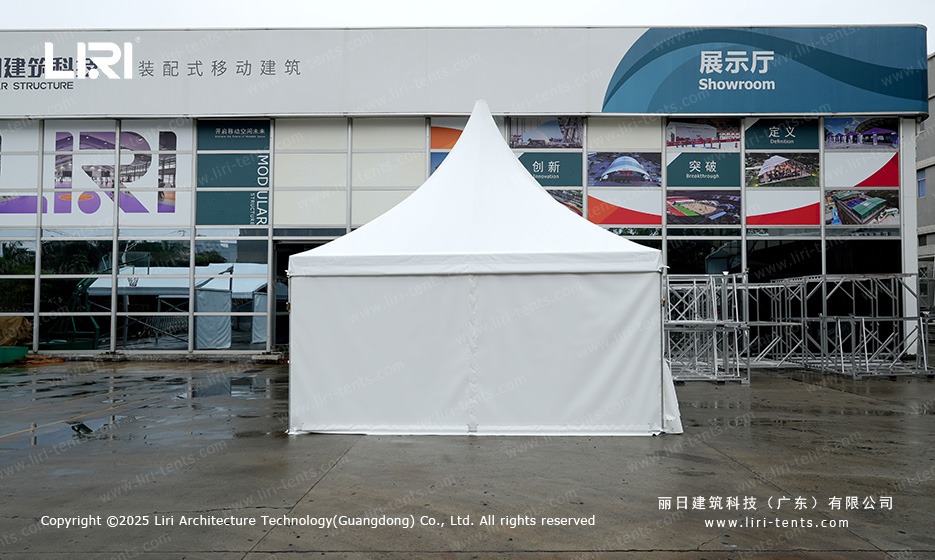
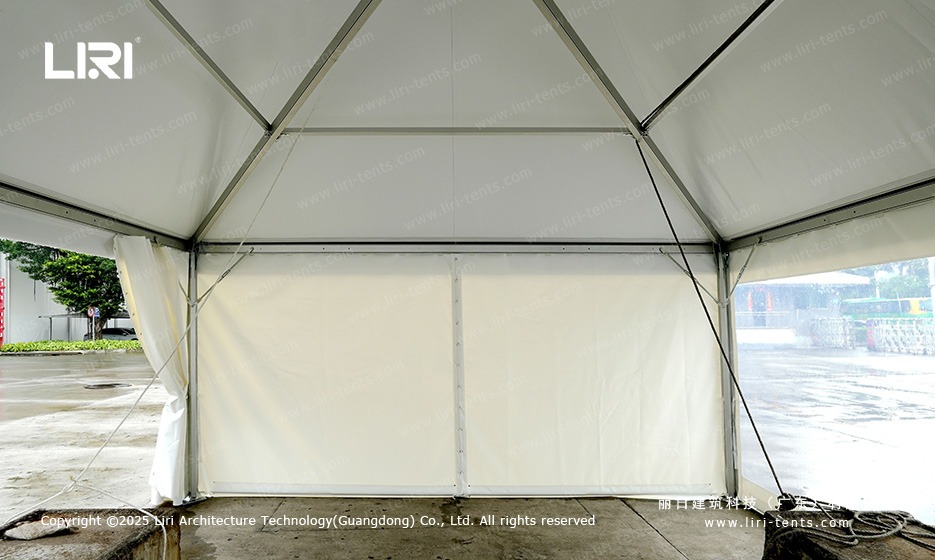
This unit runs solid white walls on three sides and a clear PVC panel on the fourth. The transparent section faces the approaching foot traffic, so visitors can see inside before they step under the roof. An aluminum frame gazebo marquee with the same layout costs less to ship because the frame packs into fewer bundles than a steel truss system.
Wind load for a 5x5m pagoda typically falls between 80 and 100 km/h when properly ballasted. That figure assumes the structure sits on a level surface with no nearby obstacles that create turbulence.
Installing on Concrete: Ballast Instead of Pegs
The exhibition site had a concrete plaza, so ground pegs were not an option. The crew placed two concrete blocks at each corner leg instead. Each block weighs roughly 200 kg, which holds the frame down in winds up to the rated limit without drilling into the slab.
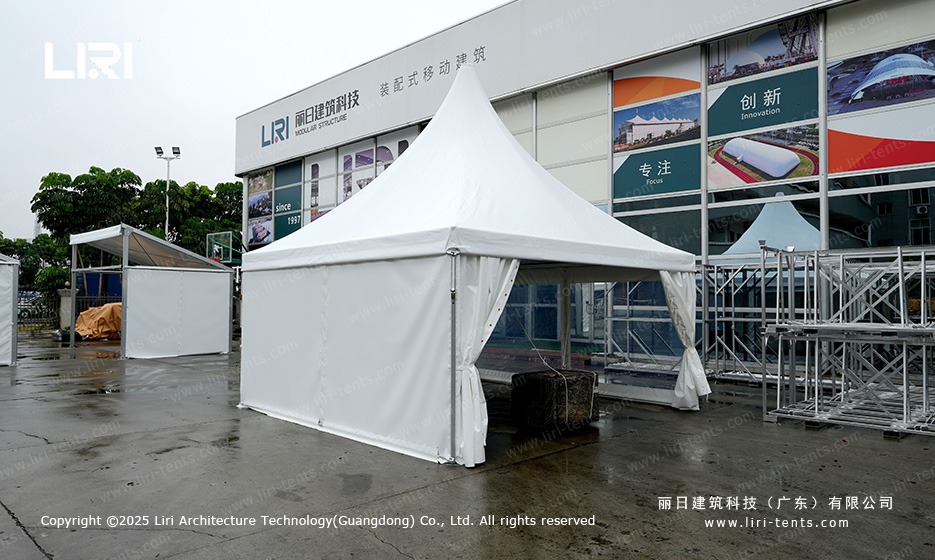
Ballast installation takes longer than pegging because the blocks must be positioned before the frame goes up. However, it leaves no holes in the host’s pavement, which most venue managers prefer. As a result, the total setup time for this 5x5m unit ran about three hours from arrival to completion.
When a Small Pagoda Beats a Larger Clear Span
A 5x5m pagoda covers 25 square meters of floor area. That fits a small registration desk, a product display table, and standing room for 15 to 20 people. If you need seated dining or stage space, a clear span marquee makes more sense because the column-free interior scales up without the visual weight of multiple peaks.
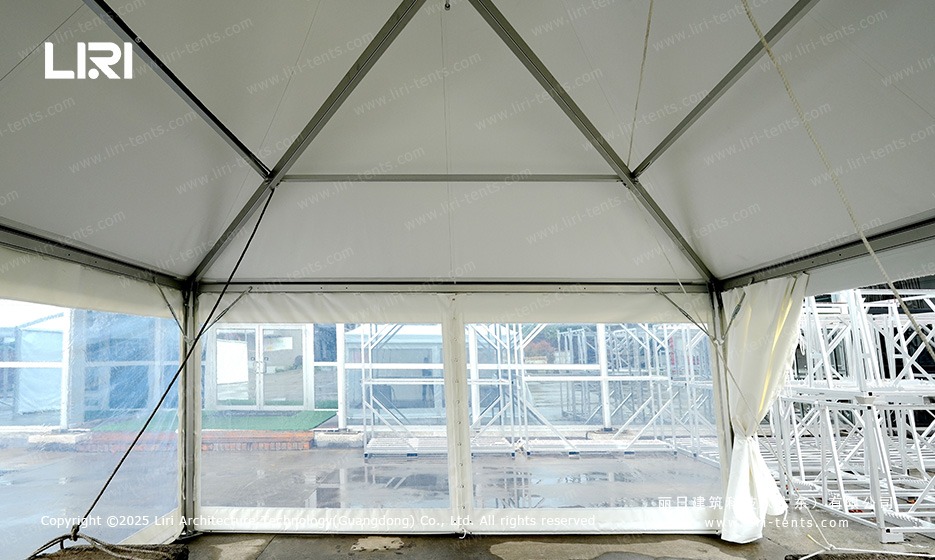
However, the pagoda shape costs less per square meter to buy and transport. The compact footprint also fits into tight sites where a larger tent would block fire lanes or neighbor access. For a pagoda gazebo for outdoor events that serves as a secondary structure beside a main hall, the low profile and fast install are the main advantages over a full-size clear span.
Frequently Asked Questions
How long does it take to set up a 5x5m pagoda tent?
A trained crew of three people can erect a 5x5m aluminum pagoda in two to three hours on a prepared surface. Ballast placement adds roughly 30 minutes compared to ground peg installation.
Can a pagoda tent withstand heavy rain?
Yes. The four-sided peaked roof sheds water immediately, and the welded PVC seams prevent leaks at the joints. The photos from this site were taken after rainfall, and the interior stayed dry throughout.
Do you need a permit for a 5x5m pagoda at an exhibition center?
It depends on local regulations and venue rules. Most indoor plazas treat a 5x5m temporary structure as furniture rather than a building, but always confirm with the venue manager before delivery. Some cities require a temporary event permit for any structure over 3 meters in height.
What is the difference between a pagoda and a gazebo tent?
The terms overlap in common use. A pagoda refers specifically to the high-center-peaked roof style with straight eaves, while a gazebo can include octagonal or hexagonal frames. In commercial catalogs, both names often describe the same product family. Check out a pagoda and clear span combination to see how both shapes work together on one event site.
 Hainan Coffee Festival Marquee Tent | Clear-Span Main Hall Plus Pagoda Vendor Booths for a Tropical Trade Month
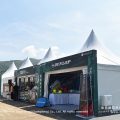 Pagoda & A-Frame Marquee Layout for Davis Cup-Style Tennis Tournament at Hengqin
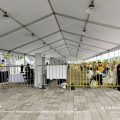 Recent Formula E Shanghai E-Prix Marquee Tent: Multi-Zone Race Village Setup
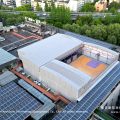 Purple Gable Twin Peak Marquee | Two Retractable Roof Bays Over a Rooftop Basketball Court
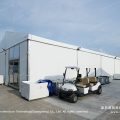 Sanya Formula E Marquee Tent: Multi-Zone Layout for Electric Racing Event
 Race Track Marquee Tent | Spectator Lounge and Multi-Zone Race Village for a GT Championship Weekend