Parking is one of the few site requirements that grows with every event, exhibition, or industrial facility, and permanent parking structures rarely keep pace. A carport marquee tent delivers covered parking in days rather than months, at a fraction of the cost of a concrete or steel building, and it can be relocated when the site plan changes. For operators comparing long-term options, a rolling door storage marquee shows how the same frame family serves both parking and storage duty. This article covers the frame specifications, fabric options, and sizing decisions that matter when buying a parking marquee from a manufacturer.
Carport Marquee Frame and Cover Specifications
The frame of a parking marquee is built from hard-pressed extruded aluminum alloy 6061/T6, which keeps the structure light enough to handle while staying strong under wind and snow. All aluminum parts are anodized to prevent blackening and corrosion where they contact the cover. Eave connections use hot-dip galvanized steel inserts, and connecting components are galvanized over 80 microns, so the hardware outlasts the first cover replacement.
For the cover, double PVC-coated polyester at 850 g/m² is the standard choice for parking use. It is waterproof, UV resistant, and flame retardant to DIN 4102 B1 or M2, and it holds up to years of sun exposure. A translucent roof option keeps daylight inside so drivers can find their vehicle without artificial lighting, which also cuts operating cost for long-term parking operators. The roof is fixed with a spindle tensioning system, and a valance in the eave area gives the structure a uniform, finished look.
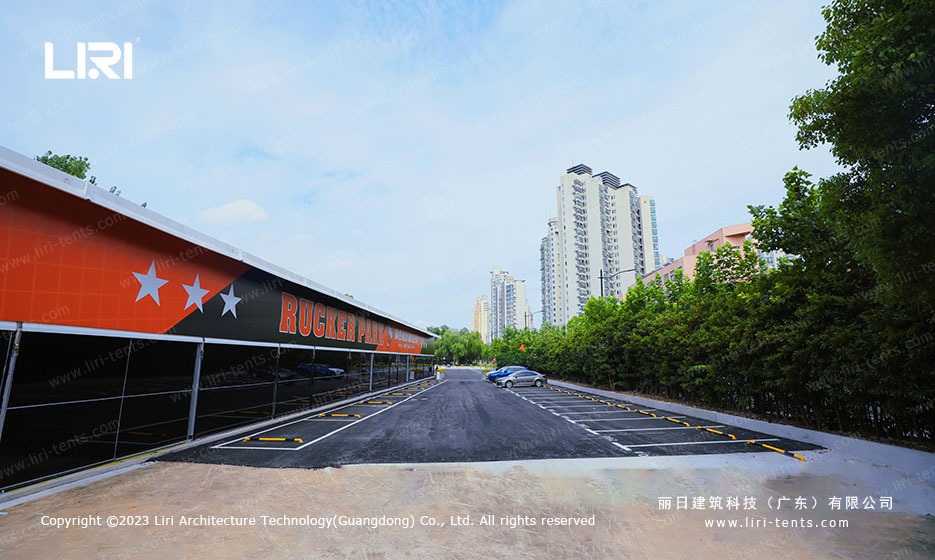
Sizing a Parking Marquee: Clear Width, Column Spacing, and Layout
Parking layout drives the tent dimensions. A standard parking bay is 2.4-2.8m wide, so a 10m clear span accommodates three bays, a 15m span fits five bays, and a 20m span fits seven. Plan the internal column layout against the drive lanes first, because center columns reduce usable space for vehicle maneuvering even when the clear span is generous.
Height is the second decision. A minimum eave height of 3.5m clears vans and SUV roof racks, while 4-4.5m suits buses and small trucks. For event parking that must also host sponsor displays or registration desks, go wider rather than taller so the interior stays flexible. Many operators standardize on a car parking canopy structure that can be extended bay by bay as demand grows.
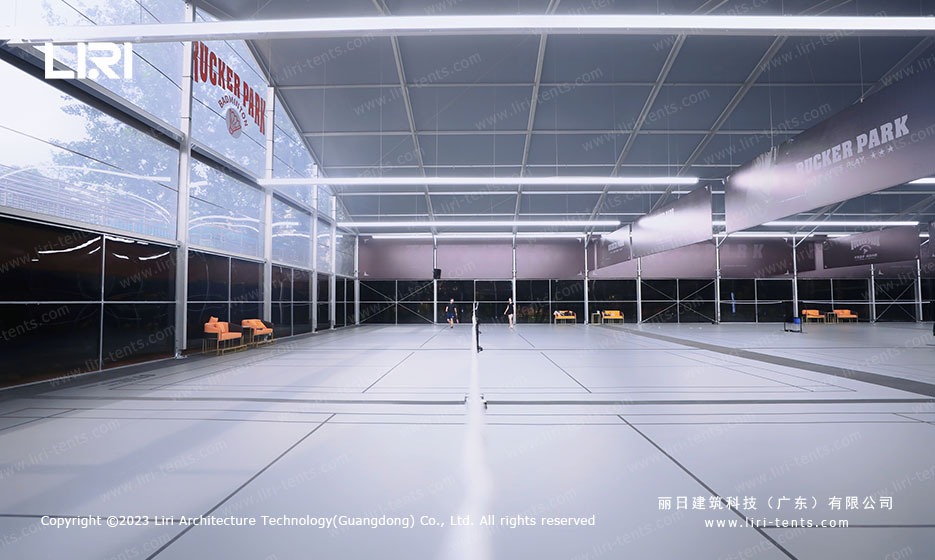
Anchoring and Site Preparation for Long-Term Parking Tents
A parking marquee that stays in place needs real anchoring, not just ballast. Use concrete blocks or ground anchors sized for the local wind zone, and add extra anchors on the windward corners. The base plates are adjustable, which compensates for unleveled surfaces, but the site should still be graded so water runs away from the structure instead of pooling at the walls.
For semi-permanent parking lots, consider a hard standing surface or compacted gravel under the tent. This keeps vehicles from churning up mud and extends the life of the fabric, which never touches the ground. Side walls can be added in cold or windy seasons and removed in summer, turning the same frame into an open canopy or an enclosed carport as the weather requires. A carport tent for sale with this flexibility covers both seasonal parking and permanent overflow lots.
Comparing a Parking Marquee With Permanent Parking Buildings
The cost difference between a marquee and a permanent parking deck is the deciding factor for most buyers. A concrete or steel structure requires foundation work, building permits, and a construction schedule measured in months, while a marquee is delivered as a kit and erected on prepared ground in days. When the parking need is temporary, seasonal, or tied to a project with an end date, the marquee avoids the sunk cost of a building that will be demolished.
Durability is the trade-off to understand. A well-maintained aluminum frame with a quality PVC cover serves 10-15 years, whereas a permanent deck lasts longer but costs several times more. For facilities that need covered parking now and may change location later, the marquee is the pragmatic option. Event organizers with shifting venue schedules typically choose frame marquee tents for car shows for the same reason: fast setup, full enclosure, and complete relocation flexibility.
FAQ: Carport Marquee Tents for Parking
How much does a carport marquee tent cost compared with a permanent car park?
A marquee costs a fraction of a concrete or steel parking structure per square meter, and it requires no foundation or building permit in most jurisdictions. The saving is largest for temporary and seasonal parking, where a permanent building would be demolished after a few years of use.
Can a parking marquee be used year-round in cold climates?
Yes, when it is sized and anchored for local wind and snow loads. Add full side walls for winter, use extra ground anchors, and choose a 850 g/m² cover with flame-retardant and UV-resistant treatment. Interior lighting can be suspended from the frame for long winter evenings.
What is the typical lifespan of a parking marquee?
An anodized aluminum frame lasts 15-20 years with routine maintenance, while the PVC cover typically needs replacement after 8-12 years depending on sun exposure. Roof re-tensioning and panel cleaning extend both lifetimes.
Do I need planning permission for a temporary parking tent?
It depends on the jurisdiction and the installation period. Structures kept up for a short event season often fall under temporary-use rules, while year-round installations may require a permit. Check with the local authority and confirm the tent height and footprint against site zoning before ordering.
If you are planning covered parking for a venue or facility, the outdoor car show marquee overview shows how the same frame family performs under real event conditions.
→ Request a Parking Marquee Quote
 Purple Gable Twin Peak Marquee | Two Retractable Roof Bays Over a Rooftop Basketball Court
 Recent Formula E Shanghai E-Prix Marquee Tent: Multi-Zone Race Village Setup
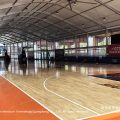 How a Clear Span Sports Court Marquee Created a Year-Round Basketball Arena
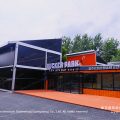 Badminton Court Marquee | Year-Round Sports Hall Solution
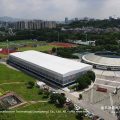 20m x 118m TFS Curve Structure Tennis Court Marquee for 8-Court Sports Park
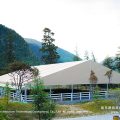 30m x 35m Equestrian Arena Marquee for Mountain Valley Riding Resort