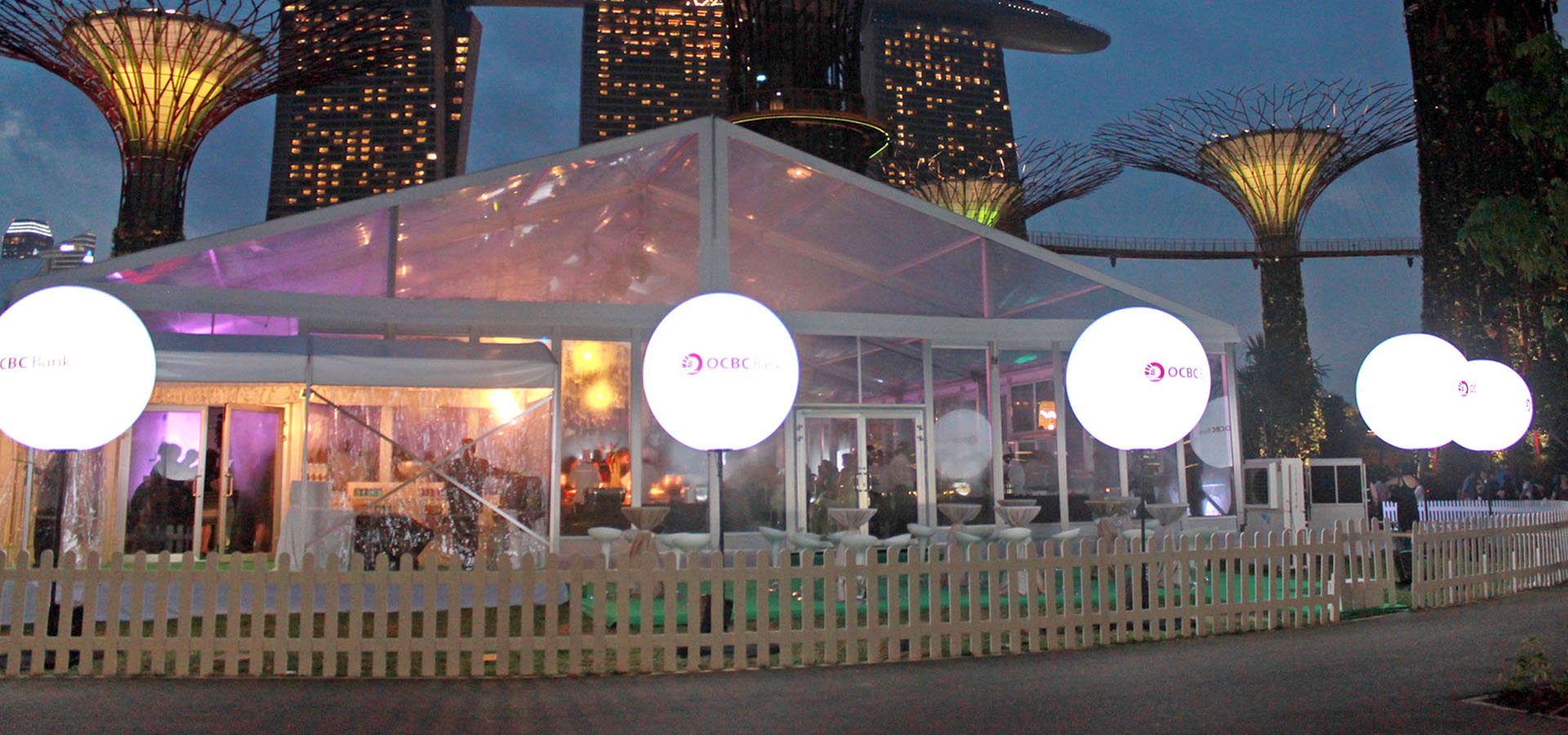
A large party marquee turns an ordinary backyard, parking lot, or field into a covered venue in a single day. The structure arrives in prefabricated sections, the crew bolts the frame together, the fabric roof goes on top, and within hours you have a weatherproof room that can hold a hundred guests or more. Because the shell is temporary, you can place it where a permanent building would never be allowed, and remove it just as quickly when the event ends. modular aluminum marquee structures for large parties follow the same prefabricated build process in wider spans.
Size is the first decision, and it drives everything else: table count, dance floor, bar, stage, and the space between them. For a standing cocktail party, plan about one square meter per guest; for a seated dinner, plan closer to 1.3 to 1.5 square meters. A 15 by 30 meter marquee, for example, seats roughly 250 guests for dinner with a dance floor, while the same footprint handles over 400 people standing.
Choosing the Right Frame and Fabric
Frame marquees come in two main types: pole tents and aluminum frame tents. Pole tents are cheaper and very quick to pitch, but the center poles and perimeter ropes interrupt the floor plan. Aluminum frame tents use a self-supporting truss, so the entire interior stays open and the sides can be fully glazed or fitted with doors. For a party with a dance floor and a band, the frame style is usually worth the extra cost.
The fabric matters as much as the frame. A double-coated PVC polyester cover blocks UV, sheds rain, and resists tearing, while a single-layer polyethylene cover is lighter but wears out faster. Ask about the flame-retardant rating and the wind load before you book. An all weather marquee for outdoor parties will list its load ratings openly, so compare those numbers across suppliers.
Layout, Lighting, and Site Preparation
Start with the floor plan before the crew arrives. Mark the entrance, the bar, the buffet line, the stage, and the dance floor on paper, then check that the delivery truck and the crew can reach the site. Grass should be mowed short and the ground should drain well; if rain is forecast, lay a solid floor so guests do not stand in mud. Power is the detail people forget most often: lights, sound, catering equipment, and heaters can easily draw 30 to 50 amps, so confirm the supply before the event.
Decide early whether to rent or buy, because the economics change the choice. A one-off birthday or wedding usually favors rental: the supplier delivers, installs, and removes the structure, and you pay only for the days you use it. A venue owner or an events company that runs dozens of parties a season often saves money by owning a marquee, especially when it is the same heavy duty marquee for large exhibitions line used at trade events. Check the local planning rules as well, because some areas limit how long a temporary structure can stand in one place, and that window decides whether a four-day festival or a three-month venue is even possible.
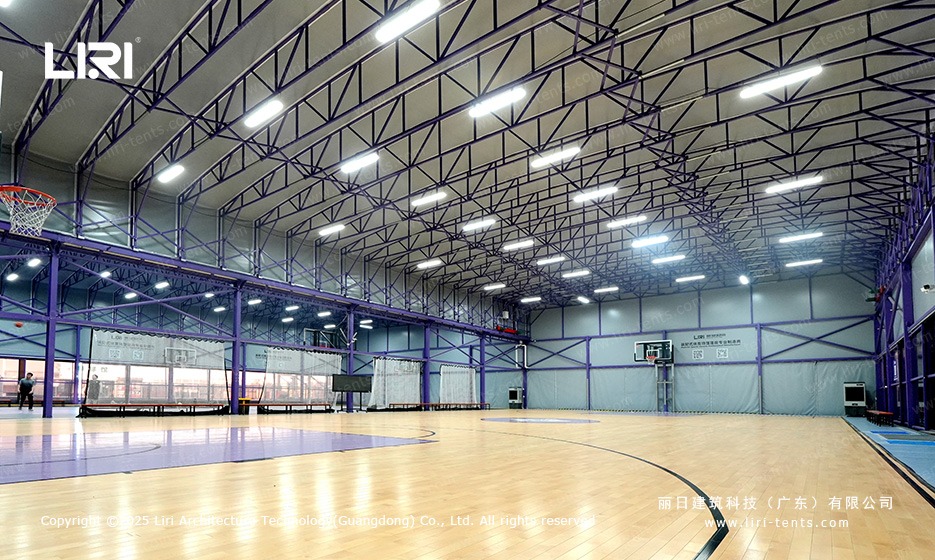
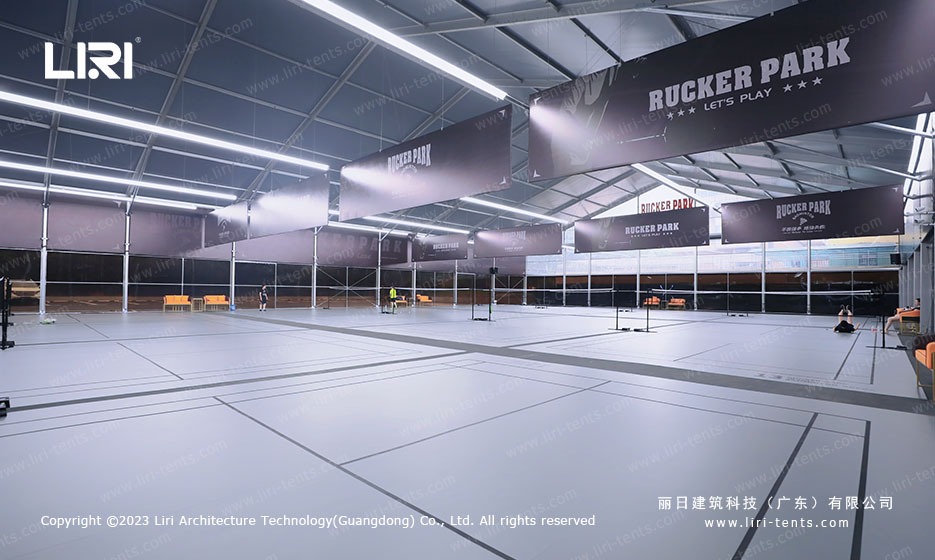
Lighting changes how the space feels more than any other single element. String lights across the roof, up-lights on the perimeter, and a few spotlights on the stage turn a plain white shell into a party room. If the event runs late, plan the lighting to be layered: bright for dinner, softer for dancing, and warm around the bar. A frame marquee system for exhibitions works on the same principle, except the decor is replaced by booths and product displays, while a clear span sports marquee for year round events shows how far the same shell can go with a fixed floor and professional lighting.
Frequently Asked Questions
How long does it take to set up a large party marquee?
A crew of four to six can erect a 15 by 30 meter aluminum frame marquee in roughly one full day. Site preparation, flooring, and electrical work usually add another half day, so plan two days from delivery to guest-ready.
Can a large party marquee survive strong wind?
Yes, when the frame is engineered for the local wind load and the anchoring is done properly with ground stakes or ballast. Always check the rated wind speed on the supplier’s spec sheet and avoid erecting the tent in storm conditions.
What is the difference between a pole tent and a frame marquee?
A pole tent relies on center poles and guy ropes, which limits the floor plan. A frame marquee is self-supporting, so the interior is completely open and the walls can be straight, glazed, or fitted with real doors.
Do we need a solid floor for a large party marquee?
Not always, but a floor makes the venue feel finished and keeps guests dry on grass. A modular PVC or wood floor also protects heels, wheelchairs, and dance floors, so most premium events add one, just like the permanent installations used at trade events.
Browse Large Party Marquee Tents
 Wedding Marquee Tent – Outdoor Bangkok Reception Venue
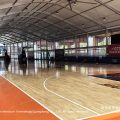 How a Clear Span Sports Court Marquee Created a Year-Round Basketball Arena
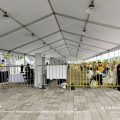 Recent Formula E Shanghai E-Prix Marquee Tent: Multi-Zone Race Village Setup
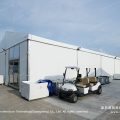 Sanya Formula E Marquee Tent: Multi-Zone Layout for Electric Racing Event
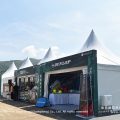 Pagoda & A-Frame Marquee Layout for Davis Cup-Style Tennis Tournament at Hengqin
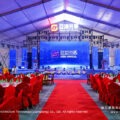 Event Marquee Tents for Corporate Year-End Party