A small dome tent solves the problem of covering a compact footprint without posts: the arched roof carries the load to perimeter frames, so a 3m or 4m clear span stays open from wall to wall. The eave height is 2.6m, which lets a standard door frame, a market stall counter or a reception desk stand under the roof without clearance issues. Because the structure is small and light, a two-person crew can set it up on a car park, a lawn or a rooftop terrace in well under an hour.
Small Dome Tent Sizes and Layout Options
The clear span is available in 3m and 4m, with no fixed limit on length: additional 3m bay sections bolt on to extend the tent as far as the site allows. That modularity makes the same unit work for a single vendor booth on one booking and a 12m-long hospitality corridor on the next.
Inside a 4m bay you can fit two rows of banquet tables with a centre aisle, or a bar counter along one wall and seating along the other. The dome roof adds headroom at the centre, so signage and string lighting can hang without touching guests. Operators who also run dome marquee reception styling on larger events keep this small version as the entry-level rental unit.
Frame Profile and Wind Performance
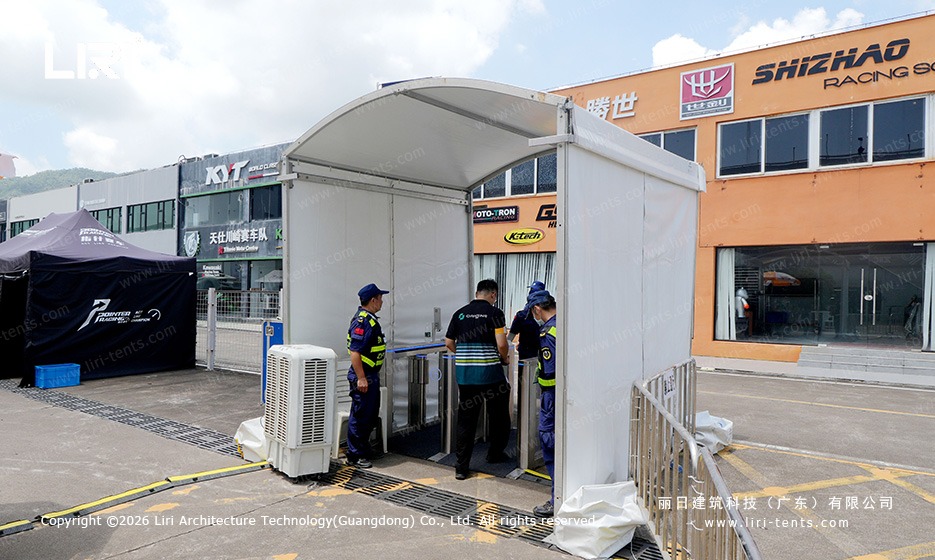
The main profile, covering upright supports and roof beams, is 82x48x3mm aluminum with 2 channels. The design is engineered for safety and reliability, and the assembled tent resists 80 km/h wind speed, about 0.3 kN/m², when anchored per the manual.
That rating holds up in exposed settings such as race paddocks and festival corridors, where smaller canopies are the first to suffer in a gust. For layouts that need more visual presence or larger clear spans, event teams step up to dome marquee party layouts and the bigger dome range rather than pushing this unit past its footprint.
Where a Small Dome Tent Performs Well
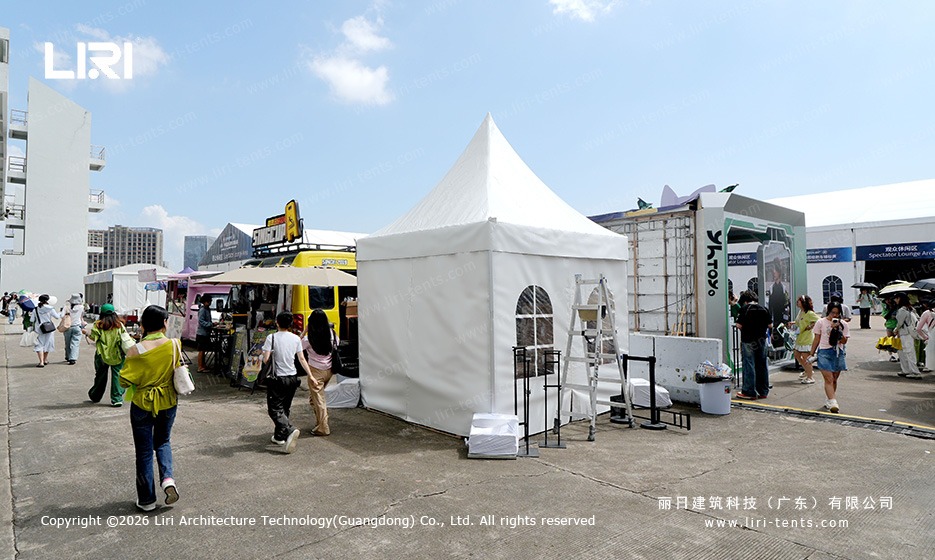
The quick assembly and dismantling routine is the main selling point. Panels and frames fold into a compact volume that stores on a shelf or in a van side-rack, so the tent is practical for recurring weekend events where every minute of setup costs money. Venue operators use them for entrance checkpoints, first-aid points and media registration desks.
They also appear in festival vendor rows alongside large geodesic dome halls, where the small domes handle ticket and merchandise functions and the big hall holds the stage. For circus-style programming, the same dome geometry scales to geodesic dome event spaces, which confirms the shape works at every size.
Setup speed also lowers the barrier for multi-zone layouts. A festival organiser can spread six small domes across a site in the time a single large hall takes to erect, then redeploy them the next weekend at a different venue. That reuse rate is why small domes keep appearing in seasonal event programmes instead of being replaced by fixed structures.
Frequently Asked Questions
How wide can a small dome tent be?
Standard clear spans are 3m and 4m with a 2.6m eave height. Length has no fixed limit and grows in 3m bays, so you can cover everything from a single booth to a long hospitality corridor with the same frame system.
What wind speed can a small dome tent handle?
The tent is rated to resist 80 km/h wind speed, about 0.3 kN/m², with correct anchoring on stable ground. Check the installation guide for anchor spacing and avoid setup when gusts are forecast above the rating.
How quickly can a small dome tent be assembled?
A two-person crew can typically erect a 3m or 4m bay in under an hour, and dismantling is faster because the frames fold into a compact storage volume. That speed is why transparent dome marquee tents are a fixture at recurring outdoor events.
→ Browse white dome marquee decorating ideas
 18.5m x 36m Polygon Tennis Court Marquee PG18.5×36-600 | Clear-Span Aluminum Sports Hall
 29m x 40m Electric Retractable Basketball Court Marquee for Lock Park Sports Facility
 20m Dome Marquee: Visual Impact for Premium Receptions
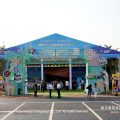 Hainan Coffee Festival Marquee Tent | Clear-Span Main Hall Plus Pagoda Vendor Booths for a Tropical Trade Month
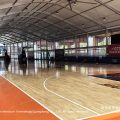 How a Clear Span Sports Court Marquee Created a Year-Round Basketball Arena
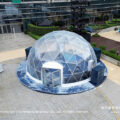 Geodesic Dome for Sale | Clear Roof Dome Marquee Tent Event