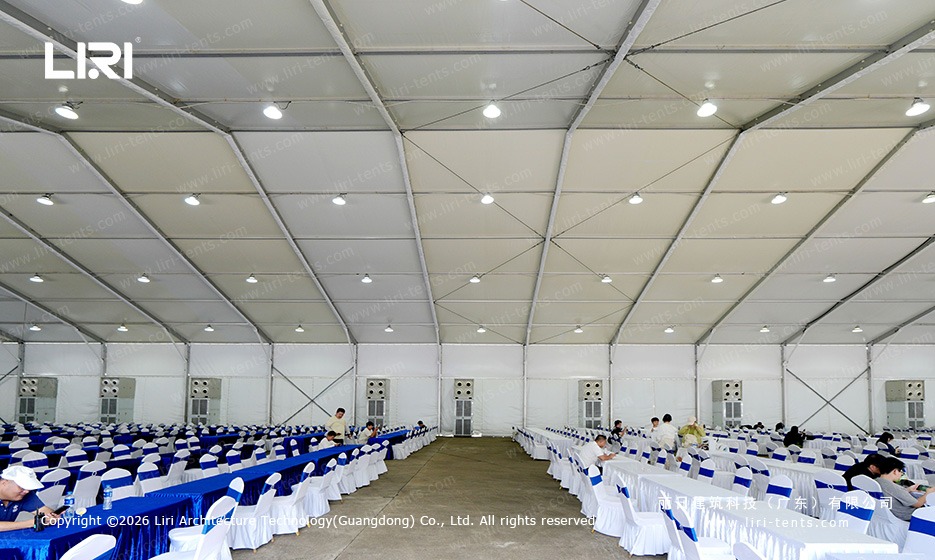
The TFS curve tent stands out from a standard marquee line because the roof bends into the signature heart shape that has made it one of the most requested designs in recent years. It was developed in-house rather than copied from an existing profile, which is why the geometry is balanced and the frame carries the load without extra bracing. The curve keeps the structure compact when packed, so a rental company can stack several units in one trailer instead of dedicating space to a bulky straight beam. A wide TFS curve structure marquee shows how the same roof family scales to full sports hall spans.
Frame Strength and Wind Load Rating
The TFS curve frame is built from high-impact extruded anodized aluminum with a wind loading rated at 100kg/h at the standard configuration, and reinforcement options are available for exposed sites. The design has been tested through repeated assembly cycles, and the bolt-together joints mean a crew can raise the tent and tear it down with standard tools and no special rigging.
Because the curved roof sheds water toward the gutters more predictably than a flat profile, the cover tension stays even across the fabric, which reduces flapping in gusty conditions. The same engineering is used on curved roof marquee for sports venues, where span and weather resistance matter more than decoration.
Applications and Setup Flexibility
The TFS curve works for temporary events and semi-permanent installations alike. Event companies use it for product launches, wedding receptions, festival stages, and exhibition lounges, while operators with a fixed site keep the tent up for a full season and relocate it when the calendar changes. The packed volume keeps storage and transport costs low, which is the main reason rental fleets keep adding this profile.
The accessory list covers the full range: colorful covers, transparent covers, and inflatable roof covers; dome or square clear PVC windows, mesh windows, and glass wall panels; VIP and simple cassette flooring; double-wing glass doors, single-wing glass doors, glass fire doors, aluminum doors, and manual or automatic rolling shutters. Wall options include soft PVC fabric, glass, ABS hard panels, sandwich panels, and steel plate, so the tent runs as an open canopy in summer or a closed hall in winter.
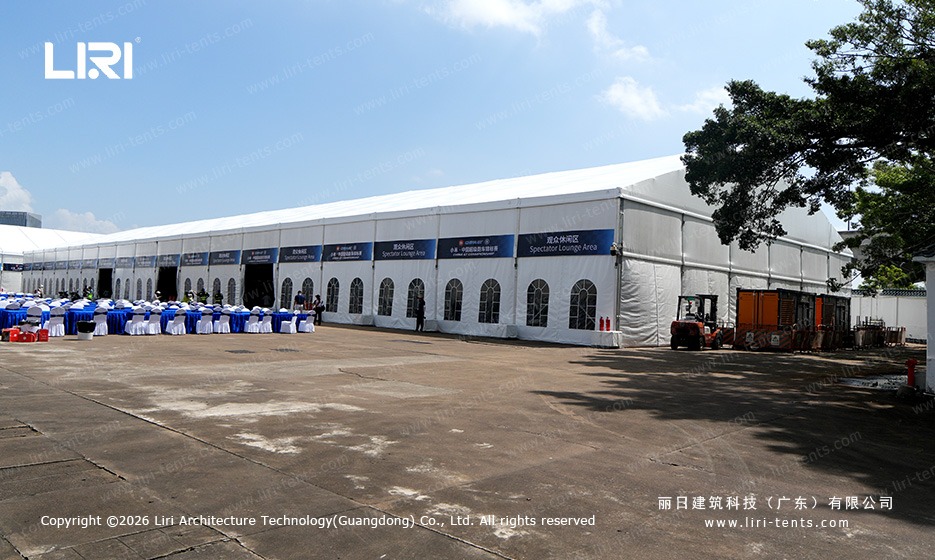
Fixing methods are chosen for the ground condition: ground anchors for soil, weight plates for concrete, and expandable bolts for hardstand areas. Rain gutters fit either along the inner roof beam or between two adjacent tents, which is what makes multi-tent layouts work without water pooling at the seam. A custom TFS marquee for large sports halls shows how the same frame family takes on longer spans when the event program demands it.
Factory Background and Order Notes
The factory behind this design has been manufacturing modular aluminum alloy structure tents since 1997 and was among the first to bring European tent technology into its own product line. The main production covers modular aluminum structure tents, aluminum square pagodas, and summer gazebos, all under the same quality control system.
Orders are quoted per unit with the accessory list itemized, so buyers can compare factory-direct pricing against local hire costs. Every batch is test-assembled before packing, and the frame ships in membrane film, hardware in solid cartons, and covers in PVC carry bags with labels for the assembly sequence. Buyers comparing the curve against a straight-beam layout should look at large marquee tent hire options to see how the two profiles differ on packing volume and ridge height. Custom sizes and shapes are available on request, and the design team confirms the roof geometry and wind rating for the site before production starts.
Frequently Asked Questions
What makes the TFS curve tent different from a standard marquee?
The roof bends into a heart-shaped curve that gives the tent a distinctive silhouette while keeping the frame bracing simple. The compact packed volume is the practical difference, because transport and storage costs stay lower than a straight-beam unit of the same footprint.
What is the wind load rating of the TFS curve tent?
The standard configuration is rated at 100kg/h with reinforcement options for exposed sites. The curved roof sheds water toward the gutters and keeps cover tension even in gusty conditions.
Can the TFS curve tent be used as a permanent structure?
Yes, the frame is designed for repeated assembly and long-term use. Many operators keep the tent up for a full season on a fixed site, then dismantle and relocate it when the event calendar changes.
What accessories come with the TFS curve tent?
The list covers covers, windows, flooring, doors, walls, fixing methods, and rain gutters, plus optional furniture, lighting, AC, and carpet. Accessories are itemized at quotation stage so the final price reflects the exact configuration.
→ Browse Outdoor Sports Court Canopy Tents
 20m x 118m TFS Curve Structure Tennis Court Marquee for 8-Court Sports Park
 Badminton Court Marquee | Year-Round Sports Hall Solution
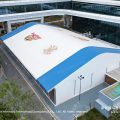 Custom 25x40m TFS Sports Marquee Tent for Basketball Hall
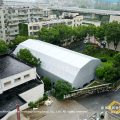 18.5m x 36m Polygon Tennis Court Marquee PG18.5×36-600 | Clear-Span Aluminum Sports Hall
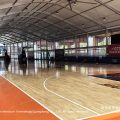 How a Clear Span Sports Court Marquee Created a Year-Round Basketball Arena
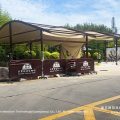 10m x 15m Arc Roof Marquee at Wildlife Park