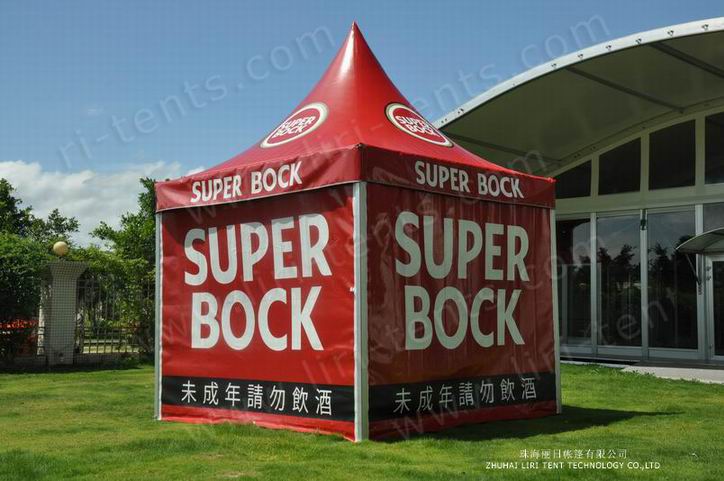
The frame-versus-pole debate is one of the most common questions in the tent industry, and the answer matters less for marketing than most buyers think. What actually promotes your business is how well the structure displays your branding, how quickly it is installed, and whether it works on the site you have chosen. Both frame event marquee and pole structures have strengths, and the right choice depends on the ground, the size, and the look you want.
Frame Tents: Column-Free Space for Flexible Layouts
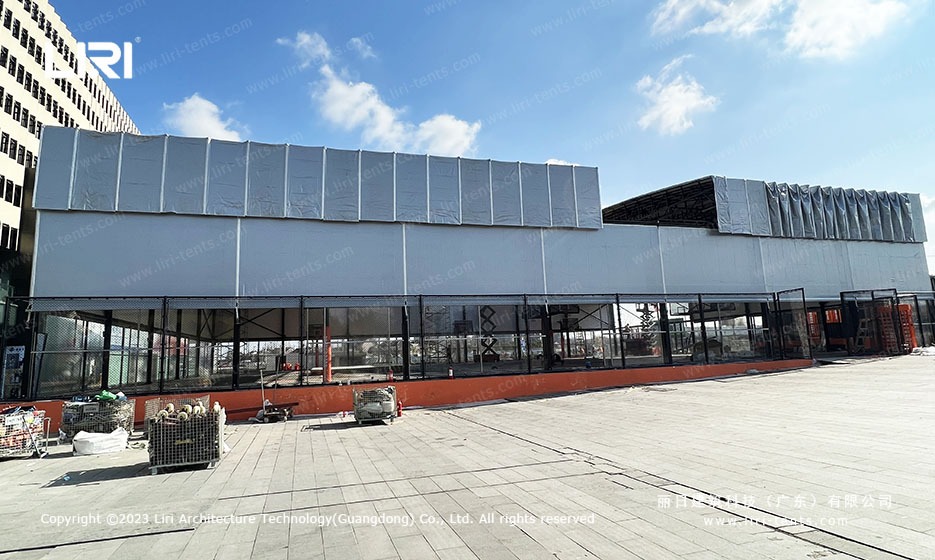
Frame tents use an aluminum or steel frame that supports the roof without interior poles, giving you an unobstructed floor plan up to about 40 feet wide. The lack of center poles makes them ideal for trade show booths, product displays, and any layout where sightlines and circulation matter. They also stand on any surface, from grass to concrete, because the frame carries the load.
Setup is a significant advantage for businesses that move between venues. Frame components are numbered and color-coded, so a trained crew can erect a 20-meter modular aluminum marquee tent in hours rather than days. This flexibility suits brands that exhibit at multiple shows in a season, and it is why many marketers choose a modular unit as their standard display solution.
Pole Tents: Dramatic Peaks and Wind Resistance
Pole tents deliver the classic peaked silhouette that reads as “event” from a distance, with a high center point that draws the eye. The center poles create a dramatic interior height that suits ceremonies and gala seating, and the tensioned fabric roof sheds wind effectively when properly staked. On soft ground where stakes sink easily, pole tents are often the most economical large-span option.
The trade-offs are real. Center poles block the interior layout, and the tents require ground that accepts stakes, which rules out concrete and asphalt. For businesses that want the visual impact without the layout constraints, frame tents achieve a similar presence through high eaves and gable-style rooflines, as seen in a pagoda A-frame tennis marquee layout at sports events.
Branding, Installation Speed, and Reuse Value
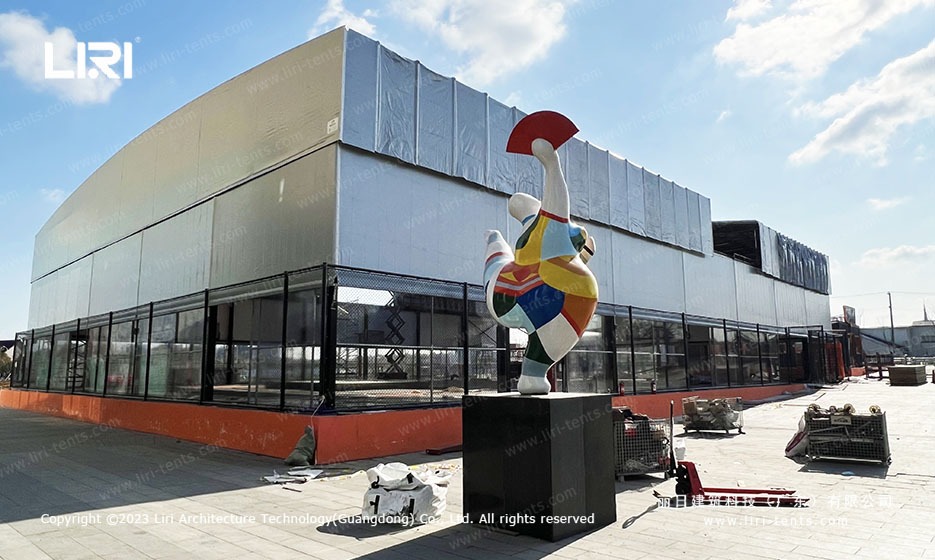
Branding surfaces are where both structures shine. Roof panels, wall banners, and entrance arches all accept printed graphics, and the flat walls of frame tents are particularly good for large-format signage. A consistent branded structure at every event builds recognition faster than any single installation, which is why quality frame marquees for industry expo are a standard choice for exhibitors with a packed calendar.
Think about the full ownership cycle before choosing. Frame tents cost more per square meter but relocate easily and last longer on demanding schedules. Pole tents are cheaper to buy and set up fast on grass, but the staking requirement limits where they can be used. For mixed venues, many companies keep both types in the fleet, and heavy-duty aluminum units such as a temporary supermarket aluminum structure show how frame systems handle semi-permanent commercial use.
Frequently Asked Questions
Which tent type is more wind resistant?
Pole tents are generally more wind resistant on soft ground because the tensioned fabric and staking system transfer loads directly into the ground. Frame tents handle wind well when ballasted or staked correctly, and their all-surface versatility often matters more than the small wind-load difference.
Can a frame tent be used on concrete?
Yes. Frame tents stand on any flat surface including concrete, asphalt, and decking, using ballast weights instead of ground stakes. This makes them the standard choice for parking lots, plazas, and other hardstanding sites where pole tents cannot be anchored.
Which is cheaper: a frame tent or a pole tent?
Pole tents are typically cheaper per square meter for large spans, while frame tents cost more but offer column-free interiors and all-surface capability. For a business that moves between venues, the frame tent’s flexibility usually justifies the higher upfront price over the full ownership period.
How do I promote my business with a tent at events?
Print your logo and brand colors on the roof panels, wall banners, and entrance, and keep the branding consistent across every event. A branded structure also serves as a photo backdrop that visitors share on social media, extending the promotion beyond the event itself.
→ Get Advice on the Right Tent for Your Brand
 Motorsport VIP Marquee Tent: Beachside Racing Hospitality Solution
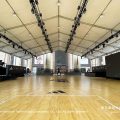 25m Clear Span Exhibition Marquee: Shanghai Urban Plaza Sports Arena
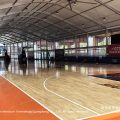 How a Clear Span Sports Court Marquee Created a Year-Round Basketball Arena
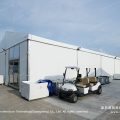 Sanya Formula E Marquee Tent: Multi-Zone Layout for Electric Racing Event
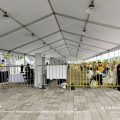 Recent Formula E Shanghai E-Prix Marquee Tent: Multi-Zone Race Village Setup
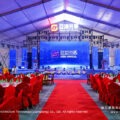 Event Marquee Tents for Corporate Year-End Party