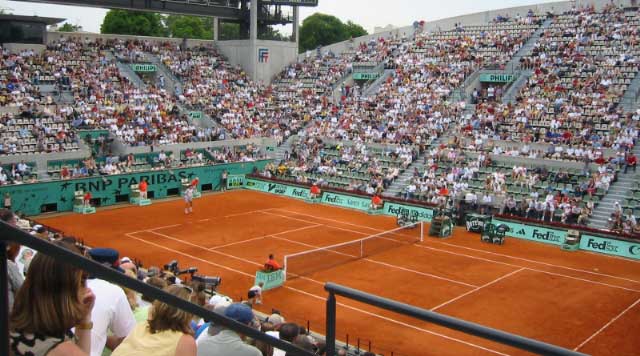
A grand slam tennis tournament is more than match play on clay. Operators also manage player zones, media rooms, ticketing, security screening and VIP hospitality, and most of that space has to appear overnight on site. A tennis tournament marquee layout shows how these functions can be grouped without disturbing spectator flow.
The clay court itself sets the tone. It slows the ball, rewards patience and ends the clay season with the most demanding fortnight of the circuit. Around the courts, however, the demands are the same as at any major event: covered walkways, climate-controlled lounges and loading points that keep logistics off the public concourse.
What Tournament Support Space Is Needed
Player areas come first. A warm-up hall, physio rooms and a quiet recovery zone keep competitors moving between matches, and these spaces are usually the first marquees erected. Media operations sit nearby but separate, with interview rooms, broadcast cabins and a mixed zone where reporters can catch players on the move.
Public-facing functions need the same attention. Ticket offices, bag screening, first aid and information desks all want shelter from rain, while food courts and merchandise stalls should sit close to the main entrance. A tennis court marquee structure sized for eight courts shows how far a single clear span can go when the whole facility is covered.
Clear Span Design and Installation
Clear span marquees carry their loads through an aluminum frame, so there are no internal columns to interrupt camera lines or player sightlines. Spans of 20 to 40 meters are common, and the structure can be bolted to concrete pads or anchored on temporary ground depending on the site. Most operators reuse the same sports marquee event facility templates built for indoor arenas.
Erection speed matters when a venue has a fixed handover date. A crew can typically raise a medium-span marquee in a matter of days, and the fabric shell keeps the interior dry while flooring, lighting and HVAC are fitted. Dismantling is the reverse process, which lets the same units rotate between events across the season.
Climate Control and Spectator Comfort
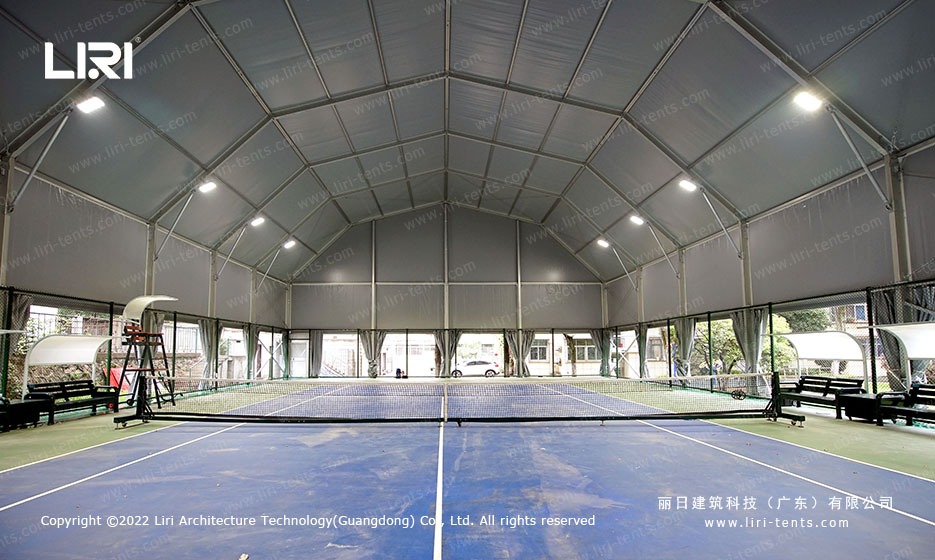
Clay court events run through late spring, when the sun is strong and afternoon showers are common. Double PVC-coated fabric blocks UV rays, while insulated roof liners and sidewall vents keep the interior temperature workable without heavy air conditioning. Translucent panels can be added where natural light is wanted, and clear walls keep the courts visible from hospitality suites.
Flooring is another decision. Interlocking PVC tiles handle chair legs and foot traffic well, while wooden floors suit player lounges and press rooms. Whatever the finish, power, data and drainage runs should be planned before the shell goes up, because retrofitting after installation costs far more than preparing in advance.
Operators who already run covered courts know the payoff. A structure that protects spectators, players and broadcast equipment pays for itself across a single tournament, and the same clear span sports court marquee approach keeps a facility bookable for training and leagues after the event closes.
Marquee Tent FAQ
What temporary facilities does a grand slam tennis venue need beyond the courts?
Beyond match courts, operators typically need player lounges, warm-up areas, media and broadcast rooms, ticketing and security screening, catering, first aid and VIP hospitality. Most of these functions fit standard clear span marquee modules, and the exact mix depends on the tournament category and site constraints.
Can the same marquee units be reused across multiple events?
Yes. Clear span marquees are designed to be dismantled and re-erected, and tournament-grade units often cycle through tennis, motorsport and trade events in one season. Frames are aluminum, so corrosion is rarely an issue, and fabric panels can be replaced individually when a wall or roof section wears out.
How long does it take to erect a tournament marquee?
A medium-span structure with flooring and lighting can usually be completed in under a week with a trained crew. Larger installations with HVAC, data cabling and staged interiors take longer, which is why most venues order the shell early and fit out services after the fabric is in place.
Do clay court events need special flooring inside the marquees?
Not necessarily. Interlocking PVC tiles or temporary wooden floors work well for lounges and media rooms, while corridors can use the same tiles. The main requirement is a flat, dry base, so a ground sheet or gravel layer is laid before the frame goes up.
→ Browse Sports Marquee Solutions
 Pagoda & A-Frame Marquee Layout for Davis Cup-Style Tennis Tournament at Hengqin
 20m x 118m TFS Curve Structure Tennis Court Marquee for 8-Court Sports Park
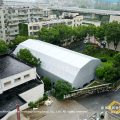 18.5m x 36m Polygon Tennis Court Marquee PG18.5×36-600 | Clear-Span Aluminum Sports Hall
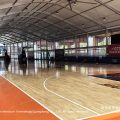 How a Clear Span Sports Court Marquee Created a Year-Round Basketball Arena
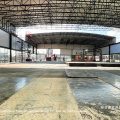 29m x 40m Electric Retractable Basketball Court Marquee for Lock Park Sports Facility
 Badminton Court Marquee | Year-Round Sports Hall Solution