A large hall tent in the 30m to 50m clear span range gives a column-free floor the size of a sports arena or a distribution centre. The modular bay system extends length in 5m steps, so the structure matches the program instead of the other way around. A large tent of this scale suits events and industry that need serious covered area.
Planning, Lead Time, and Budget
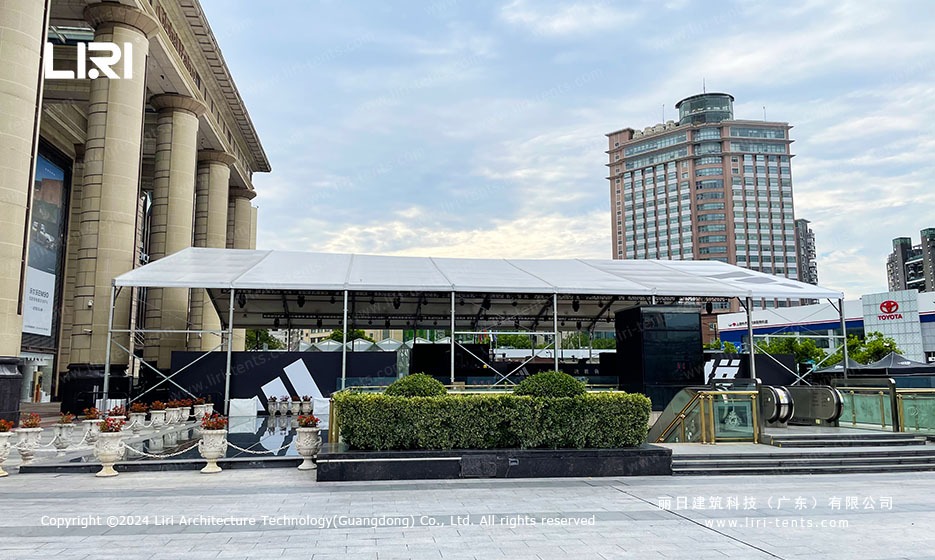
Getting the timing right is as important as the structure itself. Most large hall tent projects need a site survey, a layout drawing, and a delivery window agreed weeks ahead, especially in peak season when fleets are busy. Buying gives a permanent asset you can reuse, while hiring lets you match capacity to a single event without storage overhead. Either way, the modular frame means you pay for the area you actually need and can extend later. A clear high peak tent helps you model the footprint and the budget before you commit.
Weather, Wind, and Anchoring
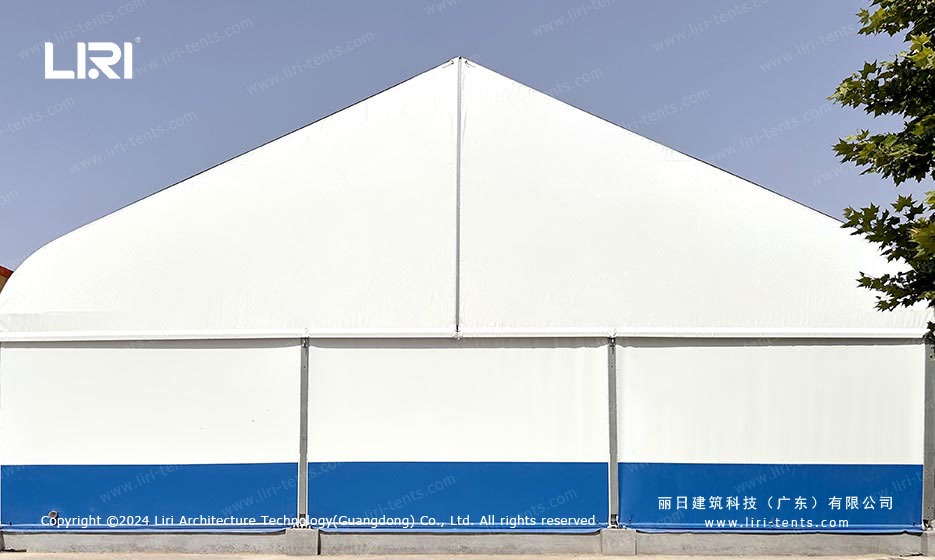
Outdoor use means the large hall tent has to stand up to real conditions. The PVC roof sheds rain, and a sealed gable stops driven water at the ends, so the interior stays dry through a storm. Anchoring depends on the surface: stakes hold in grass and soil, while weight plates keep the frame down on concrete and asphalt without drilling. Suppliers rate each profile to a wind speed and a snow load, and proper anchoring extends that rating further. Choosing the right footprint and method with a large marquee tent keeps the structure safe from the first gust to the last.
Frame, Fabric, and Build Quality
A well-made large hall tent starts with the frame. Extruded aluminum profiles bolt together in standard bays, so the structure stays straight and stable under load without interior poles getting in the way. The roof and walls use PVC-coated fabric that is waterproof, flame retardant, and rated for repeated outdoor use, then packed away for the next job. Because every joint is a bolt rather than a weld, a crew can adjust the layout on site and repair a damaged bay without special tools. Pairing the frame with a large tent keeps the whole build consistent from the ground up.
Frame and Fabric Specification
The main framework uses high-impact extruded anodized aluminum rated to 6061/T6, with a profile around 350mm by 128mm. Roof and walls are PVC-coated polyester, flame retardant to the European standard DIN 4102 B1 and M2. A large marquee tent built this way carries the loads of a permanent venue while staying movable.
Shapes Beyond the Rectangle
These big structures come in square, hexagonal, octagonal, decagonal, dodecagonal, and double decker forms. A clear high peak tent variant adds a dramatic roof for a focal point, while a polygon hall wraps a central stage. The shape choice follows the event, not the catalogue.
Accessories for a Finished Hall
The full accessory set includes sidewalls with clear windows, ground anchors, weight plates, lining, a glass wall system, and an ABS hard wall system. A swimming pool marquee uses the same parts to enclose an existing feature, showing how flexible the system is.
From Sports to Storage
The same 30m to 50m frame serves a tournament one week and a warehouse the next. A tennis court marquee is one example of the range put to an active use, while a exhibition marquee shows it as a civic venue.
Frequently Asked Questions
How wide can a clear span hall go?
The LH series reaches 30m and 40m as standard, with wider profiles available. A marquee tents for sale catalogue lists every width and bay option.
Does it need a foundation?
No. Stakes or weight plates hold the frame on grass or hard ground, and the site recovers after dismantle.
Can I enclose an existing feature?
Yes. The modular walls and glass systems wrap pools, courts, or machinery, turning the big tent into a tailored enclosure.
 Badminton Court Marquee | Year-Round Sports Hall Solution
 18.5m x 36m Polygon Tennis Court Marquee PG18.5×36-600 | Clear-Span Aluminum Sports Hall
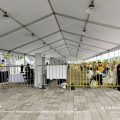 Recent Formula E Shanghai E-Prix Marquee Tent: Multi-Zone Race Village Setup
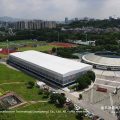 20m x 118m TFS Curve Structure Tennis Court Marquee for 8-Court Sports Park
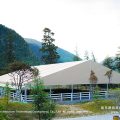 30m x 35m Equestrian Arena Marquee for Mountain Valley Riding Resort
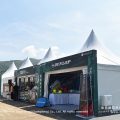 Pagoda & A-Frame Marquee Layout for Davis Cup-Style Tennis Tournament at Hengqin