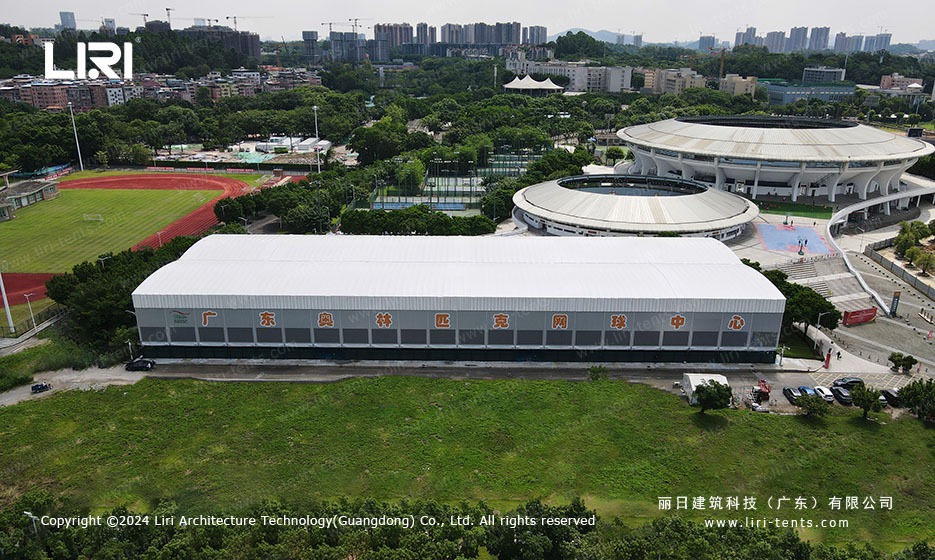
A sport tent brings a professional playing surface under cover for athletics, badminton, basketball, and training camps. Organizers use clear-span frames to turn open ground into a venue that meets competition standards without a permanent building. event
Why Events Choose Clear-Span Sport Tents
Major games need large, unobstructed halls. A clear-span sport tent removes interior poles so the full floor stays open for courts, tracks, and spectator seating. The aluminum frame bolts together in standard bays, which lets a crew size the structure to the exact number of courts required. Make Each Interesting Types Commercial
Design Features That Matter for Competition
Side height, ridge height, and wind rating decide whether a structure is fit for play. Badminton and indoor sport need side heights around 8m so shuttle and ball flight stay clear of the roof. PVC fabric roofs are waterproof and flame retardant, and sealed gables keep driven rain out of the playing area. Big
Planning a Temporary Sports Venue
A temporary venue starts with a site survey and a layout drawing that places courts, warm-up zones, and entry lanes. Anchoring depends on the surface: stakes for grass, weight plates for hard ground. Climate control and lighting run from a single distribution point so the hall works day and night. Movable Arcum Church Event Center
What size sport tent fits a standard court?
A single badminton or basketball court needs roughly 15m by 20m of clear floor, plus space for sidelines and seating. Most organizers add one or two extra bays so athletes and officials move without crowding. event
How fast can a sport tent be built?
A trained crew raises a modest frame in a day using a lift and a clear sequence. Larger spans take longer, but modular bays let the build phase around other site works.
Can a sport tent handle wind and rain?
Yes. Suppliers rate each profile to a wind speed and a snow load, and proper anchoring extends that rating. Sealed roofs and gables keep the interior dry through a storm.
→ Browse sport tents for events
Frame, Fabric, and Build Quality
A well-made sport tent starts with the frame. Extruded aluminum profiles bolt together in standard bays, so the structure stays straight and stable under load without interior poles getting in the way. The roof and walls use PVC-coated fabric that is waterproof, flame retardant, and rated for repeated outdoor use, then packed away for the next job. Because every joint is a bolt rather than a weld, a crew can adjust the layout on site and repair a damaged bay without special tools. Pairing the frame with a event keeps the whole build consistent from the ground up.
Weather, Wind, and Anchoring
Outdoor use means the sport tent has to stand up to real conditions. The PVC roof sheds rain, and a sealed gable stops driven water at the ends, so the interior stays dry through a storm. Anchoring depends on the surface: stakes hold in grass and soil, while weight plates keep the frame down on concrete and asphalt without drilling. Suppliers rate each profile to a wind speed and a snow load, and proper anchoring extends that rating further. Choosing the right footprint and method with a Big keeps the structure safe from the first gust to the last.
Layout, Flooring, and Interior Fit-Out
The open floor of a sport tent is a blank canvas. Add interlocking flooring for a level surface, lining for a finished look, and clear wall panels to bring in daylight. Climate control, lighting, and power run from a single distribution point, so the interior works as a venue rather than a bare cover. Doors and gutters link multiple units into one continuous space, which suits larger crowds and mixed functions. Reviewing a Large shows how different fit-outs change the feel and the flow of the same frame.
 Badminton Court Marquee | Year-Round Sports Hall Solution
 How a Clear Span Sports Court Marquee Created a Year-Round Basketball Arena
 20m x 118m TFS Curve Structure Tennis Court Marquee for 8-Court Sports Park
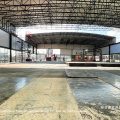 29m x 40m Electric Retractable Basketball Court Marquee for Lock Park Sports Facility
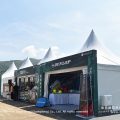 Pagoda & A-Frame Marquee Layout for Davis Cup-Style Tennis Tournament at Hengqin
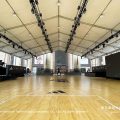 25m Clear Span Exhibition Marquee: Shanghai Urban Plaza Sports Arena