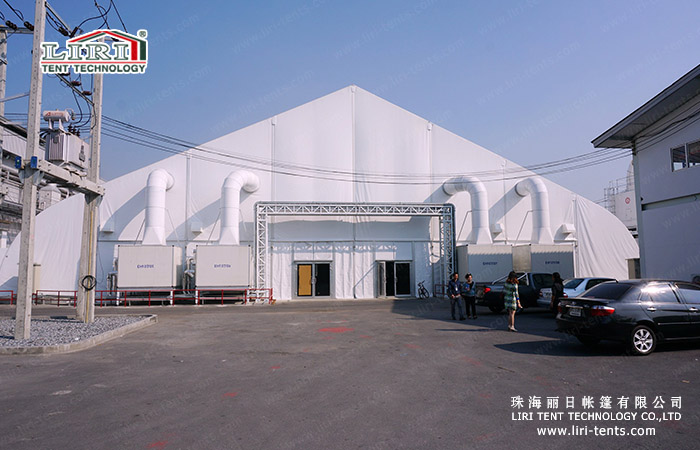
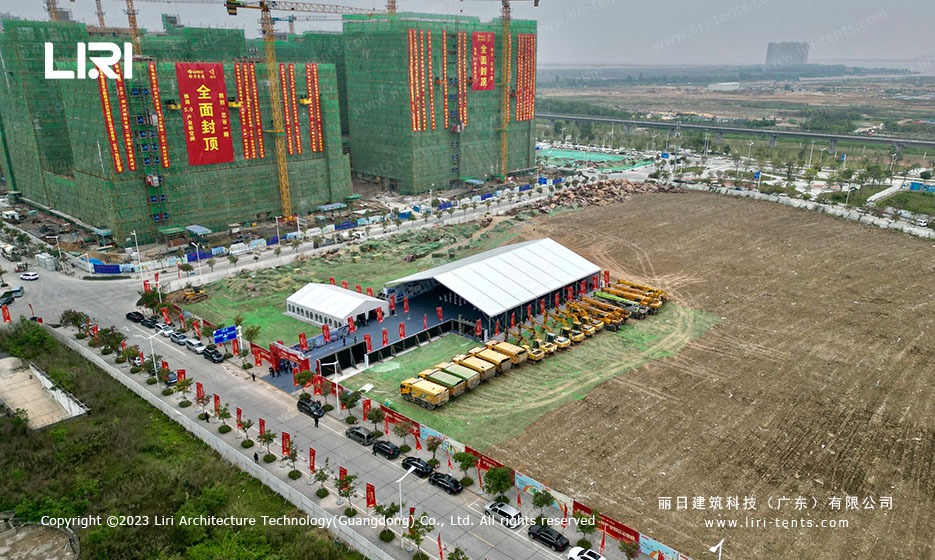
The TFS curved roof tent series provides a practical solution for celebrations, opening ceremonies, groundbreakings, and annual corporate events that need a temporary covered space. Unlike standard flat-roof marquees, the curved TFS profile delivers higher headroom and a more distinctive appearance. This article covers the modular structure, material specifications, and practical uses of the TFS curved roof tent.
TFS Curved Roof Tent Structural Design
The TFS curved roof tent uses a modular aluminum frame that allows length changes in 3m or 5m bay increments, giving organizers flexibility to match the tent footprint to the site. The main framework is manufactured from hard-pressed extruded aluminum alloy 6061/T6, with double-sided PVC-coated polyester fabric rated to European fire standard DIN 4102 B1, M2. The curved roof profile distributes structural loads evenly, reducing the need for internal columns and creating an obstruction-free interior space.
For event planners who need similar span ranges but prefer a straight-roof configuration, the foundation ceremony marquee uses the same aluminum extrusion technology with a different roof geometry. The TFS curved design is particularly suited for events where ceiling height and visual impact are priorities.
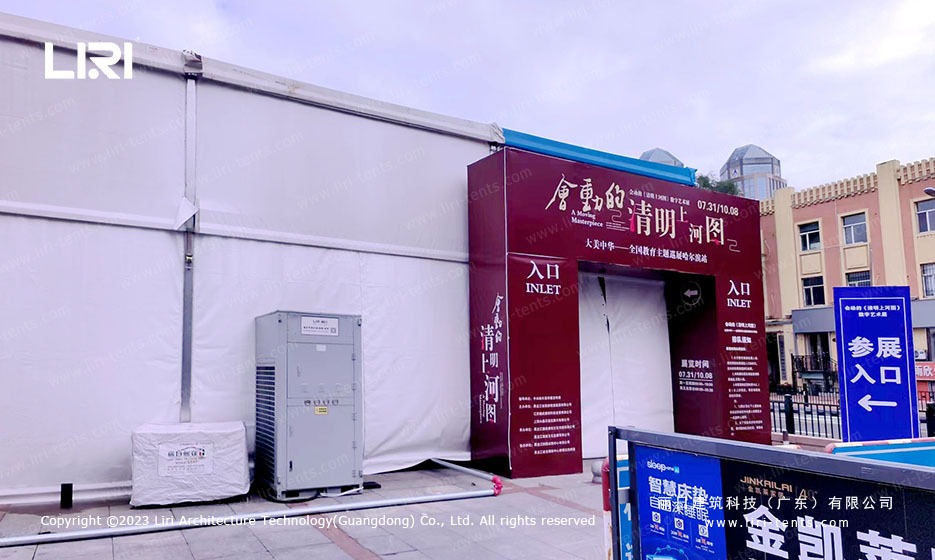
Span Options and Configuration Flexibility
The TFS series spans from 3m to 60m, covering the CBT, CEBT, and CTH models. Each model uses a progressively larger aluminum extrusion: 204x120x4mm for CBT, 256x121x5mm for CEBT, and 300x125x5/8mm for CTH. The modular bay design means a 30m-long tent can be shortened to 25m by removing one bay without affecting structural integrity. This adaptability makes the TFS a cost-effective choice for rental companies and event organizers who need to reconfigure tents for different venues.
The same modular approach used in the retractable basketball court marquee applies to the TFS series, allowing side extension kits and partition walls to be added later without structural modification. The all-terrain event marquee shares the same frame connection standard for sites with uneven ground.
Practical Applications and Rental Suitability
The TFS curved roof tent is widely used for wedding receptions, festival stages, exhibition booths, corporate galas, product launches, and VIP hospitality areas. Because the tent uses bolted aluminum connections rather than welded steel, it assembles quickly with a small crew and packs into a manageable volume for transport. The curved panels shed rainwater effectively without ponding, reducing maintenance during extended rental periods.
For multi-purpose venues that need to transition between uses, exploring sports marquee configurations for multipurpose courts shows how the same frame system can host both seated dinners and active sports. The TFS frame supports up to 100 kg/m² wind load when anchored correctly.
What span sizes does the TFS curved roof tent come in?
The TFS series offers clear spans from 3m to 60m across three sub-series. The CBT model handles 15m to 25m spans, CEBT covers 15m to 30m, and CTH spans from 20m to 40m. Custom intermediate spans are available on request.
Can the TFS tent be used for temporary rentals?
Yes. The TFS is designed for repeated assembly and disassembly. Its modular frame packs into standard shipping containers, and most sizes require no special foundation beyond ground anchors or ballast plates. The setup time for a 20m tent is roughly two days with a crew of six.
What accessories are available for the TFS curved roof tent?
Accessories include clear window sidewalls, glass wall panels, ABS hard walls, interior lining, LED lighting kits, flooring systems, air conditioning ducts, and printed banner sidewalls. All accessories are compatible with the standard TFS frame without drilling or modification.
How does the curved roof handle snow and rain loads?
The arched profile allows snow and rainwater to slide off naturally, reducing roof load compared to flat or low-pitch roofs. The standard fabric carries a 15-year UV warranty and maintains waterproof integrity across temperature ranges from -30°C to +70°C.
→ Browse TFS Curved Roof Tents for Sale
 20m x 118m TFS Curve Structure Tennis Court Marquee for 8-Court Sports Park
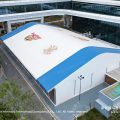 Custom 25x40m TFS Sports Marquee Tent for Basketball Hall
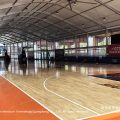 How a Clear Span Sports Court Marquee Created a Year-Round Basketball Arena
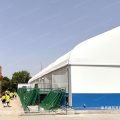 15x38m Clear Span Swimming Pool Marquee Tent — CBT Aluminum Structure
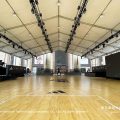 25m Clear Span Exhibition Marquee: Shanghai Urban Plaza Sports Arena
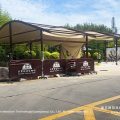 10m x 15m Arc Roof Marquee at Wildlife Park