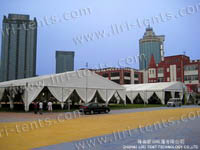
A beer festival is one of the few events where the venue itself becomes part of the experience. The 19th Qingdao Beer Festival drew 2.4 million visitors over two weeks, and the drinking halls that hosted them were not concrete buildings but marquee tents laid out across the festival grounds. The scale tells the story: 17 international breweries, 102 beer brands, and more than 660 tons of beer consumed inside temporary structures that had to work perfectly for 16 straight days.
Festival Tent Layout: How 10,000 Square Meters Was Planned
Festival organizers do not design a tent plan around one hall; they build a small district. The Qingdao site used over 10,000 square meters of marquee coverage, split between drinking halls, food courts, stage areas, and staff zones. Each structure had its own job: the main halls needed open sight lines to the stage, while the food areas needed ventilation and easy crowd flow. That zoning logic is the same one used for food festival event tents, where the layout has to move thousands of people an hour without bottlenecks.

One lesson from Qingdao is that crowd density decides the tent spec, not the number of guests on paper. A hall that holds 800 seated guests might still feel cramped if the bar lines run through the middle of the floor. The marquee frames here allowed halls to stay column-free, so beer stations could be placed along the edges and leave the center open for tables and walkways. The same planning applies to pagoda tents for food festivals, where a higher peak changes how the space breathes in summer heat.
Ventilation and Climate Control for Crowded Beer Halls
Hot weather is the real test for a beer tent. With thousands of visitors packed inside, body heat and humidity build up fast, and the PVC roof does not help unless it is engineered for airflow. The Qingdao halls used open side walls and roof vents to keep air moving, and the tents were oriented so the prevailing breeze crossed the floor. Closing the side walls turned a hall into a greenhouse within an hour, so ventilation planning was non-negotiable. This is why serious rental operators always check the airflow design before booking outdoor party catering canopies for summer events.

Lighting was the second hidden factor. A festival that runs into the evening needs more than string lights; it needs zones of brightness that match the activity. The Qingdao site used high-output fixtures on the stage side and softer lighting in the dining areas, which is a trick borrowed from outdoor dining event tents used for late-night receptions.
Beer Festival Marquee FAQ
How many people can fit in a festival marquee tent?
A 10m by 20m frame tent comfortably seats 150 to 200 guests at banquet tables, or holds roughly 300 standing visitors in a beer hall setup. The real ceiling is set by ventilation and emergency exit capacity, not by the tent dimensions alone. For a festival hall that has to move crowds all day, planners usually size for about 1.5 square meters per standing guest.
How far ahead should I order a marquee tent for a summer beer festival?
Book at least 8 to 12 weeks ahead for a large festival, because the manufacturer needs time to produce PVC covers, deliver the aluminum frames, and schedule the erection crew. Peak summer dates get reserved quickly by event companies. Confirming the layout early also gives you time to solve the site ground conditions, which often need gravel or flooring.
Are marquee tents safe for beer festivals with thousands of visitors?
Yes, when the structures meet the local fire and crowd safety standards. The key points are flame-retardant PVC, anchored frames for wind, marked emergency exits, and a crowd plan that keeps aisles clear. The Qingdao festival ran its halls under exactly these conditions for the full two weeks without a structural issue.
Can the same tent be reused for different festival formats?
Frame tents are modular, so the same aluminum structure can switch between a beer hall layout one week and a food market layout the next. Side walls, flooring, and lighting packages are all interchangeable. That reuse is one of the main reasons festival organizers prefer outdoor round party tents for festivals when they need flexibility across a season.
→ Plan Your Festival Marquee Now
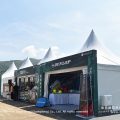 Pagoda & A-Frame Marquee Layout for Davis Cup-Style Tennis Tournament at Hengqin
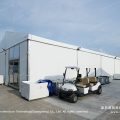 Sanya Formula E Marquee Tent: Multi-Zone Layout for Electric Racing Event
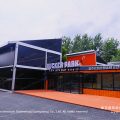 Badminton Court Marquee | Year-Round Sports Hall Solution
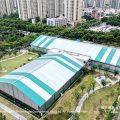 Sports Marquee for Basketball Courts | Event Marquee for Sale
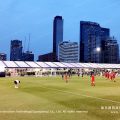 Transparent Marquee Tent for FIFA Fan Zone in Thailand: 20m Clear Span Build
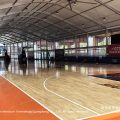 How a Clear Span Sports Court Marquee Created a Year-Round Basketball Arena