For rental companies and event organizers, the value of a marquee tent is measured in how many setups it survives, not just how it looks on the first day. That durability starts with standardized production, where every roof purlin, eave beam, and corner casting is manufactured to a fixed modular size. This article explains the business case for standardization from the buyer’s side: inventory control, spare parts, and expansion without write-offs.
Standardization Gives Rental Fleets One Interchangeable Parts Inventory
When a fleet is built on standardized components, a single set of spare parts covers every tent in stock. The same connection castings and purlins fit a 10m unit and a 25m unit, so a rental operator does not need to shelve parts for each model separately. Damaged sections are swapped on site and the tent returns to service the same day.
This matters most during peak season, when a torn panel or bent base plate would otherwise take a unit out of rotation for weeks. With interchangeable parts, the fix is a stock item rather than a factory order. Operators who keep a standardized fleet also find it easier to expand: adding a new width does not mean starting a second parts library, so movable marquee storage solutions scale without complexity.
Cost Comparison: Standardized Frames vs. One-Off Fabrication
The upfront price of a standardized tent is lower because extrusion dies and tooling are shared across a large production volume. The savings continue after purchase. Spare parts are mass-produced and inexpensive, repair labor is predictable, and the frame holds resale value because it is compatible with any other tent in the same series.
A one-off fabricated structure, by contrast, carries tooling costs in the unit price and every replacement part must be made to order. Over a five-year ownership period, the total cost of a standardized marquee usually comes out ahead even if the initial quote looks similar. This is why many logistics operators standardize on a temporary warehouse building marquee for multiple sites instead of commissioning a unique structure for each location.
Expansion and Relocation Without Writing Off the Frame
Standardized tents are designed to be taken down, moved, and re-erected without losing components. Because every part is reusable and recyclable, a structure that served as a wedding marquee for two seasons can be reconfigured as a storage hall the following year. The frame is the asset, and the configuration is a choice.
Plan for expansion by ordering the frame with a modular layout from the start. Longer side walls can be added later, gable ends can be relocated, and clear span sections can be joined with connector systems. This keeps the initial investment working as the business changes, which is the core reason buyers prefer rolling door storage tents and modular halls over rigid buildings.
FAQ: Standardized Tent Production for Buyers
What are the main advantages of standardized tent production?
Standardized production means interchangeable components, shorter lead times, lower spare part costs, and easier expansion. Buyers benefit from a single parts inventory across their fleet and from tents that can be reconfigured or relocated without new fabrication.
Do standardized tents look less premium than custom designs?
No. The frame and fabric options are identical to custom structures; standardization applies to the internal components, not the visible finish. Buyers can still specify translucent roofs, printed side walls, and decorative linings on a standardized frame.
How long does a standardized marquee last?
With an anodized aluminum frame and double PVC-coated fabric, a commercial marquee typically serves 10-15 years of seasonal use. Regular re-tensioning, cleaning, and replacing worn panels extend that lifespan further.
Can I add a section to an existing standardized tent?
Yes, if the new section uses the same modular components. Confirm the connector type and profile series with the supplier, then order the additional bays or side walls, which will bolt onto the existing frame.
To compare configuration options before you buy, review the 20m modular aluminum marquee guide.
→ Plan Your Standardized Marquee Fleet
 10m x 15m Arc Roof Marquee at Wildlife Park
 Aircraft Hangar Marquee Tent | Clear-Span Industrial Storage
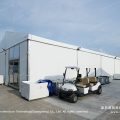 Sanya Formula E Marquee Tent: Multi-Zone Layout for Electric Racing Event
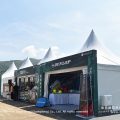 Pagoda & A-Frame Marquee Layout for Davis Cup-Style Tennis Tournament at Hengqin
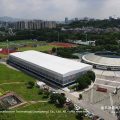 20m x 118m TFS Curve Structure Tennis Court Marquee for 8-Court Sports Park
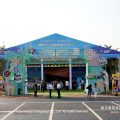 Hainan Coffee Festival Marquee Tent | Clear-Span Main Hall Plus Pagoda Vendor Booths for a Tropical Trade Month