Portable marquees are weatherproof pop-up shelters that create an enclosed selling space almost anywhere. They are used for product sales at fairs, trade shows, street markets, and busy squares, and they set up in a few hours with a small crew. Because they pack down into a carrying bag with a stake kit, the same unit can move between locations all season long.
What to Look For in a Portable Sales Tent
Start with the frame. Lightweight construction is convenient for transport, but the profile must still carry the fabric in wind. Aluminum frames with four-channel profiles strike the right balance for street selling, where the tent goes up and down frequently. The cover should be double-coated PVC or polyester with a waterproof rating, because market stalls run in rain as often as in sun.
Size follows the product range. A 3m by 3m unit fits a single stall with tables along two walls, while a 5m span gives room for a changing area or a counter display. If you plan to sell at events with neighbors, check the eave height so your signage clears the surrounding units. This is where a portable frame tent for exhibitions specification sheet earns its keep, because it lists the exact dimensions before you commit.
Street Markets vs. Trade Show Displays
Street selling favors speed and low cost. A canopy-only unit with corner weights suits short sessions, and the carrying bag keeps transport simple on public transport or a small van. Trade shows, by contrast, reward a fuller structure: side walls, printed branding panels, and interior lighting make a booth look established rather than temporary.
For shows, a custom exhibition marquee can be printed with your logo and contact details, turning the shelter itself into an advertisement. Many exhibitors keep one branded unit for trade fairs and a plain one for street markets, so the same inventory covers both revenue streams. Rental options also exist for one-off events if buying does not yet fit the cash flow.
Setting Up and Packing Down Efficiently
Practice the setup once at home before the first event. Most portable units follow the same sequence: lay out the frame, lift the center, extend the legs, then tension the cover and secure the corners. A two-person crew gets a 4m unit standing in about twenty minutes once the sequence is familiar.
Weather is the main variable on site. In wind, add ballast to every corner and lower the side walls on the exposed face; in heat, open the sides for airflow and use the roof to shade the stock. Keeping a frame marquee hire kit as a backup for larger orders covers the days when one tent is not enough.
FAQ
What makes a portable marquee suitable for street markets?
Weight and setup speed matter most. A unit under about 40 kg for the frame, with a carrying bag and a straightforward pin-and-lock assembly, suits a single trader. Look for corrosion-resistant aluminum and a fabric cover that sheds rain without pooling, because market stalls rarely have shelter from the elements.
Can a portable marquee be used for trade shows and street sales?
Yes, with different configurations. For street sales, run the canopy with minimal sides for quick setup and airflow. For trade shows, add branded side panels and lighting so the booth reads as a professional display. A large trade exhibition marquee handles the bigger stand, while the portable unit covers smaller bookings.
How durable are lightweight portable marquee frames?
Aluminum frames rated for commercial use withstand hundreds of setups when the joints are kept clean and the bolts are checked each season. The weak point is usually the fabric corners, so reinforce the corners where the cover meets the frame. Replace worn straps before the season starts rather than after a failure on site.
What size portable marquee do I need for a sales stall?
Match the footprint to your stock and counter plan. A 3m by 3m stall handles one table and a display rack; a 4m by 4m unit adds a second table or a customer waiting area. If you sell bulky items, go up a size so customers can walk in and handle the goods without crowding the entrance.
→ Get a Portable Marquee Quote
 Sanya Formula E Marquee Tent: Multi-Zone Layout for Electric Racing Event
 How a Clear Span Sports Court Marquee Created a Year-Round Basketball Arena
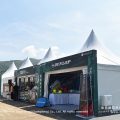 Pagoda & A-Frame Marquee Layout for Davis Cup-Style Tennis Tournament at Hengqin
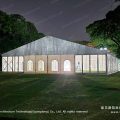 Wedding Marquee Tent – Outdoor Bangkok Reception Venue
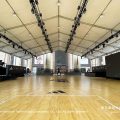 25m Clear Span Exhibition Marquee: Shanghai Urban Plaza Sports Arena
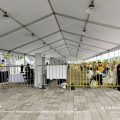 Recent Formula E Shanghai E-Prix Marquee Tent: Multi-Zone Race Village Setup