An outdoor wedding lives or dies by the quality of its weather protection, and the tent is the single structure that carries that responsibility. Get the marquee right and the day runs on schedule regardless of sun, rain or wind; get it wrong and the ceremony, the meal and the photographs all suffer. Planning the structure around the reception flow, rather than treating it as a last-minute add-on, is what separates a memorable wedding from a stressful one, and the planning starts with questions about size, lighting and access rather than about decoration alone.
Couples who remember their day fondly usually say the same thing afterward: the tent was the invisible part. It did not call attention to itself, it simply kept the light even, the floor dry and the noise inside. That outcome is engineered, not accidental, and it begins with matching the marquee to the venue months before the flowers are ordered.
Choosing a Wedding Marquee That Fits the Venue
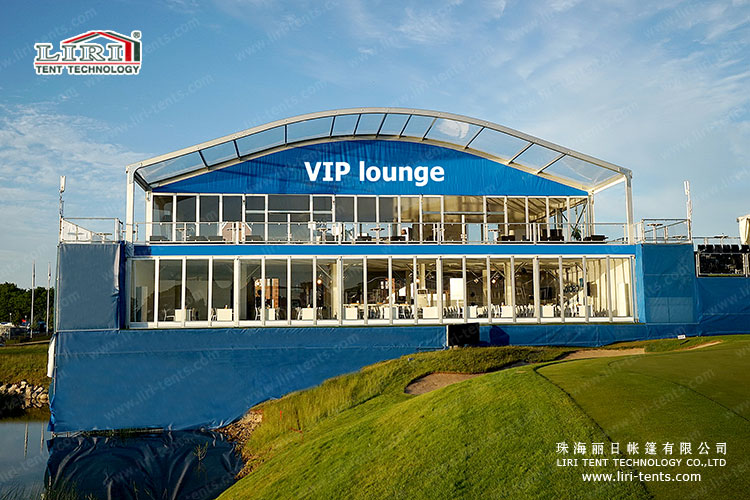
The first decision is whether the marquee stands alone in a garden or connects to a building, because that choice sets the required span and the layout of guest entrances. A freestanding structure on lawn needs a clear span wide enough for the ceremony aisle, the head table and the dance floor without columns blocking sightlines. Venues with existing buildings often use the marquee as a covered extension, which changes the anchoring plan and the way power and catering lines run.
Real installations show how much variety exists within one product family. A romantic wedding marquee reception in a tropical climate has different ventilation needs from a winter ceremony in a cooler region, yet both can be handled with the same clear span shell and different sidewall choices. This flexibility is why most planners start from the structure and build the decor around it.
Decorating for Atmosphere: Lighting, Fabrics and Layout
Lighting does more work than any other decor element in a marquee, because the structure itself is a blank shell. Warm uplighting along the frame, string lights across the ceiling and focused spots on the head table create depth that flat lighting never achieves. The white roof fabric acts as a giant diffuser, which means even simple LED bars produce an even, flattering glow across the whole reception floor.
Fabric choices inside the tent do the rest. Sheer drapes soften the wall lines and hide the frame junctions, while heavier lined panels control light and warmth when the sun is low. Table linens, chair covers and the aisle runner should all sit in the same color family so the space feels designed rather than assembled. A transparent clear span marquee takes a different route, letting the garden or the sky become part of the decor, which suits couples who want the outdoors visible during the ceremony.
Sizing, Power and Practical Logistics
Size is the most common miscalculation in wedding marquees. A seated dinner needs roughly one square meter per guest when tables, chairs and aisles are included, and that figure rises to 1.3 square meters once you add a dance floor, a buffet line and a gift table. Booking a structure that fits the guest list plus twenty percent is the industry rule of thumb, because the cost of a slightly larger tent is far lower than the cost of a cramped reception.
Power is the second most ignored item. Catering equipment, lighting, sound systems and climate control can easily draw more than a single domestic circuit supplies, so the marquee should be planned with a distribution board and cabling route from day one. aluminum orangery for large events projects demonstrate how much electrical capacity a full reception actually consumes when the entire event runs under one roof.
Frequently Asked Questions (FAQ)
How do we make the wedding marquee feel memorable rather than functional?
The details that create memory are lighting layers, fabric texture and a clear visual line from the entrance to the head table. Warm uplighting along the frame, sheer drapes on the walls and a coordinated color family across linens and flowers turn a blank shell into a scene that reads as designed, and guests remember the atmosphere long after the details of the menu.
What happens if it rains on the wedding day?
A properly installed marquee with sealed joints, anchored base plates and drainage channels keeps the interior dry through the full duration of the event. Gutters and downpipes carry runoff away from the entrance, and the clear span frame removes the risk of water pooling on the roof.
Can the marquee be used for the ceremony and the reception?
Yes, and most couples use one structure for both, repositioning the ceremony chairs to form the reception seating in the interval. The modular aluminum marquee tents in our range convert quickly between layouts because the floor plan is open and the sidewalls can be rolled up between events.
How do we keep the marquee comfortable in summer heat?
White or reflective roof fabric, open sidewalls and fans positioned at the gable ends create a through-draft that drops the interior temperature several degrees. Adding a climate control unit is the reliable option for midday ceremonies in hot regions, so plan the power capacity before the event rather than renting extra generators afterward.
→ Plan Your Outdoor Wedding Marquee with Our Team
 30x40m Foundation Ceremony Marquee Tent for Industrial Park Groundbreaking Event
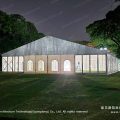 Wedding Marquee Tent – Outdoor Bangkok Reception Venue
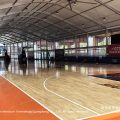 How a Clear Span Sports Court Marquee Created a Year-Round Basketball Arena
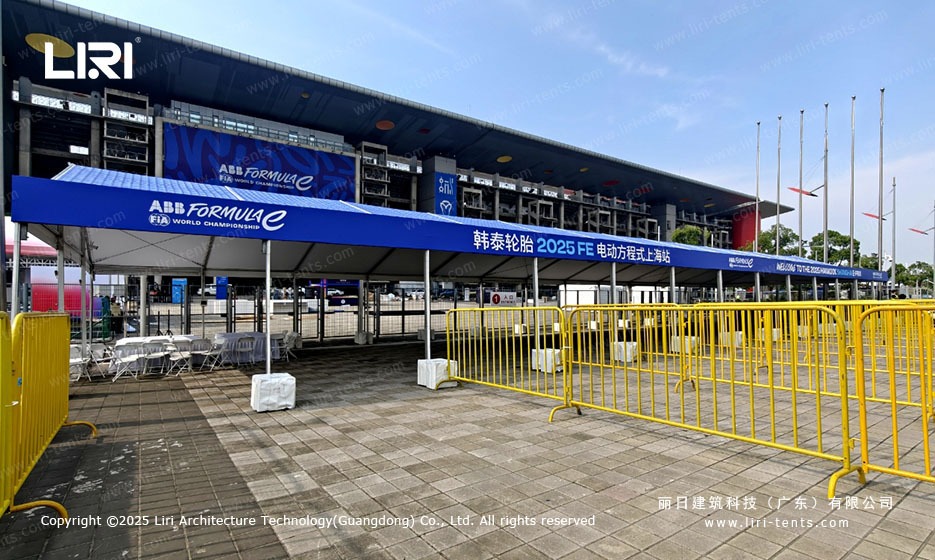
 Sanya Formula E Marquee Tent: Multi-Zone Layout for Electric Racing Event
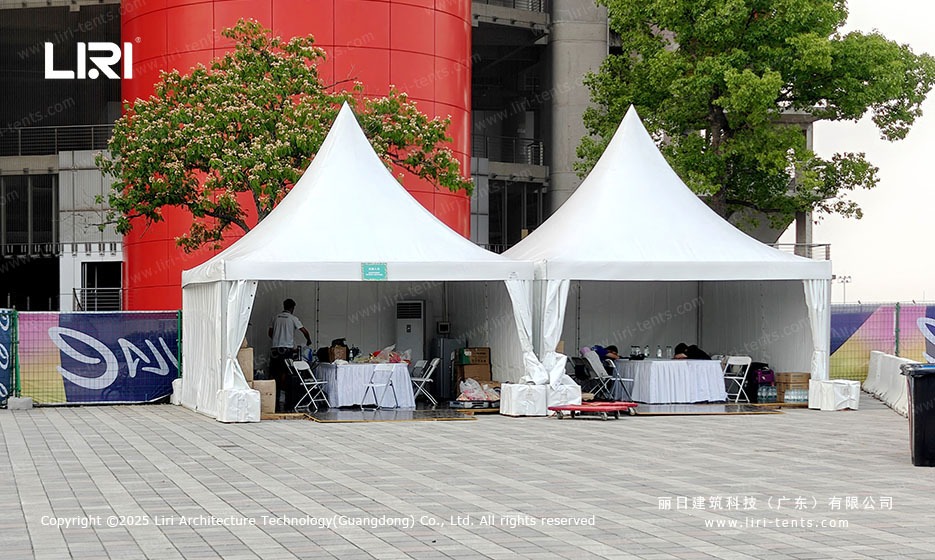
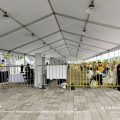 Recent Formula E Shanghai E-Prix Marquee Tent: Multi-Zone Race Village Setup