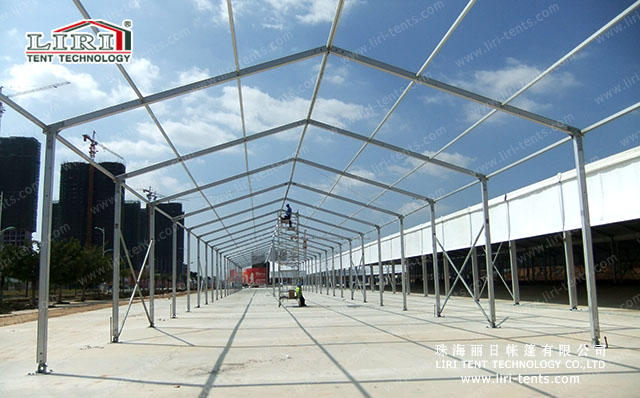
Extreme weather does not give warnings you can schedule around, and a tent that was fine in a light storm can fail completely when wind speeds double. The standard advice for any marquee owner: if a severe weather warning is issued, take the tent down or drop the fabric to the ground. That is not always possible mid-event, so this guide covers what to do when the tent has to stay up.
Wind Load: The Numbers That Decide Everything
Wind load is the biggest force a tent fights. A 10m x 20m marquee presents a large surface to the wind, and pressure grows with the square of wind speed, so a jump from 60 km/h to 90 km/h roughly doubles the load. Every tent is rated for a maximum wind speed, and that rating assumes proper anchoring and tensioning. If the manufacturer says the structure is rated for 100 km/h, that number only holds when the anchor layout is exactly as specified. For repeated exposure, buyers usually look at outdoor engineering construction tents with reinforced frames as a benchmark.

Your first action when a storm is forecast is to re-check the tension. Loosened fabric flaps, and flapping fabric tears at the seams and stresses the frame joints. Pull the straps tight at every staking point before the wind arrives.
Tension, Stakes, and the Corner Problem
Corner stakes are the weak point on almost every tent. When heavy rain saturates the soil, stakes loosen, and a loose corner stake under wind load can let the whole frame rack sideways. The fix is extra stakes and stake plates at corners, lace lines, and secondary poles, with tension checked after any significant rainfall. On hard surfaces like concrete or asphalt, ground stakes will not hold at all, so the tent needs ballast weights or anchors bolted into the surface. This is standard practice for industrial warehouse frame tents that sit on paved sites for months.

Sidewalls: When to Remove Them and When to Keep Them
Removing sidewalls is the fastest way to cut wind load, because wind passes through instead of pushing against a solid wall. If high winds are forecast, take the sidewalls down and let the air flow through the structure. That said, removing sidewalls changes the interior completely: you lose weather protection and heat control, and in a commercial context you may lose the event. The decision is a trade-off, and it is why permanent-style installations plan for it in advance with all-weather modular sports structures that come with engineered wind protection built in.
Heavy rain deserves its own checklist. Check the roof for ponding, water pooling on the fabric that can collapse a frame under its own weight. Keep roof water moving with proper tension and clear any gutters or drainage channels.
Extreme Weather Tent FAQ
What wind speed can a standard marquee tent withstand in extreme weather?
A well-anchored commercial frame marquee is typically rated for 80 to 120 km/h depending on size and frame profile. The rating assumes correct anchoring, full tension, and in many cases sidewalls removed. Always treat the manufacturer rating as a ceiling, not a guarantee.
How should I prepare a tent when heavy rain is expected?
Re-tension the roof, check every corner stake, and clear gutters before the rain arrives. If the ground is saturated, add stake plates or extra stakes at corners and lace lines. After the storm, inspect the frame joints and fabric seams before using the tent again.
Should I take the tent down or leave it up during a storm?
If the forecast exceeds the tent’s wind rating, take it down. If the storm is below the rating, keep it up but re-tension everything, add corner stakes, and consider removing sidewalls. For an event that cannot move, the fallback is dropping the fabric to the ground while leaving the frame standing, which cuts the wind surface dramatically.
How do I keep stakes from pulling out of wet soil?
Use longer stakes or stake plates to spread the load, and re-check tension after heavy rain. Wet soil loses friction, so a stake that was fine in dry ground can pull out in a downpour. Adding a second stake at each corner and using plates is the standard defense, and it is the same logic used on large industrial tent installation sites where ground conditions vary.
Can a marquee tent survive snow load?
Snow is a different force from wind: it is a static weight sitting on the roof. Most PVC marquee roofs are not designed for heavy snow accumulation, so snow should be removed promptly or the tent taken down. If the tent must stay up through winter, ask for a snow-load-rated frame and a steeper roof angle that sheds snow naturally.
 10x25m Tension Membrane Marquee Tent: Three-Peak Safari Lodge Structure
 18.5m x 36m Polygon Tennis Court Marquee PG18.5×36-600 | Clear-Span Aluminum Sports Hall
 How a Clear Span Sports Court Marquee Created a Year-Round Basketball Arena
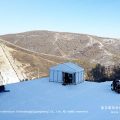 Cold-Weather Event Marquees for Outdoor Winter
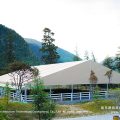 30m x 35m Equestrian Arena Marquee for Mountain Valley Riding Resort
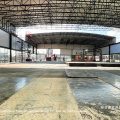 29m x 40m Electric Retractable Basketball Court Marquee for Lock Park Sports Facility