A trailer tent is a shelter that moves with the job: the frame is supported by a vehicle and aluminum poles, so the whole unit can be repositioned between parking areas, festival zones and construction sites without a permanent foundation. The opening sidewalls let air move through the interior, which keeps people comfortable even on warm afternoons when the tent is fully enclosed. For organisers who run events at multiple locations in one season, this is the portable frame marquee solution that most directly matches a changing site list.
How a Trailer Tent Moves With Your Event
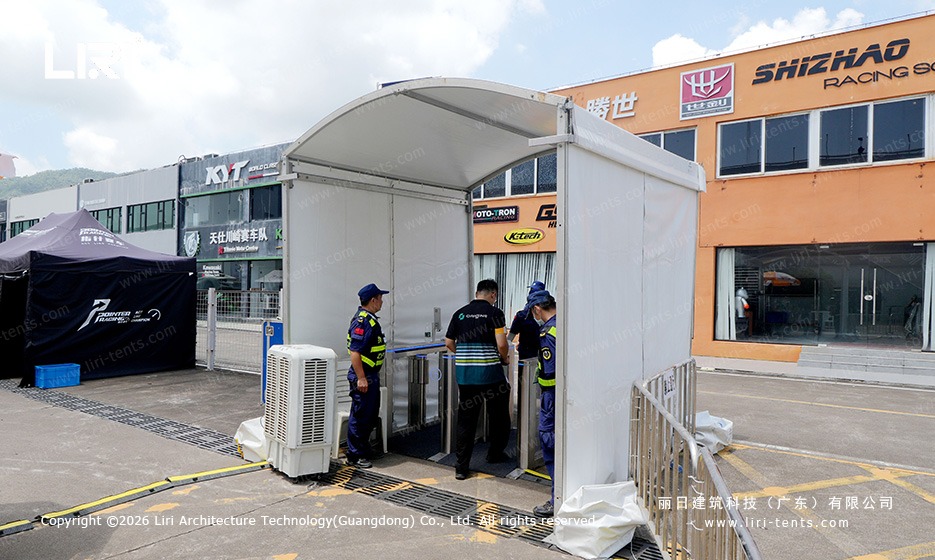
Because the tent is vehicle-supported, setup is a matter of positioning the trailer, extending the aluminum poles and tensioning the cover. There is no concrete pad, no crane and no long assembly sequence, so the unit can relocate between breakfast service and an evening reception on the same day if needed.
The practical payoff is flexibility in space planning. A single trailer tent can serve as a mobile registration point at a race circuit, a changing room block at a sports ground or a pop-up bar at a town square event. Teams that already run vehicle exhibition marquee halls often keep a trailer unit in the fleet for the jobs that do not justify a full hall.
The unit also works as a shuttle between fixed structures: one trailer tent can run ticketing at the main gate in the morning and staff catering at the back paddock in the afternoon. Crews plan that rotation into the event timeline because no crane, concrete pad or site preparation is needed between moves.
Frame and Fabric Specifications
The upright supports and roof beams use 82x48x3mm or 11x82x3mm aluminum profiles, sized for the span and the wind load expected at the site. The cover is 850g/m² PVC double-layer polyester textile, which is waterproof, mildew-proof and UV resistant, with flame retardancy to DIN4102 B1 and M2.
Those properties matter for a unit that lives outdoors between events. Unlike a frame stored in a warehouse, a trailer tent sits exposed to sun and rain, so the double-layer PVC cover and corrosion-resistant aluminum are what keep it serviceable season after season. The same fabric standard is used across clear span pool marquee enclosures, so spare cover panels remain compatible if you standardise the fleet.
Accessories for a Complete Mobile Setup
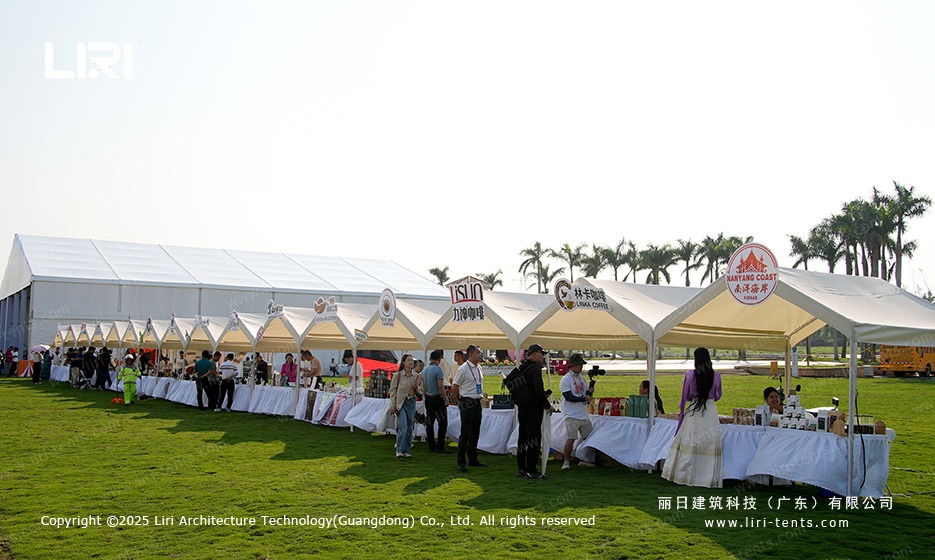
The accessory range covers clear PVC windows, mesh windows, ground anchors, weight plates, glass doors and clear PVC fabric panels. A full set lets the same tent switch from an open, breezy shelter in summer to a closed, weatherproof room when the season turns.
For larger or multi-zone sites, a trailer tent works as the mobile anchor point next to wide clear span marquee halls, handling entry, storage or crew welfare while the main hall covers the event. When the booking ends, the accessories pack down with the tent, so nothing is left on site to collect later.
Frequently Asked Questions
How is a trailer tent supported?
The structure is supported by a vehicle and aluminum poles, so it stands without a fixed foundation. That is what allows the tent to relocate between sites quickly and what makes it a practical choice for seasonal or touring events.
What fabric is used on a trailer tent?
The cover is 850g/m² PVC double-layer polyester textile, waterproof, mildew-proof and UV resistant, with flame retardancy to DIN4102 B1 and M2. Clear PVC and mesh window panels are available as accessories for light and airflow, the same options used on corporate event marquee tents that run through a full season of hires.
Can a trailer tent be used in wet weather?
Yes. The double-layer PVC cover is waterproof and the frame is corrosion-resistant, so the tent can stay serviceable through rain. Check the ground anchors and weight plates before heavy weather, and close the sidewalls once rain starts.
→ Browse clear span exhibition marquees
 How a Clear Span Sports Court Marquee Created a Year-Round Basketball Arena
 Sanya Formula E Marquee Tent: Multi-Zone Layout for Electric Racing Event
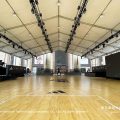 25m Clear Span Exhibition Marquee: Shanghai Urban Plaza Sports Arena
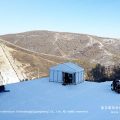 Cold-Weather Event Marquees for Outdoor Winter
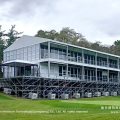 Maximize View: Premier Two Storey Marquees for Golf Course
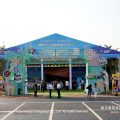 Hainan Coffee Festival Marquee Tent | Clear-Span Main Hall Plus Pagoda Vendor Booths for a Tropical Trade Month